BEGIN:VCALENDAR
VERSION:2.0
PRODID:DPCALENDAR
CALSCALE:GREGORIAN
BEGIN:VTIMEZONE
TZID:Europe/London
X-MICROSOFT-CDO-TZID:1
BEGIN:DAYLIGHT
DTSTART:20260329T010000
TZOFFSETFROM:+0000
TZOFFSETTO:+0100
TZNAME:BST
END:DAYLIGHT
BEGIN:DAYLIGHT
DTSTART:20270328T010000
TZOFFSETFROM:+0000
TZOFFSETTO:+0100
TZNAME:BST
END:DAYLIGHT
BEGIN:STANDARD
DTSTART:20261025T010000
TZOFFSETFROM:+0100
TZOFFSETTO:+0000
TZNAME:GMT
END:STANDARD
END:VTIMEZONE
X-WR-TIMEZONE:Europe/London
X-WR-CALNAME:Lecture
BEGIN:VEVENT
DTSTART;TZID=Europe/London:20120912T193000
DTEND;TZID=Europe/London:20120912T220000
UID:705A8F4B-68EB-4E40-9316-A5B2501D75AC
SUMMARY:The Eugenic Darwins
CREATED:20180721T092500Z
DTSTAMP:20180721T092500Z
URL:https://www.cirenscience.org.uk/events/lecture-programme/the-eugenic-darwins
LAST-MODIFIED:20180723T072625Z
SEQUENCE:165685
LOCATION:Ashcroft Road 21\, GL7 1RA Cirencester\, Gloucestershire
GEO:51.71539390;-1.96728510
X-LOCATION-DISPLAYNAME:Ashcroft Church
X-ACCESS:1
X-HITS:59
X-COLOR:3366cc
X-SHOW-END-TIME:0
END:VEVENT
BEGIN:VEVENT
DTSTART;TZID=Europe/London:20121011T193000
DTEND;TZID=Europe/London:20121011T220000
UID:33EFD3A4-06FD-4132-8425-E0883AEE71E5
SUMMARY:Virtual Fossils: Soft Bodied Sensations from the Silurian
CREATED:20180721T092700Z
DTSTAMP:20180721T092700Z
URL:https://www.cirenscience.org.uk/events/lecture-programme/virtual-fossils-soft-bodied-sensations-from-the-silurian
DESCRIPTION:PUBLIC LECTURE
X-ALT-DESC;FMTTYPE=text/html:PUBLIC LECTURE
LAST-MODIFIED:20180721T092925Z
SEQUENCE:145
LOCATION:Stroud Road\, GL7 6JS Cirencester\, Gloucestershire
GEO:51.71142860;-1.99677610
X-LOCATION-DISPLAYNAME:Royal Agricultural University - Boutflour Hall
X-ACCESS:1
X-HITS:47
X-COLOR:3366cc
X-SHOW-END-TIME:0
END:VEVENT
BEGIN:VEVENT
DTSTART;TZID=Europe/London:20121114T193000
DTEND;TZID=Europe/London:20121114T220000
UID:0DDA390F-5A61-49EB-886D-4B494F6FE1DF
SUMMARY:Active Galaxies
CREATED:20180721T093024Z
DTSTAMP:20180721T093024Z
URL:https://www.cirenscience.org.uk/events/lecture-programme/active-galaxies
LOCATION:Sir Emrys Jones Lecture Theatre\, RAU\, GL7 6JS Cirencester\, Gloucestershire
GEO:51.70988500;-1.99498400
X-LOCATION-DISPLAYNAME:Royal Agricultural University - Sir Emrys Jones Lecture Theatre
X-ACCESS:1
X-HITS:54
X-COLOR:3366cc
X-SHOW-END-TIME:0
END:VEVENT
BEGIN:VEVENT
DTSTART;TZID=Europe/London:20121212T193000
DTEND;TZID=Europe/London:20121212T220000
UID:B7A7F63A-099C-4C4C-AEC2-E43EB6FDDD6C
SUMMARY:Cirencester - Its Local Geology
CREATED:20180721T093134Z
DTSTAMP:20180721T093134Z
URL:https://www.cirenscience.org.uk/events/lecture-programme/cirencester-its-local-geology
DESCRIPTION:Including the Annual Consultation Meeting, refreshments and a chance to mingle and chat, in the Atrium foyer outside the EJ lecture theatre.
X-ALT-DESC;FMTTYPE=text/html:Including the Annual Consultation Meeting, refreshments and a chance to mingle and chat, in the Atrium foyer outside the EJ lecture theatre.
LAST-MODIFIED:20180721T093540Z
SEQUENCE:246
LOCATION:Stroud Road\, GL7 6JS Cirencester\, Gloucestershire
GEO:51.71142860;-1.99677610
X-LOCATION-DISPLAYNAME:Royal Agricultural University - Sir Emrys Jones Centre
X-ACCESS:1
X-HITS:52
X-COLOR:3366cc
X-SHOW-END-TIME:0
END:VEVENT
BEGIN:VEVENT
DTSTART;TZID=Europe/London:20130213T193000
DTEND;TZID=Europe/London:20130213T220000
UID:F4F3B6D5-3B5F-40B5-9319-80C8672325CE
SUMMARY:Nuclear Fusion Potential & Present Status
CREATED:20180721T093458Z
DTSTAMP:20180721T093458Z
URL:https://www.cirenscience.org.uk/events/lecture-programme/nuclear-fusion-potential-present-status
LAST-MODIFIED:20180721T094511Z
SEQUENCE:613
LOCATION:Sir Emrys Jones Lecture Theatre\, RAU\, GL7 6JS Cirencester\, Gloucestershire
GEO:51.70988500;-1.99498400
X-LOCATION-DISPLAYNAME:Royal Agricultural University - Sir Emrys Jones Lecture Theatre
X-ACCESS:1
X-HITS:43
X-COLOR:3366cc
X-SHOW-END-TIME:0
END:VEVENT
BEGIN:VEVENT
DTSTART;TZID=Europe/London:20130313T193000
DTEND;TZID=Europe/London:20130313T220000
UID:260A252E-6CCA-442C-856F-7B6639BAB7FA
SUMMARY:Aerosols: The X Factor
CREATED:20180721T093631Z
DTSTAMP:20180721T093631Z
URL:https://www.cirenscience.org.uk/events/lecture-programme/aerosols-the-x-factor
LOCATION:Sir Emrys Jones Lecture Theatre\, RAU\, GL7 6JS Cirencester\, Gloucestershire
GEO:51.70988500;-1.99498400
X-LOCATION-DISPLAYNAME:Royal Agricultural University - Sir Emrys Jones Lecture Theatre
X-ACCESS:1
X-HITS:42
X-COLOR:3366cc
X-SHOW-END-TIME:0
END:VEVENT
BEGIN:VEVENT
DTSTART;TZID=Europe/London:20130410T193000
DTEND;TZID=Europe/London:20130410T220000
UID:2C9FCDED-188D-4CF2-9638-6687062C4B86
SUMMARY:Modelling Networks: The British Railway System 1845-2012
CREATED:20180721T093721Z
DTSTAMP:20180721T093721Z
URL:https://www.cirenscience.org.uk/events/lecture-programme/modelling-networks-the-british-railway-system-1845-2012
LOCATION:Ashcroft Road 21\, GL7 1RA Cirencester\, Gloucestershire
GEO:51.71539390;-1.96728510
X-LOCATION-DISPLAYNAME:Ashcroft Church
X-ACCESS:1
X-HITS:40
X-COLOR:3366cc
X-SHOW-END-TIME:0
END:VEVENT
BEGIN:VEVENT
DTSTART;TZID=Europe/London:20130508T193000
DTEND;TZID=Europe/London:20130508T203000
UID:504F4F33-2B67-4243-8906-AE4E09B3D54E
SUMMARY:Extremophiles
CREATED:20180721T093820Z
DTSTAMP:20180721T093820Z
URL:https://www.cirenscience.org.uk/events/lecture-programme/extremophiles
LOCATION:Sir Emrys Jones Lecture Theatre\, RAU\, GL7 6JS Cirencester\, Gloucestershire
GEO:51.70988500;-1.99498400
X-LOCATION-DISPLAYNAME:Royal Agricultural University - Sir Emrys Jones Lecture Theatre
X-ACCESS:1
X-HITS:47
X-COLOR:3366cc
X-SHOW-END-TIME:0
END:VEVENT
BEGIN:VEVENT
DTSTART;TZID=Europe/London:20130612T073000
DTEND;TZID=Europe/London:20130612T083000
UID:939D116E-88C3-4F86-9A03-3A8460FFB700
SUMMARY:Photochemistry - A Little Light Relief
CREATED:20180721T093903Z
DTSTAMP:20180721T093903Z
URL:https://www.cirenscience.org.uk/events/lecture-programme/photochemistry-a-little-light-relief
LOCATION:Sir Emrys Jones Lecture Theatre\, RAU\, GL7 6JS Cirencester\, Gloucestershire
GEO:51.70988500;-1.99498400
X-LOCATION-DISPLAYNAME:Royal Agricultural University - Sir Emrys Jones Lecture Theatre
X-ACCESS:1
X-HITS:56
X-COLOR:3366cc
X-SHOW-END-TIME:0
END:VEVENT
BEGIN:VEVENT
DTSTART;TZID=Europe/London:20130901T193000
DTEND;TZID=Europe/London:20130901T220000
UID:A6D9C9C0-57EF-447C-A218-49180336BB81
SUMMARY:Green (and Brown and Red)Prospects for Algal Biofuels
CREATED:20180721T093220Z
DTSTAMP:20180721T093220Z
URL:https://www.cirenscience.org.uk/events/lecture-programme/green-and-brown-and-red-prospects-for-algal-biofuels
LAST-MODIFIED:20180721T093519Z
SEQUENCE:179
LOCATION:Stroud Road\, GL7 6JS Cirencester\, Gloucestershire
GEO:51.71142860;-1.99677610
X-LOCATION-DISPLAYNAME:Royal Agricultural University - Sir Emrys Jones Centre
X-ACCESS:1
X-HITS:50
X-COLOR:3366cc
X-SHOW-END-TIME:0
END:VEVENT
BEGIN:VEVENT
DTSTART;TZID=Europe/London:20130918T073000
DTEND;TZID=Europe/London:20130918T220000
UID:44AF7A96-5ED8-4D9F-BFAC-8ED874D03EBE
SUMMARY:Using LIDAR to see through the trees
CREATED:20180721T094438Z
DTSTAMP:20180721T094438Z
URL:https://www.cirenscience.org.uk/events/lecture-programme/using-lidar-to-see-through-the-trees
DESCRIPTION:Joint with CAHS
X-ALT-DESC;FMTTYPE=text/html:Joint with CAHS
LOCATION:Ashcroft Road 21\, GL7 1RA Cirencester\, Gloucestershire
GEO:51.71539390;-1.96728510
X-LOCATION-DISPLAYNAME:Ashcroft Church
X-ACCESS:1
X-HITS:45
X-COLOR:3366cc
X-SHOW-END-TIME:0
END:VEVENT
BEGIN:VEVENT
DTSTART;TZID=Europe/London:20131009T193000
DTEND;TZID=Europe/London:20131009T203000
UID:77C56227-69C9-47FF-B83D-3F567FC6D3FC
SUMMARY:How science can help British Agriculture
CREATED:20180721T094955Z
DTSTAMP:20180721T094955Z
URL:https://www.cirenscience.org.uk/events/lecture-programme/how-science-can-help-british-agriculture
DESCRIPTION:Public Lecture
X-ALT-DESC;FMTTYPE=text/html:Public Lecture
LAST-MODIFIED:20180721T095140Z
SEQUENCE:105
LOCATION:Sir Emrys Jones Lecture Theatre\, RAU\, GL7 6JS Cirencester\, Gloucestershire
GEO:51.70988500;-1.99498400
X-LOCATION-DISPLAYNAME:Royal Agricultural University - Sir Emrys Jones Lecture Theatre
X-ACCESS:1
X-HITS:46
X-COLOR:3366cc
X-SHOW-END-TIME:0
END:VEVENT
BEGIN:VEVENT
DTSTART;TZID=Europe/London:20131106T193000
DTEND;TZID=Europe/London:20131106T220000
UID:C2533CB3-05DF-4E30-9D9C-02B3FE958036
SUMMARY:Modern Cryptography
CREATED:20180721T095123Z
DTSTAMP:20180721T095123Z
URL:https://www.cirenscience.org.uk/events/lecture-programme/modern-cryptography
DESCRIPTION:Joint with IMS
X-ALT-DESC;FMTTYPE=text/html:Joint with IMS
LOCATION:Sir Emrys Jones Lecture Theatre\, RAU\, GL7 6JS Cirencester\, Gloucestershire
GEO:51.70988500;-1.99498400
X-LOCATION-DISPLAYNAME:Royal Agricultural University - Sir Emrys Jones Lecture Theatre
X-ACCESS:1
X-HITS:49
X-COLOR:3366cc
X-SHOW-END-TIME:0
END:VEVENT
BEGIN:VEVENT
DTSTART;TZID=Europe/London:20131211T193000
DTEND;TZID=Europe/London:20131211T220000
UID:2AA2C07F-1C28-4116-A2A6-FBD1AC280C9F
SUMMARY:Hedonics - The Scientific Study of Happiness
CREATED:20180721T095423Z
DTSTAMP:20180721T095423Z
URL:https://www.cirenscience.org.uk/events/lecture-programme/hedonics-the-scientific-study-of-happiness
DESCRIPTION:** Festive refreshments will be available! **
X-ALT-DESC;FMTTYPE=text/html:** Festive refreshments will be available! **
LOCATION:Sir Emrys Jones Lecture Theatre\, RAU\, GL7 6JS Cirencester\, Gloucestershire
GEO:51.70988500;-1.99498400
X-LOCATION-DISPLAYNAME:Royal Agricultural University - Sir Emrys Jones Lecture Theatre
X-ACCESS:1
X-HITS:38
X-COLOR:3366cc
X-SHOW-END-TIME:0
END:VEVENT
BEGIN:VEVENT
DTSTART;TZID=Europe/London:20140108T193000
DTEND;TZID=Europe/London:20140108T203000
UID:AFFC6E3D-F6EB-4CFB-93AF-457CCFB289A1
SUMMARY:Edward Jenner: Local Man : Global Impact
CREATED:20180721T095524Z
DTSTAMP:20180721T095524Z
URL:https://www.cirenscience.org.uk/events/lecture-programme/edward-jenner-local-man-global-impact
LAST-MODIFIED:20180723T072949Z
SEQUENCE:164065
LOCATION:Sir Emrys Jones Lecture Theatre\, RAU\, GL7 6JS Cirencester\, Gloucestershire
GEO:51.70988500;-1.99498400
X-LOCATION-DISPLAYNAME:Royal Agricultural University - Sir Emrys Jones Lecture Theatre
X-ACCESS:1
X-HITS:48
X-COLOR:3366cc
X-SHOW-END-TIME:0
END:VEVENT
BEGIN:VEVENT
DTSTART;TZID=Europe/London:20140212T193000
DTEND;TZID=Europe/London:20140212T220000
UID:385BBBDB-99ED-42C5-B8D6-233A5C4A1E30
SUMMARY:Volcanoes, Earthquakes, Tsunamis in the news
CREATED:20180721T095604Z
DTSTAMP:20180721T095604Z
URL:https://www.cirenscience.org.uk/events/lecture-programme/volcanoes-earthquakes-tsunamis-in-the-news
LOCATION:Sir Emrys Jones Lecture Theatre\, RAU\, GL7 6JS Cirencester\, Gloucestershire
GEO:51.70988500;-1.99498400
X-LOCATION-DISPLAYNAME:Royal Agricultural University - Sir Emrys Jones Lecture Theatre
X-ACCESS:1
X-HITS:53
X-COLOR:3366cc
X-SHOW-END-TIME:0
END:VEVENT
BEGIN:VEVENT
DTSTART;TZID=Europe/London:20140319T193000
DTEND;TZID=Europe/London:20140319T203000
UID:07953521-3ABD-4B37-A4AD-132A0C19D31E
SUMMARY:The Aurora Borealis
CREATED:20180721T100724Z
DTSTAMP:20180721T100724Z
URL:https://www.cirenscience.org.uk/events/lecture-programme/the-aurora-borealis
DESCRIPTION:With solar activity having reached one of its periodic peaks, the winters of 2013–14 and 2014–15 are likely to be the best for aurora spotting for the next decade. This talk will describe what aurorae look like, the legends and superstitions associated with them, how and where they occur and how to watch for them.
X-ALT-DESC;FMTTYPE=text/html:With solar activity having reached one of its periodic peaks, the winters of 2013–14 and 2014–15 are likely to be the best for aurora spotting for the next decade.
This talk will describe what aurorae look like, the legends and superstitions associated with them, how and where they occur and how to watch for them.
LAST-MODIFIED:20180721T100830Z
SEQUENCE:66
LOCATION:Sir Emrys Jones Lecture Theatre\, RAU\, GL7 6JS Cirencester\, Gloucestershire
GEO:51.70988500;-1.99498400
X-LOCATION-DISPLAYNAME:Royal Agricultural University - Sir Emrys Jones Lecture Theatre
X-ACCESS:1
X-HITS:49
X-COLOR:3366cc
X-SHOW-END-TIME:0
END:VEVENT
BEGIN:VEVENT
DTSTART;TZID=Europe/London:20140409T193000
DTEND;TZID=Europe/London:20140409T220000
UID:1F49580B-D697-4207-9A34-603EA1087CF0
SUMMARY:Reverse Engineering the Violin
CREATED:20180721T100815Z
DTSTAMP:20180721T100815Z
URL:https://www.cirenscience.org.uk/events/lecture-programme/reverse-engineering-the-violin
LOCATION:Sir Emrys Jones Lecture Theatre\, RAU\, GL7 6JS Cirencester\, Gloucestershire
GEO:51.70988500;-1.99498400
X-LOCATION-DISPLAYNAME:Royal Agricultural University - Sir Emrys Jones Lecture Theatre
X-ACCESS:1
X-HITS:47
X-COLOR:3366cc
X-SHOW-END-TIME:0
END:VEVENT
BEGIN:VEVENT
DTSTART;TZID=Europe/London:20140514T073000
DTEND;TZID=Europe/London:20140514T083000
UID:B5AFD160-2AC5-4FBE-8A8D-8ABB8C755F88
SUMMARY:Safety and Accident Investigations
CREATED:20180721T100910Z
DTSTAMP:20180721T100910Z
URL:https://www.cirenscience.org.uk/events/lecture-programme/safety-and-accident-investigations
LOCATION:Sir Emrys Jones Lecture Theatre\, RAU\, GL7 6JS Cirencester\, Gloucestershire
GEO:51.70988500;-1.99498400
X-LOCATION-DISPLAYNAME:Royal Agricultural University - Sir Emrys Jones Lecture Theatre
X-ACCESS:1
X-HITS:37
X-COLOR:3366cc
X-SHOW-END-TIME:0
END:VEVENT
BEGIN:VEVENT
DTSTART;TZID=Europe/London:20140602T130000
DTEND;TZID=Europe/London:20140602T143000
UID:B3E32EF8-3AC8-4442-9DF2-B84547D9CEB5
SUMMARY:UCL Lunch hour Lectures
CREATED:20180721T172733Z
DTSTAMP:20180721T172733Z
URL:https://www.cirenscience.org.uk/events/lecture-programme/ucl-lunch-hour-lectures
DESCRIPTION:Members may be interested in the UCL "Lunch hour Lectures" available live online each Tuesday at 1:15pm. \NPlease see: http://events.ucl.ac.uk/calendar/tab:lunch_hour_lectures for more information.
X-ALT-DESC;FMTTYPE=text/html:Members may be interested in the UCL "Lunch hour Lectures" available live online each Tuesday at 1:15pm.
Please see: http://events.ucl.ac.uk/calendar/tab:lunch_hour_lectures for more information.
X-ACCESS:1
X-HITS:63
X-COLOR:3366cc
X-SHOW-END-TIME:0
END:VEVENT
BEGIN:VEVENT
DTSTART;TZID=Europe/London:20140611T193000
DTEND;TZID=Europe/London:20140611T203000
UID:96D777BE-8297-4DDE-B67F-D070516A9E4F
SUMMARY:Crocodiles, Pills and pH: Some Chemistry in Birth Control History
CREATED:20180721T100941Z
DTSTAMP:20180721T100941Z
URL:https://www.cirenscience.org.uk/events/lecture-programme/crocodiles-pills-and-ph-some-chemistry-in-birth-control-history
LOCATION:Sir Emrys Jones Lecture Theatre\, RAU\, GL7 6JS Cirencester\, Gloucestershire
GEO:51.70988500;-1.99498400
X-LOCATION-DISPLAYNAME:Royal Agricultural University - Sir Emrys Jones Lecture Theatre
X-ACCESS:1
X-HITS:46
X-COLOR:3366cc
X-SHOW-END-TIME:0
END:VEVENT
BEGIN:VEVENT
DTSTART;TZID=Europe/London:20140910T193000
DTEND;TZID=Europe/London:20140910T203000
UID:B313ABDE-196A-49C5-B0C4-FAC313F89F2C
SUMMARY:The UK's Atmospheric Research Aircraft
CREATED:20180721T101040Z
DTSTAMP:20180721T101040Z
URL:https://www.cirenscience.org.uk/events/lecture-programme/the-uk-s-atmospheric-research-aircraft
LOCATION:Ashcroft Road 21\, GL7 1RA Cirencester\, Gloucestershire
GEO:51.71539390;-1.96728510
X-LOCATION-DISPLAYNAME:Ashcroft Church
X-ACCESS:1
X-HITS:49
X-COLOR:3366cc
X-SHOW-END-TIME:0
END:VEVENT
BEGIN:VEVENT
DTSTART;TZID=Europe/London:20141008T193000
DTEND;TZID=Europe/London:20141008T203000
UID:F279A0AD-1373-452A-B60A-4B9FC84B41D9
SUMMARY:Malaria: the 2000 year old killer and the production of malarial treatments
CREATED:20180721T101113Z
DTSTAMP:20180721T101113Z
URL:https://www.cirenscience.org.uk/events/lecture-programme/malaria-the-2000-year-old-killer-and-the-production-of-malarial-treatments
LOCATION:Sir Emrys Jones Lecture Theatre\, RAU\, GL7 6JS Cirencester\, Gloucestershire
GEO:51.70988500;-1.99498400
X-LOCATION-DISPLAYNAME:Royal Agricultural University - Sir Emrys Jones Lecture Theatre
X-ACCESS:1
X-HITS:44
X-COLOR:3366cc
X-SHOW-END-TIME:0
END:VEVENT
BEGIN:VEVENT
DTSTART;TZID=Europe/London:20141112T193000
DTEND;TZID=Europe/London:20141112T203000
UID:DF171393-C742-4CD0-AAC5-815E6814F8AC
SUMMARY:Nitrogen Pollution
CREATED:20180721T101204Z
DTSTAMP:20180721T101204Z
URL:https://www.cirenscience.org.uk/events/lecture-programme/nitrogen-pollution
DESCRIPTION:Joint with ICS
X-ALT-DESC;FMTTYPE=text/html:Joint with ICS
LOCATION:Sir Emrys Jones Lecture Theatre\, RAU\, GL7 6JS Cirencester\, Gloucestershire
GEO:51.70988500;-1.99498400
X-LOCATION-DISPLAYNAME:Royal Agricultural University - Sir Emrys Jones Lecture Theatre
X-ACCESS:1
X-HITS:50
X-COLOR:3366cc
X-SHOW-END-TIME:0
END:VEVENT
BEGIN:VEVENT
DTSTART;TZID=Europe/London:20141210T193000
DTEND;TZID=Europe/London:20141210T203000
UID:9EAA494F-CC28-4668-8FB4-EB2834A973B7
SUMMARY:Citizen Science
CREATED:20180721T101246Z
DTSTAMP:20180721T101246Z
URL:https://www.cirenscience.org.uk/events/lecture-programme/citizen-science
LOCATION:Sir Emrys Jones Lecture Theatre\, RAU\, GL7 6JS Cirencester\, Gloucestershire
GEO:51.70988500;-1.99498400
X-LOCATION-DISPLAYNAME:Royal Agricultural University - Sir Emrys Jones Lecture Theatre
X-ACCESS:1
X-HITS:49
X-COLOR:3366cc
X-SHOW-END-TIME:0
END:VEVENT
BEGIN:VEVENT
DTSTART;TZID=Europe/London:20150114T193000
DTEND;TZID=Europe/London:20150114T203000
UID:8EDCFC99-3CE1-47CA-ACF4-73B42B53CEBF
SUMMARY:Computing for the Future of the Planet
CREATED:20180721T101352Z
DTSTAMP:20180721T101352Z
URL:https://www.cirenscience.org.uk/events/lecture-programme/computing-for-the-future-of-the-planet
DESCRIPTION:Public Lecture\NAndy Hopper has pursued academic and industrial careers simultaneously. In the academic career he has worked at the Computer Laboratory and the Department of Engineering at Cambridge. In the industrial context he has co-founded over a dozen spin-outs and start-ups, three of which floated on stock markets, as well as working for multinational companies. He is Chairman of RealVNC Group and Ubisense plc which between them have received five Queen’s Awards for Enterprise. As computing becomes ever more fundamental to our way of life, this talk will take a broad view of its impact on our planet, and consider possible ways to maximise the positive, and minimise the adverse impacts.
X-ALT-DESC;FMTTYPE=text/html:Public Lecture
Andy Hopper has pursued academic and industrial careers simultaneously. In the academic career he has worked at the Computer Laboratory and the Department of Engineering at Cambridge. In the industrial context he has co-founded over a dozen spin-outs and start-ups, three of which floated on stock markets, as well as working for multinational companies. He is Chairman of RealVNC Group and Ubisense plc which between them have received five Queen’s Awards for Enterprise.
As computing becomes ever more fundamental to our way of life, this talk will take a broad view of its impact on our planet, and consider possible ways to maximise the positive, and minimise the adverse impacts.
LOCATION:Stroud Road\, GL7 6JS Cirencester\, Gloucestershire
GEO:51.71142860;-1.99677610
X-LOCATION-DISPLAYNAME:Royal Agricultural University - Boutflour Hall
X-ACCESS:1
X-HITS:56
X-COLOR:3366cc
X-SHOW-END-TIME:0
END:VEVENT
BEGIN:VEVENT
DTSTART;TZID=Europe/London:20150211T193000
DTEND;TZID=Europe/London:20150211T203000
UID:FCE42998-8975-4500-88C2-E07F6190FFF4
SUMMARY:How Quantum Physics Democratised Music
CREATED:20180721T101438Z
DTSTAMP:20180721T101438Z
URL:https://www.cirenscience.org.uk/events/lecture-programme/how-quantum-physics-democratised-music
DESCRIPTION:If talk of Quantum Physics sends a shiver down your spine, don't panic! Professor Berry is a renowned physicist and educator, and is interested in the connection between physics and the gadgets which form the basis of our modern lives. Music, photography, and many other fields are touched upon and some fascinating new ideas are brought to our attention.
X-ALT-DESC;FMTTYPE=text/html:If talk of Quantum Physics sends a shiver down your spine, don't panic! Professor Berry is a renowned physicist and educator, and is interested in the connection between physics and the gadgets which form the basis of our modern lives.
Music, photography, and many other fields are touched upon and some fascinating new ideas are brought to our attention.
LOCATION:Sir Emrys Jones Lecture Theatre\, RAU\, GL7 6JS Cirencester\, Gloucestershire
GEO:51.70988500;-1.99498400
X-LOCATION-DISPLAYNAME:Royal Agricultural University - Sir Emrys Jones Lecture Theatre
X-ACCESS:1
X-HITS:44
X-COLOR:3366cc
X-SHOW-END-TIME:0
END:VEVENT
BEGIN:VEVENT
DTSTART;TZID=Europe/London:20150311T193000
DTEND;TZID=Europe/London:20150311T203000
UID:F80FFF36-5669-4A37-B068-99797254BA4C
SUMMARY:Germ Warfare
CREATED:20180721T101537Z
DTSTAMP:20180721T101537Z
URL:https://www.cirenscience.org.uk/events/lecture-programme/germ-warfare
DESCRIPTION:A fascinating insight into this most frightening of threats, and how it is countered, tracing its use throughout history to the present day.\N
X-ALT-DESC;FMTTYPE=text/html:A fascinating insight into this most frightening of threats, and how it is countered, tracing its use throughout history to the present day.
LOCATION:Sir Emrys Jones Lecture Theatre\, RAU\, GL7 6JS Cirencester\, Gloucestershire
GEO:51.70988500;-1.99498400
X-LOCATION-DISPLAYNAME:Royal Agricultural University - Sir Emrys Jones Lecture Theatre
X-ACCESS:1
X-HITS:40
X-COLOR:3366cc
X-SHOW-END-TIME:0
END:VEVENT
BEGIN:VEVENT
DTSTART;TZID=Europe/London:20150408T193000
DTEND;TZID=Europe/London:20150408T203000
UID:7A360E18-4651-4214-BDC8-8FE75C231DAE
SUMMARY:The Environmental Effects and Monitoring of Nuclear Power Generation
CREATED:20180721T101611Z
DTSTAMP:20180721T101611Z
URL:https://www.cirenscience.org.uk/events/lecture-programme/the-environmental-effects-and-monitoring-of-nuclear-power-generation
LOCATION:Ashcroft Road 21\, GL7 1RA Cirencester\, Gloucestershire
GEO:51.71539390;-1.96728510
X-LOCATION-DISPLAYNAME:Ashcroft Church
X-ACCESS:1
X-HITS:37
X-COLOR:3366cc
X-SHOW-END-TIME:0
END:VEVENT
BEGIN:VEVENT
DTSTART;TZID=Europe/London:20150422T193000
DTEND;TZID=Europe/London:20150422T203000
UID:D9CCB930-218B-4E6B-9A24-E4C0C57736F7
SUMMARY:A Day in the Life of Sir Mark Walport FRS
CREATED:20180721T172444Z
DTSTAMP:20180721T172444Z
URL:https://www.cirenscience.org.uk/events/lecture-programme/a-day-in-the-life-of-sir-mark-walport-frs
X-ACCESS:1
X-HITS:43
X-COLOR:3366cc
X-IMAGE-FULL:https://www.cirenscience.org.uk//images/csts_images/sir%20mark%20poster%20copy-01.jpeg
X-IMAGE-INTRO:https://www.cirenscience.org.uk//images/csts_images/sir%20mark%20poster%20copy-01.jpeg
X-SHOW-END-TIME:0
END:VEVENT
BEGIN:VEVENT
DTSTART;TZID=Europe/London:20150513T193000
DTEND;TZID=Europe/London:20150513T203000
UID:0FB77F2D-39D3-4E69-A6F3-36E6088460E3
SUMMARY:Bras and Bridges
CREATED:20180721T101644Z
DTSTAMP:20180721T101644Z
URL:https://www.cirenscience.org.uk/events/lecture-programme/bras-and-bridges
DESCRIPTION:Professor Tyrer considers how to measure complicated things using light - and yes, that does include designing bras!\N
X-ALT-DESC;FMTTYPE=text/html:Professor Tyrer considers how to measure complicated things using light - and yes, that does include designing bras!
LAST-MODIFIED:20180721T101751Z
SEQUENCE:67
LOCATION:Sir Emrys Jones Lecture Theatre\, RAU\, GL7 6JS Cirencester\, Gloucestershire
GEO:51.70988500;-1.99498400
X-LOCATION-DISPLAYNAME:Royal Agricultural University - Sir Emrys Jones Lecture Theatre
X-ACCESS:1
X-HITS:45
X-COLOR:3366cc
X-SHOW-END-TIME:0
END:VEVENT
BEGIN:VEVENT
DTSTART;TZID=Europe/London:20150610T193000
DTEND;TZID=Europe/London:20150610T203000
UID:AAFA45D5-0025-4FEF-88E6-80AFC250E548
SUMMARY:No More Drugs for Superbugs - The End of the Antibiotic Age?
CREATED:20180721T101739Z
DTSTAMP:20180721T101739Z
URL:https://www.cirenscience.org.uk/events/lecture-programme/no-more-drugs-for-superbugs-the-end-of-the-antibiotic-age
DESCRIPTION:Dr. Avison's aim is to explain how our battle against one of the greatest current threats to mankind cannot be won by biomedical scientists alone. Victory will require the involvement of economists, politicians, social scientists and lawyers; geographers, physical scientists and engineers; educators, medical practitioners and the public at large.\N
X-ALT-DESC;FMTTYPE=text/html:Dr. Avison's aim is to explain how our battle against one of the greatest current threats to mankind cannot be won by biomedical scientists alone.
Victory will require the involvement of economists, politicians, social scientists and lawyers; geographers, physical scientists and engineers; educators, medical practitioners and the public at large.
LOCATION:Sir Emrys Jones Lecture Theatre\, RAU\, GL7 6JS Cirencester\, Gloucestershire
GEO:51.70988500;-1.99498400
X-LOCATION-DISPLAYNAME:Royal Agricultural University - Sir Emrys Jones Lecture Theatre
X-ACCESS:1
X-HITS:42
X-COLOR:3366cc
X-SHOW-END-TIME:0
END:VEVENT
BEGIN:VEVENT
DTSTART;TZID=Europe/London:20150909T193000
DTEND;TZID=Europe/London:20150909T203000
UID:1242BBDD-6192-4F7C-9CF1-E0E392863845
SUMMARY:Construction, Operation and Decommissioning of Nuclear Plant
CREATED:20180721T101856Z
DTSTAMP:20180721T101856Z
URL:https://www.cirenscience.org.uk/events/lecture-programme/construction-operation-and-decommissioning-of-nuclear-plant
DESCRIPTION:Joint with CAHS
X-ALT-DESC;FMTTYPE=text/html:Joint with CAHS
LOCATION:Ashcroft Road 21\, GL7 1RA Cirencester\, Gloucestershire
GEO:51.71539390;-1.96728510
X-LOCATION-DISPLAYNAME:Ashcroft Church
X-ACCESS:1
X-HITS:54
X-COLOR:3366cc
X-SHOW-END-TIME:0
END:VEVENT
BEGIN:VEVENT
DTSTART;TZID=Europe/London:20151014T193000
DTEND;TZID=Europe/London:20151014T203000
UID:BF6F67B9-14B7-44B1-AB2F-7E21D5336B66
SUMMARY:Exploring Giant Waves in the Atmosphere over the Mountains of the Andes, Antarctica & Southern Islands
CREATED:20180721T101940Z
DTSTAMP:20180721T101940Z
URL:https://www.cirenscience.org.uk/events/lecture-programme/exploring-giant-waves-in-the-atmosphere-over-the-mountains-of-the-andes-antarctica-southern-islands
LOCATION:Sir Emrys Jones Lecture Theatre\, RAU\, GL7 6JS Cirencester\, Gloucestershire
GEO:51.70988500;-1.99498400
X-LOCATION-DISPLAYNAME:Royal Agricultural University - Sir Emrys Jones Lecture Theatre
X-ACCESS:1
X-HITS:48
X-COLOR:3366cc
X-SHOW-END-TIME:0
END:VEVENT
BEGIN:VEVENT
DTSTART;VALUE=DATE:20151030
DTEND;VALUE=DATE:20151101
UID:E6086D0F-0210-47E4-B535-9DFF4BEAD385
SUMMARY:Kinetic Toys at Brewery Arts
CREATED:20180721T172244Z
DTSTAMP:20180721T172244Z
URL:https://www.cirenscience.org.uk/events/lecture-programme/kinetic-toys-at-brewery-arts
DESCRIPTION:There is a charming exhibition of kinetic toys at New Brewery Arts until 31 October, which all our members should visit!
X-ALT-DESC;FMTTYPE=text/html:There is a charming exhibition of kinetic toys at New Brewery Arts until 31 October, which all our members should visit!
X-ACCESS:1
X-HITS:50
X-COLOR:3366cc
X-SHOW-END-TIME:0
END:VEVENT
BEGIN:VEVENT
DTSTART;TZID=Europe/London:20151111T193000
DTEND;TZID=Europe/London:20151111T203000
UID:8CEB297F-6FAD-4201-A8D0-DDA664C40E16
SUMMARY:Insect Pest and Vector Control: GM technologies, risks and regulation
CREATED:20180721T102020Z
DTSTAMP:20180721T102020Z
URL:https://www.cirenscience.org.uk/events/lecture-programme/insect-pest-and-vector-control-gm-technologies-risks-and-regulation
DESCRIPTION:In this talk I will discuss aspects of GM insects for the control of agricultural pests and vector-borne diseases. Insects caused billions of dollars worth of damage to agricultural crops (both pre and post harvest) and inflict worldwide morbidity and mortality through the transmission of infectious diseases. We need novel control methods and biological control through the use of GM insects provides one new tool. I will introduce the basic biology associated with GM insects and define the essential ideas. Focussing on population suppression approaches I will illustrate the ecological implications of GM insect releases using mathematical modelling. I will discuss the regulatory issues that surround the use of GM insects and conclude with a illustrative computer game on the economics of GM insect control.\N
X-ALT-DESC;FMTTYPE=text/html:In this talk I will discuss aspects of GM insects for the control of agricultural pests and vector-borne diseases.
Insects caused billions of dollars worth of damage to agricultural crops (both pre and post harvest) and inflict worldwide morbidity and mortality through the transmission of infectious diseases. We need novel control methods and biological control through the use of GM insects provides one new tool. I will introduce the basic biology associated with GM insects and define the essential ideas. Focussing on population suppression approaches I will illustrate the ecological implications of GM insect releases using mathematical modelling.
I will discuss the regulatory issues that surround the use of GM insects and conclude with a illustrative computer game on the economics of GM insect control.
LOCATION:Sir Emrys Jones Lecture Theatre\, RAU\, GL7 6JS Cirencester\, Gloucestershire
GEO:51.70988500;-1.99498400
X-LOCATION-DISPLAYNAME:Royal Agricultural University - Sir Emrys Jones Lecture Theatre
X-ACCESS:1
X-HITS:43
X-COLOR:3366cc
X-SHOW-END-TIME:0
END:VEVENT
BEGIN:VEVENT
DTSTART;TZID=Europe/London:20151209T193000
DTEND;TZID=Europe/London:20151209T203000
UID:39948C69-B84E-4429-AD63-803B702E99C5
SUMMARY:The Birth of British Aviation - Prisoners of Hope
CREATED:20180721T102103Z
DTSTAMP:20180721T102103Z
URL:https://www.cirenscience.org.uk/events/lecture-programme/the-birth-of-british-aviation-prisoners-of-hope
DESCRIPTION:This is the story of the birth of British aviation revealing the personalities and characters of the Honourable CS Rolls, the Short brothers, the Wright brothers, JTC Moore-Brabazon and Frank McClean, and what drove them together to seek the same goals, challenging society and world governments with their prophetic vision.\N
X-ALT-DESC;FMTTYPE=text/html:This is the story of the birth of British aviation revealing the personalities and characters of the Honourable CS Rolls, the Short brothers, the Wright brothers, JTC Moore-Brabazon and Frank McClean, and what drove them together to seek the same goals, challenging society and world governments with their prophetic vision.
LOCATION:Sir Emrys Jones Lecture Theatre\, RAU\, GL7 6JS Cirencester\, Gloucestershire
GEO:51.70988500;-1.99498400
X-LOCATION-DISPLAYNAME:Royal Agricultural University - Sir Emrys Jones Lecture Theatre
X-ACCESS:1
X-HITS:49
X-COLOR:3366cc
X-SHOW-END-TIME:0
END:VEVENT
BEGIN:VEVENT
DTSTART;TZID=Europe/London:20160113T193000
DTEND;TZID=Europe/London:20160113T203000
UID:01700A1C-4F55-41B2-A632-12E6742AC8A3
SUMMARY:Geohazards Globally
CREATED:20180721T102201Z
DTSTAMP:20180721T102201Z
URL:https://www.cirenscience.org.uk/events/lecture-programme/geohazards-globally
DESCRIPTION:PUBLIC LECTURE\NWhat does the British Geological Survey do?\NIn the UK and world-wide, the BGS studies the ground on which we stand, to understand how we interact with it and the threats we should be aware of.\NA fascinating display of information about our home planet!
X-ALT-DESC;FMTTYPE=text/html:PUBLIC LECTURE
What does the British Geological Survey do?
In the UK and world-wide, the BGS studies the ground on which we stand, to understand how we interact with it and the threats we should be aware of.
A fascinating display of information about our home planet!
LOCATION:Stroud Road\, GL7 6JS Cirencester\, Gloucestershire
GEO:51.71142860;-1.99677610
X-LOCATION-DISPLAYNAME:Royal Agricultural University - Boutflour Hall
X-ACCESS:1
X-HITS:51
X-COLOR:3366cc
X-SHOW-END-TIME:0
END:VEVENT
BEGIN:VEVENT
DTSTART;TZID=Europe/London:20160210T193000
DTEND;TZID=Europe/London:20160210T203000
UID:46DEA3C2-9688-4F73-93C2-D43849286BB1
SUMMARY:Small Science - Big Future....
CREATED:20180721T102244Z
DTSTAMP:20180721T102244Z
URL:https://www.cirenscience.org.uk/events/lecture-programme/small-science-big-future
DESCRIPTION:Nanoscience and Nanotechnology allow scientists the chance to bring together Physics, Chemistry, Biology and Engineering to understand the world on the small scale. Objects on this scale, around one billionth of a metre transform from everyday objects and begin to behave in a weird and unpredictable way. In this talk, we will find out more about these strange properties and how scientists can measure and understand them, and see examples of how nanoscience is being used to solve global problems.\N
X-ALT-DESC;FMTTYPE=text/html:Nanoscience and Nanotechnology allow scientists the chance to bring together Physics, Chemistry, Biology and Engineering to understand the world on the small scale. Objects on this scale, around one billionth of a metre transform from everyday objects and begin to behave in a weird and unpredictable way.
In this talk, we will find out more about these strange properties and how scientists can measure and understand them, and see examples of how nanoscience is being used to solve global problems.
LOCATION:Sir Emrys Jones Lecture Theatre\, RAU\, GL7 6JS Cirencester\, Gloucestershire
GEO:51.70988500;-1.99498400
X-LOCATION-DISPLAYNAME:Royal Agricultural University - Sir Emrys Jones Lecture Theatre
X-ACCESS:1
X-HITS:47
X-COLOR:3366cc
X-SHOW-END-TIME:0
END:VEVENT
BEGIN:VEVENT
DTSTART;TZID=Europe/London:20160309T193000
DTEND;TZID=Europe/London:20160309T203000
UID:EF3C8602-837A-4946-8EAF-CB2AFB3A0E72
SUMMARY:Left and Right: The Mathematics of Chirality from Darwin's Perversion to Feynman's Obsession
CREATED:20180721T102344Z
DTSTAMP:20180721T102344Z
URL:https://www.cirenscience.org.uk/events/lecture-programme/left-and-right-the-mathematics-of-chirality-from-darwin-s-perversion-to-feynman-s-obsession
DESCRIPTION:Prof. Goriely lists his interests as "Methods of Applied Mathematics, Discrete and continuum mechanics, elasticity, plasticity, Application of mechanics and mathematics to biology, Mathematical modelling in physics and engineering and Interesting and otherwise unclassifiable mathematical problems." In other words - a wide-ranging topic!\N
X-ALT-DESC;FMTTYPE=text/html:Prof. Goriely lists his interests as "Methods of Applied Mathematics, Discrete and continuum mechanics, elasticity, plasticity, Application of mechanics and mathematics to biology, Mathematical modelling in physics and engineering and Interesting and otherwise unclassifiable mathematical problems."
In other words - a wide-ranging topic!
LOCATION:Sir Emrys Jones Lecture Theatre\, RAU\, GL7 6JS Cirencester\, Gloucestershire
GEO:51.70988500;-1.99498400
X-LOCATION-DISPLAYNAME:Royal Agricultural University - Sir Emrys Jones Lecture Theatre
X-ACCESS:1
X-HITS:37
X-COLOR:3366cc
X-SHOW-END-TIME:0
END:VEVENT
BEGIN:VEVENT
DTSTART;TZID=Europe/London:20160413T193000
DTEND;TZID=Europe/London:20160413T203000
UID:330E00A0-DDED-4024-8196-B339EA231F96
SUMMARY:Getting Hotter: the effect of Climate Change on Wildlife in Gloucestershire and the UK
CREATED:20180721T102438Z
DTSTAMP:20180721T102438Z
URL:https://www.cirenscience.org.uk/events/lecture-programme/getting-hotter-the-effect-of-climate-change-on-wildlife-in-gloucestershire-and-the-uk
LOCATION:Ashcroft Road 21\, GL7 1RA Cirencester\, Gloucestershire
GEO:51.71539390;-1.96728510
X-LOCATION-DISPLAYNAME:Ashcroft Church
X-ACCESS:1
X-HITS:43
X-COLOR:3366cc
X-SHOW-END-TIME:0
END:VEVENT
BEGIN:VEVENT
DTSTART;TZID=Europe/London:20160511T193000
DTEND;TZID=Europe/London:20160511T203000
UID:9B746801-B270-4145-9E36-7F6B8DDB8FB6
SUMMARY:The Role of Plant Roots in Preventing Soil Erosion
CREATED:20180721T102511Z
DTSTAMP:20180721T102511Z
URL:https://www.cirenscience.org.uk/events/lecture-programme/the-role-of-plant-roots-in-preventing-soil-erosion
LOCATION:Sir Emrys Jones Lecture Theatre\, RAU\, GL7 6JS Cirencester\, Gloucestershire
GEO:51.70988500;-1.99498400
X-LOCATION-DISPLAYNAME:Royal Agricultural University - Sir Emrys Jones Lecture Theatre
X-ACCESS:1
X-HITS:43
X-COLOR:3366cc
X-SHOW-END-TIME:0
END:VEVENT
BEGIN:VEVENT
DTSTART;TZID=Europe/London:20160608T193000
DTEND;TZID=Europe/London:20160608T203000
UID:E6E581F2-F498-4523-A83D-89CC49000B1A
SUMMARY:The Use of Hydrogen as a Low carbon Energy Vector
CREATED:20180721T102637Z
DTSTAMP:20180721T102637Z
URL:https://www.cirenscience.org.uk/events/lecture-programme/the-use-of-hydrogen-as-a-low-carbon-energy-vector
DESCRIPTION:Joint with RSC\N
X-ALT-DESC;FMTTYPE=text/html:Joint with RSC
LOCATION:Sir Emrys Jones Lecture Theatre\, RAU\, GL7 6JS Cirencester\, Gloucestershire
GEO:51.70988500;-1.99498400
X-LOCATION-DISPLAYNAME:Royal Agricultural University - Sir Emrys Jones Lecture Theatre
X-ACCESS:1
X-HITS:36
X-COLOR:3366cc
X-SHOW-END-TIME:0
END:VEVENT
BEGIN:VEVENT
DTSTART;TZID=Europe/London:20160914T193000
DTEND;TZID=Europe/London:20160914T203000
UID:009CF365-1BF5-4F11-9C6E-5B52CB278C0C
SUMMARY:Fusion - within our grasp?
CREATED:20180721T102716Z
DTSTAMP:20180721T102716Z
URL:https://www.cirenscience.org.uk/events/lecture-programme/fusion-within-our-grasp
DESCRIPTION:With the potential to help save mankind from its own folly, nuclear fusion has proved to be extgremely difficult to achieve. This talk brings us up to date with progress at ITER in achieving stability and power.\N
X-ALT-DESC;FMTTYPE=text/html:With the potential to help save mankind from its own folly, nuclear fusion has proved to be extgremely difficult to achieve.
This talk brings us up to date with progress at ITER in achieving stability and power.
LOCATION:Ashcroft Road 21\, GL7 1RA Cirencester\, Gloucestershire
GEO:51.71539390;-1.96728510
X-LOCATION-DISPLAYNAME:Ashcroft Church
X-ACCESS:1
X-HITS:45
X-COLOR:3366cc
X-SHOW-END-TIME:0
END:VEVENT
BEGIN:VEVENT
DTSTART;TZID=Europe/London:20161012T193000
DTEND;TZID=Europe/London:20161012T203000
UID:3B1DE3ED-5620-4448-B5F9-4E3B7533355A
SUMMARY:The Ethical Roboticist
CREATED:20180721T102824Z
DTSTAMP:20180721T102824Z
URL:https://www.cirenscience.org.uk/events/lecture-programme/the-ethical-roboticist
DESCRIPTION:PUBLIC LECTURE\NWe address another of the 'hot topics' which is the subject of heated debate at the moment: what can we trust machines to do? How can we control machines which are cleverer than us? Would you relax in a self-driving car?
X-ALT-DESC;FMTTYPE=text/html:PUBLIC LECTURE
We address another of the 'hot topics' which is the subject of heated debate at the moment: what can we trust machines to do? How can we control machines which are cleverer than us? Would you relax in a self-driving car?
LOCATION:Stroud Road\, GL7 6JS Cirencester\, Gloucestershire
GEO:51.71142860;-1.99677610
X-LOCATION-DISPLAYNAME:Royal Agricultural University - Boutflour Hall
X-ACCESS:1
X-HITS:50
X-COLOR:3366cc
X-SHOW-END-TIME:0
END:VEVENT
BEGIN:VEVENT
DTSTART;TZID=Europe/London:20161109T193000
DTEND;TZID=Europe/London:20161109T203000
UID:E59C433E-1AE1-4CC3-A2D3-D8E9CA867945
SUMMARY:The Power of Light
CREATED:20180721T102912Z
DTSTAMP:20180721T102912Z
URL:https://www.cirenscience.org.uk/events/lecture-programme/the-power-of-light
LOCATION:Sir Emrys Jones Lecture Theatre\, RAU\, GL7 6JS Cirencester\, Gloucestershire
GEO:51.70988500;-1.99498400
X-LOCATION-DISPLAYNAME:Royal Agricultural University - Sir Emrys Jones Lecture Theatre
X-ACCESS:1
X-HITS:48
X-COLOR:3366cc
X-SHOW-END-TIME:0
END:VEVENT
BEGIN:VEVENT
DTSTART;TZID=Europe/London:20161214T193000
DTEND;TZID=Europe/London:20161214T203000
UID:034AD9AE-FBAE-4014-8DD5-9C23EC2209ED
SUMMARY:Defending Planet Earth
CREATED:20180721T103010Z
DTSTAMP:20180721T103010Z
URL:https://www.cirenscience.org.uk/events/lecture-programme/defending-planet-earth
DESCRIPTION:The explosion of a large meteoroid high over the Russian city of Chelyabinsk in 2013 focused attention on the risk from impacts of extraterrestrial objects.\NFollowed by festive refreshments!
X-ALT-DESC;FMTTYPE=text/html:The explosion of a large meteoroid high over the Russian city of Chelyabinsk in 2013 focused attention on the risk from impacts of extraterrestrial objects.
Followed by festive refreshments!
LOCATION:Sir Emrys Jones Lecture Theatre\, RAU\, GL7 6JS Cirencester\, Gloucestershire
GEO:51.70988500;-1.99498400
X-LOCATION-DISPLAYNAME:Royal Agricultural University - Sir Emrys Jones Lecture Theatre
X-ACCESS:1
X-HITS:57
X-COLOR:3366cc
X-SHOW-END-TIME:0
END:VEVENT
BEGIN:VEVENT
DTSTART;TZID=Europe/London:20170111T193000
DTEND;TZID=Europe/London:20170111T203000
UID:1B4E6F11-FC2A-4789-A89E-3703B0D109B6
SUMMARY:The Monster that wasn't - or was it?
CREATED:20180721T103054Z
DTSTAMP:20180721T103054Z
URL:https://www.cirenscience.org.uk/events/lecture-programme/the-monster-that-wasn-t-or-was-it
LOCATION:Sir Emrys Jones Lecture Theatre\, RAU\, GL7 6JS Cirencester\, Gloucestershire
GEO:51.70988500;-1.99498400
X-LOCATION-DISPLAYNAME:Royal Agricultural University - Sir Emrys Jones Lecture Theatre
X-ACCESS:1
X-HITS:40
X-COLOR:3366cc
X-SHOW-END-TIME:0
END:VEVENT
BEGIN:VEVENT
DTSTART;TZID=Europe/London:20170208T193000
DTEND;TZID=Europe/London:20170208T203000
UID:3E789001-C624-4476-8B92-89E02F968015
SUMMARY:Epigenetics - the missing link between nature and nurture?
CREATED:20180721T104057Z
DTSTAMP:20180721T104057Z
URL:https://www.cirenscience.org.uk/events/lecture-programme/epigenetics-the-missing-link-between-nature-and-nurture
LOCATION:Sir Emrys Jones Lecture Theatre\, RAU\, GL7 6JS Cirencester\, Gloucestershire
GEO:51.70988500;-1.99498400
X-LOCATION-DISPLAYNAME:Royal Agricultural University - Sir Emrys Jones Lecture Theatre
X-ACCESS:1
X-HITS:45
X-COLOR:3366cc
X-SHOW-END-TIME:0
END:VEVENT
BEGIN:VEVENT
DTSTART;TZID=Europe/London:20170308T193000
DTEND;TZID=Europe/London:20170308T203000
UID:3C55989F-94C8-4BC7-83B3-F32A1E8C16EC
SUMMARY:How chemical fossils help us understand past greenhouse climates... and future ones
CREATED:20180721T104155Z
DTSTAMP:20180721T104155Z
URL:https://www.cirenscience.org.uk/events/lecture-programme/how-chemical-fossils-help-us-understand-past-greenhouse-climates-and-future-ones
DESCRIPTION:JOINT WITH RSC\NOrganic matter preserved in ancient marine, lake, and peat deposits are vast repositories of information on Earth’s climate through time. Biomarkers - molecular fossils with structures that can be linked to specific biological sources - provide insight into the organisms living in the past, and by extension, the environmental conditions necessary for such organisms to thrive. \NFurther information is provided by the isotopic compositions of such biomarkers, which can be used to reconstruct a variety of climatic and environmental conditions. We use these geochemical signatures to explore the ancient Earth system, allowing us to better understand how changes in greenhouse gases affected temperature, rainfall, ecosystems or feedbacks; and from these insights, we can better constrain the impacts of future global warming.
X-ALT-DESC;FMTTYPE=text/html:JOINT WITH RSC
Organic matter preserved in ancient marine, lake, and peat deposits are vast repositories of information on Earth’s climate through time. Biomarkers - molecular fossils with structures that can be linked to specific biological sources - provide insight into the organisms living in the past, and by extension, the environmental conditions necessary for such organisms to thrive.
Further information is provided by the isotopic compositions of such biomarkers, which can be used to reconstruct a variety of climatic and environmental conditions. We use these geochemical signatures to explore the ancient Earth system, allowing us to better understand how changes in greenhouse gases affected temperature, rainfall, ecosystems or feedbacks; and from these insights, we can better constrain the impacts of future global warming.
LOCATION:Sir Emrys Jones Lecture Theatre\, RAU\, GL7 6JS Cirencester\, Gloucestershire
GEO:51.70988500;-1.99498400
X-LOCATION-DISPLAYNAME:Royal Agricultural University - Sir Emrys Jones Lecture Theatre
X-ACCESS:1
X-HITS:46
X-COLOR:3366cc
X-SHOW-END-TIME:0
END:VEVENT
BEGIN:VEVENT
DTSTART;TZID=Europe/London:20170412T193000
DTEND;TZID=Europe/London:20170412T203000
UID:A9F86101-F66F-4D02-8A5B-B93A5E103F05
SUMMARY:The Map that changed the World
CREATED:20180721T104236Z
DTSTAMP:20180721T104236Z
URL:https://www.cirenscience.org.uk/events/lecture-programme/the-map-that-changed-the-world
DESCRIPTION:Joint with CAHS\N
X-ALT-DESC;FMTTYPE=text/html:Joint with CAHS
LOCATION:Ashcroft Road 21\, GL7 1RA Cirencester\, Gloucestershire
GEO:51.71539390;-1.96728510
X-LOCATION-DISPLAYNAME:Ashcroft Church
X-ACCESS:1
X-HITS:47
X-COLOR:3366cc
X-SHOW-END-TIME:0
END:VEVENT
BEGIN:VEVENT
DTSTART;TZID=Europe/London:20170510T193000
DTEND;TZID=Europe/London:20170510T203000
UID:4472AB5C-775E-48BD-80A3-DC8B4F3294E7
SUMMARY:The secret life of your mobile phone: metal supply and digital devices
CREATED:20180721T104312Z
DTSTAMP:20180721T104312Z
URL:https://www.cirenscience.org.uk/events/lecture-programme/the-secret-life-of-your-mobile-phone-metal-supply-and-digital-devices
LOCATION:Sir Emrys Jones Lecture Theatre\, RAU\, GL7 6JS Cirencester\, Gloucestershire
GEO:51.70988500;-1.99498400
X-LOCATION-DISPLAYNAME:Royal Agricultural University - Sir Emrys Jones Lecture Theatre
X-ACCESS:1
X-HITS:37
X-COLOR:3366cc
X-SHOW-END-TIME:0
END:VEVENT
BEGIN:VEVENT
DTSTART;TZID=Europe/London:20170614T193000
DTEND;TZID=Europe/London:20170614T203000
UID:EF58A9F5-C495-434F-9301-C77E2AEB05CA
SUMMARY:The Origin of Taste
CREATED:20180721T104405Z
DTSTAMP:20180721T104405Z
URL:https://www.cirenscience.org.uk/events/lecture-programme/the-origin-of-taste
DESCRIPTION:talk followed by AGM and refreshements\NDr. Parker's expertise is in the area of flavour chemistry and the mechanisms by which key odour compounds are formed during thermal processing. Research in flavour formation in a range of fresh produce and sensory and chemical characterisation, provides her with a well rounded perspective on industrial flavour problems.\N
X-ALT-DESC;FMTTYPE=text/html:talk followed by AGM and refreshements
Dr. Parker's expertise is in the area of flavour chemistry and the mechanisms by which key odour compounds are formed during thermal processing. Research in flavour formation in a range of fresh produce and sensory and chemical characterisation, provides her with a well rounded perspective on industrial flavour problems.
LOCATION:Sir Emrys Jones Lecture Theatre\, RAU\, GL7 6JS Cirencester\, Gloucestershire
GEO:51.70988500;-1.99498400
X-LOCATION-DISPLAYNAME:Royal Agricultural University - Sir Emrys Jones Lecture Theatre
X-ACCESS:1
X-HITS:48
X-COLOR:3366cc
X-SHOW-END-TIME:0
END:VEVENT
BEGIN:VEVENT
DTSTART;TZID=Europe/London:20170913T193000
DTEND;TZID=Europe/London:20170913T203000
UID:9E9EF18A-ABF8-46FE-B474-10C0F5B0F0C6
SUMMARY:Fungus Wars
CREATED:20180721T104446Z
DTSTAMP:20180721T104446Z
URL:https://www.cirenscience.org.uk/events/lecture-programme/fungus-wars
DESCRIPTION:Fungi are crucial to the well-being of our planet. With around 5 million species, they are rarely found growing alone in nature but usually in communities of several or many other fungi, and also bacteria. They are all competing for limited resources, and do so by fighting each other! I will show how they ‘attack’ and ‘defend’ their territory by deploying an arsenal of chemicals at distance, and using these chemicals and other aggressive mechanisms following contact. I will also explain why we cannot live without fungi.\N
X-ALT-DESC;FMTTYPE=text/html:Fungi are crucial to the well-being of our planet. With around 5 million species, they are rarely found growing alone in nature but usually in communities of several or many other fungi, and also bacteria. They are all competing for limited resources, and do so by fighting each other!
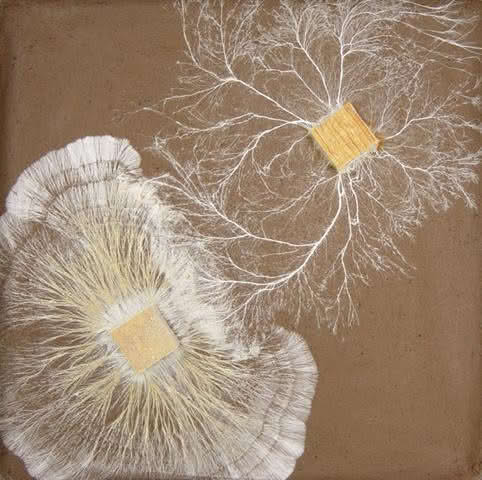
I will show how they ‘attack’ and ‘defend’ their territory by deploying an arsenal of chemicals at distance, and using these chemicals and other aggressive mechanisms following contact. I will also explain why we cannot live without fungi.
LOCATION:Sir Emrys Jones Lecture Theatre\, RAU\, GL7 6JS Cirencester\, Gloucestershire
GEO:51.70988500;-1.99498400
X-LOCATION-DISPLAYNAME:Royal Agricultural University - Sir Emrys Jones Lecture Theatre
X-ACCESS:1
X-HITS:47
X-COLOR:3366cc
X-SHOW-END-TIME:0
END:VEVENT
BEGIN:VEVENT
DTSTART;TZID=Europe/London:20171011T193000
DTEND;TZID=Europe/London:20171011T203000
UID:1BFD08B1-9F9C-414C-A572-BBAB6E610D5B
SUMMARY:‘Testing the Water’: Innovation and the management of Britain’s most precious resource
CREATED:20180721T104553Z
DTSTAMP:20180721T104553Z
URL:https://www.cirenscience.org.uk/events/lecture-programme/testing-the-water-innovation-and-the-management-of-britain-s-most-precious-resource
DESCRIPTION:PUBLIC LECTURE\NThe UK seems either regularly to be flooded, or experiencing economically-damaging droughts, and yet everyone complains that water bills are exorbitant whilst Local Authorities and the Environment Agency are incompetent. What’s the basis of the problem, and can technological innovation make our water systems more robust in the face of future climate uncertainty?\N
X-ALT-DESC;FMTTYPE=text/html:PUBLIC LECTURE
The UK seems either regularly to be flooded, or experiencing economically-damaging droughts, and yet everyone complains that water bills are exorbitant whilst Local Authorities and the Environment Agency are incompetent.
What’s the basis of the problem, and can technological innovation make our water systems more robust in the face of future climate uncertainty?
LOCATION:Stroud Road\, GL7 6JS Cirencester\, Gloucestershire
GEO:51.71142860;-1.99677610
X-LOCATION-DISPLAYNAME:Royal Agricultural University - Boutflour Hall
X-ACCESS:1
X-HITS:67
X-COLOR:3366cc
X-SHOW-END-TIME:0
END:VEVENT
BEGIN:VEVENT
DTSTART;TZID=Europe/London:20171108T193000
DTEND;TZID=Europe/London:20171108T203000
UID:CF748287-20E5-43EB-9658-E621B7BC0BC5
SUMMARY:Ecology at the Ends of the Earth
CREATED:20180721T104636Z
DTSTAMP:20180721T104636Z
URL:https://www.cirenscience.org.uk/events/lecture-programme/ecology-at-the-ends-of-the-earth
DESCRIPTION:Antarctica will be the main focus of this talk, but I will make some contrasts with the Arctic. Antarctica is the harshest terrestrial environment on the Earth and is often referred to as the highest, driest, oldest and coldest continent. Coldness is probably not very surprising, but dryness may be – the polar deserts of Antarctica are the Earth’s driest desert. Yet in this harsh and unforgiving environment, there are active biological community adapted to function and survive. Most of what we know about the biological communities in Antarctica has only been discovered in the past few decades, and the picture emerging is of a community dominated by micro-organisms and minute plants and animal living specialised lives responding to environmental factors at the limit of those that humans can appreciate.\N
X-ALT-DESC;FMTTYPE=text/html:Antarctica will be the main focus of this talk, but I will make some contrasts with the Arctic. Antarctica is the harshest terrestrial environment on the Earth and is often referred to as the highest, driest, oldest and coldest continent. Coldness is probably not very surprising, but dryness may be – the polar deserts of Antarctica are the Earth’s driest desert. Yet in this harsh and unforgiving environment, there are active biological community adapted to function and survive.
Most of what we know about the biological communities in Antarctica has only been discovered in the past few decades, and the picture emerging is of a community dominated by micro-organisms and minute plants and animal living specialised lives responding to environmental factors at the limit of those that humans can appreciate.
LOCATION:Sir Emrys Jones Lecture Theatre\, RAU\, GL7 6JS Cirencester\, Gloucestershire
GEO:51.70988500;-1.99498400
X-LOCATION-DISPLAYNAME:Royal Agricultural University - Sir Emrys Jones Lecture Theatre
X-ACCESS:1
X-HITS:48
X-COLOR:3366cc
X-SHOW-END-TIME:0
END:VEVENT
BEGIN:VEVENT
DTSTART;TZID=Europe/London:20171206T193000
DTEND;TZID=Europe/London:20171206T203000
UID:5A25445A-C90E-4E7E-9F3A-1B11DE9066E4
SUMMARY:Engineering Espionage: how technological innovation has shaped secret intelligence
CREATED:20180721T104720Z
DTSTAMP:20180721T104720Z
URL:https://www.cirenscience.org.uk/events/lecture-programme/engineering-espionage-how-technological-innovation-has-shaped-secret-intelligence
DESCRIPTION:The collection of secret intelligence pits the wits of the spies against those of their targets. During the course of the 20th century, this battle produced some remarkable pieces of innovation to overcome both the secrecy of the targets and the constraints of available technology. The talk will examine examples of this innovation, running from World War Two through the Cold War to the present day, covering imagery, signals intelligence and cyber warfare.\N
X-ALT-DESC;FMTTYPE=text/html:The collection of secret intelligence pits the wits of the spies against those of their targets. During the course of the 20th century, this battle produced some remarkable pieces of innovation to overcome both the secrecy of the targets and the constraints of available technology.
The talk will examine examples of this innovation, running from World War Two through the Cold War to the present day, covering imagery, signals intelligence and cyber warfare.
LOCATION:Sir Emrys Jones Lecture Theatre\, RAU\, GL7 6JS Cirencester\, Gloucestershire
GEO:51.70988500;-1.99498400
X-LOCATION-DISPLAYNAME:Royal Agricultural University - Sir Emrys Jones Lecture Theatre
X-ACCESS:1
X-HITS:49
X-COLOR:3366cc
X-SHOW-END-TIME:0
END:VEVENT
BEGIN:VEVENT
DTSTART;TZID=Europe/London:20180110T193000
DTEND;TZID=Europe/London:20180110T203000
UID:89E833B4-BCD0-462D-8882-AF73ACF1779C
SUMMARY:DNA- a victim of its own levels of sensitivity?
CREATED:20180721T104752Z
DTSTAMP:20180721T104752Z
URL:https://www.cirenscience.org.uk/events/lecture-programme/dna-a-victim-of-its-own-levels-of-sensitivity
DESCRIPTION:DNA is a well-established tool in the arsenal of the forensic biologist, used to establish from whom biological material, left at a scene of crime, originated. Since its first use in forensic casework in 1986, the levels of sensitivity and the power of discrimination of DNA profiling have increased substantially. Indeed, theoretically, it is now possible to yield successful results from a single cell, which contains only six picograms (6x10-12g) of DNA. This lecture will look at some of the challenges generated by this increased level of sensitivity.\N
X-ALT-DESC;FMTTYPE=text/html:DNA is a well-established tool in the arsenal of the forensic biologist, used to establish from whom biological material, left at a scene of crime, originated.
Since its first use in forensic casework in 1986, the levels of sensitivity and the power of discrimination of DNA profiling have increased substantially. Indeed, theoretically, it is now possible to yield successful results from a single cell, which contains only six picograms (6x10-12g) of DNA.
This lecture will look at some of the challenges generated by this increased level of sensitivity.
LOCATION:Sir Emrys Jones Lecture Theatre\, RAU\, GL7 6JS Cirencester\, Gloucestershire
GEO:51.70988500;-1.99498400
X-LOCATION-DISPLAYNAME:Royal Agricultural University - Sir Emrys Jones Lecture Theatre
X-ACCESS:1
X-HITS:55
X-COLOR:3366cc
X-SHOW-END-TIME:0
END:VEVENT
BEGIN:VEVENT
DTSTART;TZID=Europe/London:20180214T193000
DTEND;TZID=Europe/London:20180214T203000
UID:7E19D1DE-6B78-4208-9E5F-4338268B8B85
SUMMARY:How big is my data?
CREATED:20180721T104842Z
DTSTAMP:20180721T104842Z
URL:https://www.cirenscience.org.uk/events/lecture-programme/how-big-is-my-data
DESCRIPTION:The WHEELER Lecture\NThis lecture on a Mathematical topic is named the Wheeler Lecture in recognition of the contribution of Dr Roger and Dorothy Wheeler to the Society, through years of work on the committee, and their financial support. Prof Budd will talk about the analysis of data relating to Dating websites!\N
X-ALT-DESC;FMTTYPE=text/html:The WHEELER Lecture
This lecture on a Mathematical topic is named the Wheeler Lecture in recognition of the contribution of Dr Roger and Dorothy Wheeler to the Society, through years of work on the committee, and their financial support.
Prof Budd will talk about the analysis of data relating to Dating websites!
LOCATION:Sir Emrys Jones Lecture Theatre\, RAU\, GL7 6JS Cirencester\, Gloucestershire
GEO:51.70988500;-1.99498400
X-LOCATION-DISPLAYNAME:Royal Agricultural University - Sir Emrys Jones Lecture Theatre
X-ACCESS:1
X-HITS:44
X-COLOR:3366cc
X-SHOW-END-TIME:0
END:VEVENT
BEGIN:VEVENT
DTSTART;TZID=Europe/London:20180314T193000
DTEND;TZID=Europe/London:20180314T203000
UID:497BA14B-8023-431D-B29A-BDFE53A56BAF
SUMMARY:Catalysts: From Biofuels to Self-Healing Aeroplanes
CREATED:20180721T104920Z
DTSTAMP:20180721T104920Z
URL:https://www.cirenscience.org.uk/events/lecture-programme/catalysts-from-biofuels-to-self-healing-aeroplanes
DESCRIPTION:Jointly with RSC
X-ALT-DESC;FMTTYPE=text/html:Jointly with RSC
LOCATION:Sir Emrys Jones Lecture Theatre\, RAU\, GL7 6JS Cirencester\, Gloucestershire
GEO:51.70988500;-1.99498400
X-LOCATION-DISPLAYNAME:Royal Agricultural University - Sir Emrys Jones Lecture Theatre
X-ACCESS:1
X-HITS:41
X-COLOR:3366cc
X-SHOW-END-TIME:0
END:VEVENT
BEGIN:VEVENT
DTSTART;TZID=Europe/London:20180411T193000
DTEND;TZID=Europe/London:20180411T203000
UID:97CCED02-54AD-4ADA-843F-681B46C55191
SUMMARY:Rolls Royce Aero
CREATED:20180721T105009Z
DTSTAMP:20180721T105009Z
URL:https://www.cirenscience.org.uk/events/lecture-programme/rolls-royce-aero
DESCRIPTION:jointly with CAHS\NMy talk will trace the development of the Rolls Royce aero engine from the Hawk piston engine to the Trent jet. The piston engines were named after birds of prey and the jets were named after rivers.\NThe Bristol connection will be explored from the manufactureof RR engines in WW1 to the RR take-over of Bristol Siddeley in the 60's'.
X-ALT-DESC;FMTTYPE=text/html:jointly with CAHS
My talk will trace the development of the Rolls Royce aero engine from the Hawk piston engine to the Trent jet. The piston engines were named after birds of prey and the jets were named after rivers.
The Bristol connection will be explored from the manufactureof RR engines in WW1 to the RR take-over of Bristol Siddeley in the 60's'.
LOCATION:Ashcroft Road 21\, GL7 1RA Cirencester\, Gloucestershire
GEO:51.71539390;-1.96728510
X-LOCATION-DISPLAYNAME:Ashcroft Church
X-ACCESS:1
X-HITS:50
X-COLOR:3366cc
X-SHOW-END-TIME:0
END:VEVENT
BEGIN:VEVENT
DTSTART;TZID=Europe/London:20180509T193000
DTEND;TZID=Europe/London:20180509T203000
UID:C49B35CF-B192-4D12-8F21-0EBE991B5A10
SUMMARY:Nitrogen and humanity: a perpetual crisis
CREATED:20180721T105125Z
DTSTAMP:20180721T105125Z
URL:https://www.cirenscience.org.uk/events/lecture-programme/nitrogen-and-humanity-a-perpetual-crisis
DESCRIPTION:Nitrogen is vitally important in raising agricultural production but, the drive for yield alone, has led to very high application rates of nitrates at the farm level resulting in groundwater contamination and eutrophication of rivers, lakes and estuaries. Reactive nitrogen in the biosphere has doubled from pre-industrial levels, primarily through massive inputs into agriculture, and Nitrate Vulnerable Zones now cover 55% of England’s landscape. The atmospheric concentration of nitrous oxide, which is around 300-times more potent than CO2 as a greenhouse gas, continues to rise each year.\NThese are problems of regional, national and international scope that require urgent attention and are at the forefront of the grand challenges for UK and global science. An alternative to added nitrogenous fertilizer is biological nitrogen fixation from legumes. Understanding the biochemistry and genetics of how bacteria, called rhizobia, infect legumes to induce formation of N2-fixing nodules is a focus of our group.\NHow we might deploy them more effectively to help ameliorate the nitrogen crisis will be discussed.
X-ALT-DESC;FMTTYPE=text/html:Nitrogen is vitally important in raising agricultural production but, the drive for yield alone, has led to very high application rates of nitrates at the farm level resulting in groundwater contamination and eutrophication of rivers, lakes and estuaries. Reactive nitrogen in the biosphere has doubled from pre-industrial levels, primarily through massive inputs into agriculture, and Nitrate Vulnerable Zones now cover 55% of England’s landscape. The atmospheric concentration of nitrous oxide, which is around 300-times more potent than CO2 as a greenhouse gas, continues to rise each year.
These are problems of regional, national and international scope that require urgent attention and are at the forefront of the grand challenges for UK and global science. An alternative to added nitrogenous fertilizer is biological nitrogen fixation from legumes. Understanding the biochemistry and genetics of how bacteria, called rhizobia, infect legumes to induce formation of N2-fixing nodules is a focus of our group.
How we might deploy them more effectively to help ameliorate the nitrogen crisis will be discussed.
LAST-MODIFIED:20190609T110700Z
SEQUENCE:27908135
LOCATION:Sir Emrys Jones Lecture Theatre\, RAU\, GL7 6JS Cirencester\, Gloucestershire
GEO:51.70988500;-1.99498400
X-LOCATION-DISPLAYNAME:Royal Agricultural University - Sir Emrys Jones Lecture Theatre
X-ACCESS:1
X-HITS:50
X-COLOR:3366cc
X-SHOW-END-TIME:0
END:VEVENT
BEGIN:VEVENT
DTSTART;TZID=Europe/London:20180613T193000
DTEND;TZID=Europe/London:20180613T203000
UID:3997FA47-50BE-4442-B34F-068873646E54
SUMMARY:Volcano Monitoring with Citizen Scientists
CREATED:20180721T105216Z
DTSTAMP:20180721T105216Z
URL:https://www.cirenscience.org.uk/events/lecture-programme/volcano-monitoring-with-citizen-scientists
DESCRIPTION:Our interdisciplinary study is based at Masaya volcano (Nicaragua) because of the varying environmental conditions at Masaya seen through time and the persistent, low level of eruptive activity. This project seeks to track and quantify the volatile flux at Masaya from the source magma, through the volcanic plume, to the local environmental sinks in the soil and water, and the flora and fauna.\NThis work builds on a project that began in 1993 and already represents a uniquely long and continuous data set of integrated volcanological and ecological surveys. A feature of this work is that it has been carried out by Citizen Scientists. The use of ‘non specialist’ people in the field has been highly effective, even when it comes to using high tech equipment. This is because the volunteers bring expertise to the project which the core science team don’t necessarily have.\NThis talk will cover the work of the Citizen Scientists and our latest results.
X-ALT-DESC;FMTTYPE=text/html:Our interdisciplinary study is based at Masaya volcano (Nicaragua) because of the varying environmental conditions at Masaya seen through time and the persistent, low level of eruptive activity. This project seeks to track and quantify the volatile flux at Masaya from the source magma, through the volcanic plume, to the local environmental sinks in the soil and water, and the flora and fauna.
This work builds on a project that began in 1993 and already represents a uniquely long and continuous data set of integrated volcanological and ecological surveys. A feature of this work is that it has been carried out by Citizen Scientists. The use of ‘non specialist’ people in the field has been highly effective, even when it comes to using high tech equipment. This is because the volunteers bring expertise to the project which the core science team don’t necessarily have.
This talk will cover the work of the Citizen Scientists and our latest results.
LAST-MODIFIED:20190609T110632Z
SEQUENCE:27908056
LOCATION:Sir Emrys Jones Lecture Theatre\, RAU\, GL7 6JS Cirencester\, Gloucestershire
GEO:51.70988500;-1.99498400
X-LOCATION-DISPLAYNAME:Royal Agricultural University - Sir Emrys Jones Lecture Theatre
X-ACCESS:1
X-HITS:62
X-COLOR:3366cc
X-SHOW-END-TIME:0
END:VEVENT
BEGIN:VEVENT
DTSTART;TZID=Europe/London:20180905T193000
DTEND;TZID=Europe/London:20180905T203000
UID:600F311A-EB2E-4BAE-B492-F001668896DC
SUMMARY:Fiat Lux – Using Light to Treat Disease - Note the DATE!
CREATED:20180721T105304Z
DTSTAMP:20180721T105304Z
URL:https://www.cirenscience.org.uk/events/lecture-programme/fiat-lux-using-light-to-treat-disease
DESCRIPTION:Professor Hugh Barr of Gloucester Royal Hospital & Cranfield University Note Date!
X-ALT-DESC;FMTTYPE=text/html:Professor Hugh Barr of Gloucester Royal Hospital & Cranfield University Note Date!
LAST-MODIFIED:20190609T110356Z
SEQUENCE:27907852
LOCATION:Stroud Road\, GL7 6JS Cirencester\, Gloucestershire
GEO:51.71142860;-1.99677610
X-LOCATION-DISPLAYNAME:Royal Agricultural University - Sir Emrys Jones Centre
X-ACCESS:1
X-HITS:117
X-COLOR:3366cc
X-SHOW-END-TIME:0
END:VEVENT
BEGIN:VEVENT
DTSTART;TZID=Europe/London:20181010T193000
DTEND;TZID=Europe/London:20181010T203000
UID:230560E2-81C5-4648-819E-DFE4A1807323
SUMMARY:The Great Western Electrification– the Biggest Change Since Brunel
CREATED:20180721T105335Z
DTSTAMP:20180721T105335Z
URL:https://www.cirenscience.org.uk/events/lecture-programme/the-great-western-electrification-the-biggest-change-since-brunel
LAST-MODIFIED:20180907T101332Z
SEQUENCE:4144797
LOCATION:Sir Emrys Jones Lecture Theatre\, RAU\, GL7 6JS Cirencester\, Gloucestershire
GEO:51.70988500;-1.99498400
X-LOCATION-DISPLAYNAME:Royal Agricultural University - Sir Emrys Jones Lecture Theatre
X-ACCESS:1
X-HITS:68
X-COLOR:3366cc
X-SHOW-END-TIME:0
END:VEVENT
BEGIN:VEVENT
DTSTART;TZID=Europe/London:20181114T193000
DTEND;TZID=Europe/London:20181114T203000
UID:57071266-4AD3-4B42-8637-3F10EA4CBA4B
SUMMARY:Silk – Its Source, Chemistry and Uses for the Benefit of Humanity
CREATED:20180721T105420Z
DTSTAMP:20180721T105420Z
URL:https://www.cirenscience.org.uk/events/lecture-programme/silk-its-source-chemistry-and-uses-for-the-benefit-of-humanity
LOCATION:Sir Emrys Jones Lecture Theatre\, RAU\, GL7 6JS Cirencester\, Gloucestershire
GEO:51.70988500;-1.99498400
X-LOCATION-DISPLAYNAME:Royal Agricultural University - Sir Emrys Jones Lecture Theatre
X-ACCESS:1
X-HITS:563
X-COLOR:3366cc
X-SHOW-END-TIME:0
END:VEVENT
BEGIN:VEVENT
DTSTART;TZID=Europe/London:20181212T193000
DTEND;TZID=Europe/London:20181212T203000
UID:D9002D8E-FFFA-4C1A-8292-AD3C3FEBE8FD
SUMMARY:Metals in Medicine – the Use of Stents
CREATED:20180721T105448Z
DTSTAMP:20180721T105448Z
URL:https://www.cirenscience.org.uk/events/lecture-programme/metals-in-medicine-the-use-of-stents
LAST-MODIFIED:20190609T110441Z
SEQUENCE:27907793
LOCATION:Sir Emrys Jones Lecture Theatre\, RAU\, GL7 6JS Cirencester\, Gloucestershire
GEO:51.70988500;-1.99498400
X-LOCATION-DISPLAYNAME:Royal Agricultural University - Sir Emrys Jones Lecture Theatre
X-ACCESS:1
X-HITS:690
X-COLOR:3366cc
X-SHOW-END-TIME:0
END:VEVENT
BEGIN:VEVENT
DTSTART;TZID=Europe/London:20190109T193000
DTEND;TZID=Europe/London:20190109T203000
UID:101905B1-EC0A-453E-A8B4-7FA8A06671E4
SUMMARY:The Rosetta Mission, the Link Between Science and Technology
CREATED:20180721T105547Z
DTSTAMP:20180721T105547Z
URL:https://www.cirenscience.org.uk/events/lecture-programme/the-rosetta-mission-the-link-between-science-and-technology
LAST-MODIFIED:20190609T110518Z
SEQUENCE:27907771
LOCATION:Sir Emrys Jones Lecture Theatre\, RAU\, GL7 6JS Cirencester\, Gloucestershire
GEO:51.70988500;-1.99498400
X-LOCATION-DISPLAYNAME:Royal Agricultural University - Sir Emrys Jones Lecture Theatre
X-ACCESS:1
X-HITS:689
X-COLOR:3366cc
X-SHOW-END-TIME:0
END:VEVENT
BEGIN:VEVENT
DTSTART;TZID=Europe/London:20190213T193000
DTEND;TZID=Europe/London:20190213T203000
UID:9ADE77D4-785B-47AA-8044-CFAA3EBA5214
SUMMARY:Handling Wicked Problems - The emergence of a holistically-oriented science and the implications for hard and soft technology development and selection.
CREATED:20180721T105630Z
DTSTAMP:20180721T105630Z
URL:https://www.cirenscience.org.uk/events/lecture-programme/improving-the-nutritional-value-of-staple-foods
DESCRIPTION:Christopher Cooke from the 3LM Savory network will talk about\NHandling Wicked Problems - The emergence of a holistically-oriented science and the implications for hard and soft technology development and selection.
X-ALT-DESC;FMTTYPE=text/html:Christopher Cooke from the 3LM Savory network will talk about
Handling Wicked Problems - The emergence of a holistically-oriented science and the implications for hard and soft technology development and selection.
LAST-MODIFIED:20190203T221455Z
SEQUENCE:17061505
LOCATION:Sir Emrys Jones Lecture Theatre\, RAU\, GL7 6JS Cirencester\, Gloucestershire
GEO:51.70988500;-1.99498400
X-LOCATION-DISPLAYNAME:Royal Agricultural University - Sir Emrys Jones Lecture Theatre
X-ACCESS:1
X-HITS:751
X-COLOR:3366cc
X-SHOW-END-TIME:0
END:VEVENT
BEGIN:VEVENT
DTSTART;TZID=Europe/London:20190306T193000
DTEND;TZID=Europe/London:20190306T210000
UID:80DC1499-FCD6-49F4-AA44-9115E5033B6B
SUMMARY:Waiting for the Spring – Can Plants Contribute to Today’s Healthcare?
CREATED:20180721T105657Z
DTSTAMP:20180721T105657Z
URL:https://www.cirenscience.org.uk/events/lecture-programme/waiting-for-the-spring-can-plants-contribute-to-today-s-healthcare
DESCRIPTION:PLEASE NOTE THE NEW DATE! This has been changed due to speaker availability
X-ALT-DESC;FMTTYPE=text/html:PLEASE NOTE THE NEW DATE! This has been changed due to speaker availability
LAST-MODIFIED:20190609T110555Z
SEQUENCE:27907738
LOCATION:Sir Emrys Jones Lecture Theatre\, RAU\, GL7 6JS Cirencester\, Gloucestershire
GEO:51.70988500;-1.99498400
X-LOCATION-DISPLAYNAME:Royal Agricultural University - Sir Emrys Jones Lecture Theatre
X-ACCESS:1
X-HITS:490
X-COLOR:3366cc
X-SHOW-END-TIME:0
END:VEVENT
BEGIN:VEVENT
DTSTART;TZID=Europe/London:20190410T193000
DTEND;TZID=Europe/London:20190410T203000
UID:2C52717F-552E-4541-A3B2-96480D625AF9
SUMMARY:The Cheltenham Branch of Mr. Brunel’s Great West Railway
CREATED:20180721T105917Z
DTSTAMP:20180721T105917Z
URL:https://www.cirenscience.org.uk/events/lecture-programme/the-cheltenham-branch-of-mr-brunel-s-great-west-railway
LOCATION:Sir Emrys Jones Lecture Theatre\, RAU\, GL7 6JS Cirencester\, Gloucestershire
GEO:51.70988500;-1.99498400
X-LOCATION-DISPLAYNAME:Royal Agricultural University - Sir Emrys Jones Lecture Theatre
X-ACCESS:1
X-HITS:793
X-COLOR:3366cc
X-SHOW-END-TIME:0
END:VEVENT
BEGIN:VEVENT
DTSTART;TZID=Europe/London:20190508T193000
DTEND;TZID=Europe/London:20190508T203000
UID:1A5BC1A3-E58F-446C-8E7C-7B8ADA88D4C3
SUMMARY:The Blockchain and Crypto-Currencies - Everybody’s Heard of Them, but How do They Work?
CREATED:20180721T105942Z
DTSTAMP:20180721T105942Z
URL:https://www.cirenscience.org.uk/events/lecture-programme/the-blockchain-and-crypto-currencies-everybody-s-heard-of-them-but-how-do-they-work
LAST-MODIFIED:20190609T110232Z
SEQUENCE:27907370
LOCATION:Sir Emrys Jones Lecture Theatre\, RAU\, GL7 6JS Cirencester\, Gloucestershire
GEO:51.70988500;-1.99498400
X-LOCATION-DISPLAYNAME:Royal Agricultural University - Sir Emrys Jones Lecture Theatre
X-ACCESS:1
X-HITS:759
X-COLOR:3366cc
X-SHOW-END-TIME:0
END:VEVENT
BEGIN:VEVENT
DTSTART;TZID=Europe/London:20190612T193000
DTEND;TZID=Europe/London:20190612T203000
UID:241A9BC2-E93E-42FB-A777-C84ECE9AC7F7
SUMMARY:Flying and Sailing for a Living
CREATED:20180721T110020Z
DTSTAMP:20180721T110020Z
URL:https://www.cirenscience.org.uk/events/lecture-programme/flying-and-sailing-for-a-living
DESCRIPTION:\NAerobatic display at RAF Valley - flying a Folland Gnat\N \N\NAdmirals Cup, helming Inshore Race & Concours D'Elegance winner "Big Apple"
X-ALT-DESC;FMTTYPE=text/html: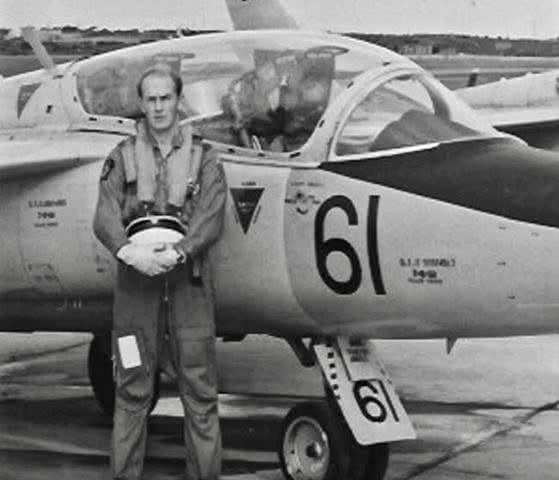
Aerobatic display at RAF Valley - flying a Folland Gnat
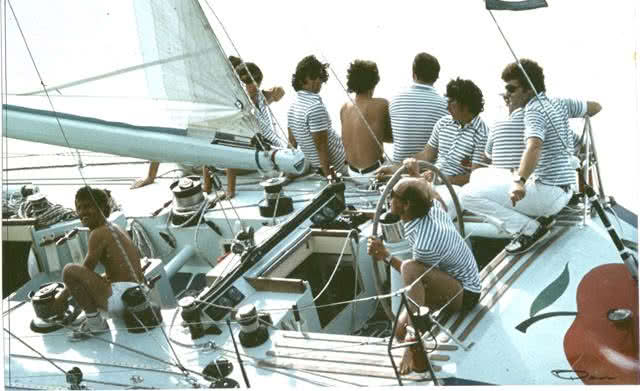
Admirals Cup, helming Inshore Race & Concours D'Elegance winner "Big Apple"
LAST-MODIFIED:20190516T081937Z
SEQUENCE:25823957
LOCATION:Sir Emrys Jones Lecture Theatre\, RAU\, GL7 6JS Cirencester\, Gloucestershire
GEO:51.70988500;-1.99498400
X-LOCATION-DISPLAYNAME:Royal Agricultural University - Sir Emrys Jones Lecture Theatre
X-ACCESS:1
X-HITS:900
X-COLOR:3366cc
X-SHOW-END-TIME:0
END:VEVENT
BEGIN:VEVENT
DTSTART;TZID=Europe/London:20190911T193000
DTEND;TZID=Europe/London:20190911T210000
UID:652838B3-C2BC-4C5B-8989-1C5E3EF819A5
SUMMARY:Bless you! All fall down. The secret life of a devastating virus
CREATED:20190526T155451Z
DTSTAMP:20190526T155451Z
URL:https://www.cirenscience.org.uk/events/lecture-programme/bless-you-all-fall-down-the-secret-life-of-a-devastating-virus
LAST-MODIFIED:20190614T195352Z
SEQUENCE:1655941
LOCATION:Sir Emrys Jones Lecture Theatre\, RAU\, GL7 6JS Cirencester\, Gloucestershire
GEO:51.70988500;-1.99498400
X-LOCATION-DISPLAYNAME:Royal Agricultural University - Sir Emrys Jones Lecture Theatre
X-ACCESS:1
X-HITS:954
X-COLOR:3366cc
X-SHOW-END-TIME:0
END:VEVENT
BEGIN:VEVENT
DTSTART;TZID=Europe/London:20191009T193000
DTEND;TZID=Europe/London:20191009T210000
UID:8C910B2C-3003-4073-ACC3-464EAD340DCE
SUMMARY:The Highs and Lows of Auto-transformer Feeding on the British Railways.
CREATED:20190526T155659Z
DTSTAMP:20190526T155659Z
URL:https://www.cirenscience.org.uk/events/lecture-programme/the-highs-and-lows-of-auto-transformer-feeding-on-the-british-railways
LAST-MODIFIED:20190614T195828Z
SEQUENCE:1656089
LOCATION:Sir Emrys Jones Lecture Theatre\, RAU\, GL7 6JS Cirencester\, Gloucestershire
GEO:51.70988500;-1.99498400
X-LOCATION-DISPLAYNAME:Royal Agricultural University - Sir Emrys Jones Lecture Theatre
X-ACCESS:1
X-HITS:827
X-COLOR:3366cc
X-SHOW-END-TIME:0
END:VEVENT
BEGIN:VEVENT
DTSTART;TZID=Europe/London:20191113T193000
DTEND;TZID=Europe/London:20191113T210000
UID:BDB3323F-59D7-4762-87E8-EA40FFB0CE7E
SUMMARY:Multiple Sclerosis: Natural History and Future Prospects
CREATED:20190526T155957Z
DTSTAMP:20190526T155957Z
URL:https://www.cirenscience.org.uk/events/lecture-programme/multiple-sclerosis-natural-history-and-future-prospects
LAST-MODIFIED:20190526T163601Z
SEQUENCE:2164
LOCATION:Sir Emrys Jones Lecture Theatre\, RAU\, GL7 6JS Cirencester\, Gloucestershire
GEO:51.70988500;-1.99498400
X-LOCATION-DISPLAYNAME:Royal Agricultural University - Sir Emrys Jones Lecture Theatre
X-ACCESS:1
X-HITS:1023
X-COLOR:3366cc
X-SHOW-END-TIME:0
END:VEVENT
BEGIN:VEVENT
DTSTART;TZID=Europe/London:20191211T193000
DTEND;TZID=Europe/London:20191211T210000
UID:3BE91F47-4F16-49A8-92B1-EF19A0BF9917
SUMMARY:Artful Computing
CREATED:20190526T160120Z
DTSTAMP:20190526T160120Z
URL:https://www.cirenscience.org.uk/events/lecture-programme/artful-computing
DESCRIPTION:
X-ALT-DESC;FMTTYPE=text/html:
LAST-MODIFIED:20191201T205106Z
SEQUENCE:16346986
LOCATION:Sir Emrys Jones Lecture Theatre\, RAU\, GL7 6JS Cirencester\, Gloucestershire
GEO:51.70988500;-1.99498400
X-LOCATION-DISPLAYNAME:Royal Agricultural University - Sir Emrys Jones Lecture Theatre
X-ACCESS:1
X-HITS:1173
X-COLOR:3366cc
X-SHOW-END-TIME:0
END:VEVENT
BEGIN:VEVENT
DTSTART;TZID=Europe/London:20200108T193000
DTEND;TZID=Europe/London:20200108T210000
UID:8EE25584-C962-4922-AF6F-44359CD9E21D
SUMMARY:Nature, Nuclear Energy and LIfe
CREATED:20190526T160603Z
DTSTAMP:20190526T160603Z
URL:https://www.cirenscience.org.uk/events/lecture-programme/nature-nuclear-energy-and-life
LAST-MODIFIED:20190614T200351Z
SEQUENCE:1655868
LOCATION:Sir Emrys Jones Lecture Theatre\, RAU\, GL7 6JS Cirencester\, Gloucestershire
GEO:51.70988500;-1.99498400
X-LOCATION-DISPLAYNAME:Royal Agricultural University - Sir Emrys Jones Lecture Theatre
X-ACCESS:1
X-HITS:962
X-COLOR:3366cc
X-SHOW-END-TIME:0
END:VEVENT
BEGIN:VEVENT
DTSTART;TZID=Europe/London:20200212T193000
DTEND;TZID=Europe/London:20200212T210000
UID:9F0BC593-9D01-4D31-AE50-6D6A98ACE8F8
SUMMARY:Why Measurement Matters and the Redefinition of Base SI units. The Wheeler Lecture
CREATED:20190526T161324Z
DTSTAMP:20190526T161324Z
URL:https://www.cirenscience.org.uk/events/lecture-programme/why-measurement-matters-and-the-redefinition-of-base-si-units
LAST-MODIFIED:20190526T163852Z
SEQUENCE:1528
LOCATION:Sir Emrys Jones Lecture Theatre\, RAU\, GL7 6JS Cirencester\, Gloucestershire
GEO:51.70988500;-1.99498400
X-LOCATION-DISPLAYNAME:Royal Agricultural University - Sir Emrys Jones Lecture Theatre
X-ACCESS:1
X-HITS:2157
X-COLOR:3366cc
X-SHOW-END-TIME:0
END:VEVENT
BEGIN:VEVENT
DTSTART;TZID=Europe/London:20200311T193000
DTEND;TZID=Europe/London:20200311T210000
UID:377BBA7C-0A25-48E4-84F8-9A3A6AFA470C
SUMMARY:Marine Plastics - from Local to Global – joint lecture with RSC
CREATED:20190526T161641Z
DTSTAMP:20190526T161641Z
URL:https://www.cirenscience.org.uk/events/lecture-programme/marine-plastics-from-local-to-global-joint-lecture-with-rcs
LAST-MODIFIED:20200130T100356Z
SEQUENCE:21491235
LOCATION:Sir Emrys Jones Lecture Theatre\, RAU\, GL7 6JS Cirencester\, Gloucestershire
GEO:51.70988500;-1.99498400
X-LOCATION-DISPLAYNAME:Royal Agricultural University - Sir Emrys Jones Lecture Theatre
X-ACCESS:1
X-HITS:1168
X-COLOR:3366cc
X-SHOW-END-TIME:0
END:VEVENT
BEGIN:VEVENT
DTSTART;TZID=Europe/London:20200408T193000
DTEND;TZID=Europe/London:20200408T210000
UID:4D747F3A-B146-4215-8ADA-8892A3369A17
SUMMARY:POSTPONED to next programme - Reconstructing Pre-historic Landscapes helped by Snails, Soils and Sediments - Joint lecture with CAHS
CREATED:20190526T162751Z
DTSTAMP:20190526T162751Z
URL:https://www.cirenscience.org.uk/events/lecture-programme/reconstructing-pre-historic-landscapes-helped-by-snails-soils-and-sediments
DESCRIPTION:This lecture has been postponed until an opportunity arises to present it, hopefully in the next programme of lectures.\NNOTE - Ashcroft Centre
X-ALT-DESC;FMTTYPE=text/html:This lecture has been postponed until an opportunity arises to present it, hopefully in the next programme of lectures.
NOTE - Ashcroft Centre
LAST-MODIFIED:20200315T182428Z
SEQUENCE:25408597
LOCATION:21 Ashcroft Road\, GL7 1RA Cirencester
GEO:51.71495092;-1.96828209
X-LOCATION-DISPLAYNAME:***NOTE: Ashcroft Centre ***
X-ACCESS:1
X-HITS:775
X-COLOR:3366cc
X-SHOW-END-TIME:0
END:VEVENT
BEGIN:VEVENT
DTSTART;TZID=Europe/London:20200513T193000
DTEND;TZID=Europe/London:20200513T210000
UID:73DB514D-185D-4A66-B9B4-652D7992934A
SUMMARY:Black Holes
CREATED:20190526T162954Z
DTSTAMP:20190526T162954Z
URL:https://www.cirenscience.org.uk/events/lecture-programme/black-holes
LOCATION:Sir Emrys Jones Lecture Theatre\, RAU\, GL7 6JS Cirencester\, Gloucestershire
GEO:51.70988500;-1.99498400
X-LOCATION-DISPLAYNAME:Royal Agricultural University - Sir Emrys Jones Lecture Theatre
X-ACCESS:1
X-HITS:585
X-COLOR:3366cc
X-SHOW-END-TIME:0
END:VEVENT
BEGIN:VEVENT
DTSTART;TZID=Europe/London:20200909T193000
DTEND;TZID=Europe/London:20200909T210000
UID:54920AD5-30C0-4D6E-B574-41C10534E842
SUMMARY:Radio Telescopes: How they work and what they can do
CREATED:20200906T141826Z
DTSTAMP:20200906T141826Z
URL:https://www.cirenscience.org.uk/events/lecture-programme/radio-telescopes-how-they-work-and-what-they-can-do
DESCRIPTION:Radio astronomy revolutionised our view of the Universe in the later half of the 20th Century, ushering in the era of “high-energy astrophysics” and leading to discoveries of quasars, pulsar and culminating recently with a remarkable image of the event horizon of a super-massive black hole, a feat roughly equivalent to seeing the detail on a 50 pence coin resting on the Moon’s surface. The science is a “gee-whiz” as it gets and always provides easy wins in popular talks, but the technology behind these discoveries is just as extraordinary, even though little celebrated and has surprising connections to our everyday life. Dr McEllin will talk about how the constant exploitation of the latest techniques in electronics, computing and software has maintained a pace of discoveries that has every prospect of again revolutionising our view of the Universe in the next couple of decades.\N \N \NDr Michael McEllin FInstP FRAS CEng trained in theoretical physics at Cambridge later spending 37 years as a computational physicist in the nuclear industry after completing a PhD on The Structure of Extragalactic Radio Sources, working in Sir Martin Ryle’s Radio Astronomy Group at the Cavendish Laboratory and using the most advanced telescopes then available. He has maintained his interest in astronomy by mentoring a range of science projects in local schools over many years.
X-ALT-DESC;FMTTYPE=text/html:Radio astronomy revolutionised our view of the Universe in the later half of the 20th Century, ushering in the era of “high-energy astrophysics” and leading to discoveries of quasars, pulsar and culminating recently with a remarkable image of the event horizon of a super-massive black hole, a feat roughly equivalent to seeing the detail on a 50 pence coin resting on the Moon’s surface. The science is a “gee-whiz” as it gets and always provides easy wins in popular talks, but the technology behind these discoveries is just as extraordinary, even though little celebrated and has surprising connections to our everyday life. Dr McEllin will talk about how the constant exploitation of the latest techniques in electronics, computing and software has maintained a pace of discoveries that has every prospect of again revolutionising our view of the Universe in the next couple of decades.
Dr Michael McEllin FInstP FRAS CEng trained in theoretical physics at Cambridge later spending 37 years as a computational physicist in the nuclear industry after completing a PhD on The Structure of Extragalactic Radio Sources, working in Sir Martin Ryle’s Radio Astronomy Group at the Cavendish Laboratory and using the most advanced telescopes then available. He has maintained his interest in astronomy by mentoring a range of science projects in local schools over many years.
X-ACCESS:1
X-HITS:153
X-COLOR:3366cc
X-SHOW-END-TIME:0
END:VEVENT
BEGIN:VEVENT
DTSTART;TZID=Europe/London:20201014T193000
DTEND;TZID=Europe/London:20201014T210000
UID:901CBAB6-FFEE-4D39-8767-430598CEA1AD
SUMMARY:The Antikythera Mechanism of the Ancient Orrary of Rhodes
CREATED:20190526T163121Z
DTSTAMP:20190526T163121Z
URL:https://www.cirenscience.org.uk/events/lecture-programme/the-antikythera-mechanism-of-the-ancient-orrary-found-off-the-coast-of-rhodes
DESCRIPTION:The Antikythera Mechanism was discovered by Symiote sponge divers in 1900 off the Greek island of Antikythera between the Greek mainland and Crete. Subsequent study of the 82 known fragments revealed details of some 30 gears in a compact mechanism dating to around 70BC, and further analysis showed that it was the oldest known astronomical computer which could calculate lunar and solar eclipses as well as the planetary positions. \NA BBC documentary on the mechanism prompted my interest, and led to me reading a scientific paper that proposed a scheme for the overall mechanism’s construction and functionality including an epicyclic gearbox with “pin-in-slot” mechanism to show planetary motion including retrograde motion. As this was relatively complex, I decided to generate a CAD model of the device which then led to me building a modern reproduction of all the main parts in an exploded form so that the mechanism could be seen working in all of its complexity.\NThis presentation aims to describe in outline the lunar, solar and planetary movements that the mechanism tried to model and then show how this was implemented in both the original device and my modern reproduction.\N (This talk was due to be given in June 2020, but has been delayed by COVID. It will now be presented on our Zoom channel 912 0723 6181)
X-ALT-DESC;FMTTYPE=text/html:The Antikythera Mechanism was discovered by Symiote sponge divers in 1900 off the Greek island of Antikythera between the Greek mainland and Crete. Subsequent study of the 82 known fragments revealed details of some 30 gears in a compact mechanism dating to around 70BC, and further analysis showed that it was the oldest known astronomical computer which could calculate lunar and solar eclipses as well as the planetary positions.
A BBC documentary on the mechanism prompted my interest, and led to me reading a scientific paper that proposed a scheme for the overall mechanism’s construction and functionality including an epicyclic gearbox with “pin-in-slot” mechanism to show planetary motion including retrograde motion. As this was relatively complex, I decided to generate a CAD model of the device which then led to me building a modern reproduction of all the main parts in an exploded form so that the mechanism could be seen working in all of its complexity.
This presentation aims to describe in outline the lunar, solar and planetary movements that the mechanism tried to model and then show how this was implemented in both the original device and my modern reproduction.
(This talk was due to be given in June 2020, but has been delayed by COVID. It will now be presented on our Zoom channel 912 0723 6181)
LAST-MODIFIED:20200929T122146Z
SEQUENCE:42493825
LOCATION:Market Place\, GL7 Cirencester\, England
GEO:51.71695510;-1.96667150
X-LOCATION-DISPLAYNAME:& CSTS Zoom Channel ID 912 0723 6181
X-ACCESS:1
X-HITS:1583
X-COLOR:3366cc
X-SHOW-END-TIME:0
END:VEVENT
BEGIN:VEVENT
DTSTART;TZID=Europe/London:20201111T193000
DTEND;TZID=Europe/London:20201111T210000
UID:28E5D649-70BE-457C-834E-308D4287B4B7
SUMMARY:Air Pollution and Health
CREATED:20201031T135004Z
DTSTAMP:20201031T135004Z
URL:https://www.cirenscience.org.uk/events/lecture-programme/air-pollution-and-health
DESCRIPTION:Air Pollution and Health\NIn spite of the Covid crisis, the effects of air pollution on our health can still make the headlines. Only this week (October 21st) we learn that polluted air kills half a million babies a year across the globe; and that air pollution is the fourth highest risk factor for premature death, involved in over 6 million deaths a year worldwide. In the UK, 40,000 deaths a year are attributed to air pollution. In this lecture I will explore the science behind these values. How do we estimate all this mortality and what are the uncertainties? What pollutants are responsible and what can we do about them? Are things getting better or worse? What political obstacles are there in the way of improvement? And inevitably, since we can’t ignore the present situation, does air pollution affect the response to Covid-19? And what does the reduction in economic activity due to lockdowns tell us about pollution sources?\NAs our understanding of air pollution has evolved it has generated new insights not only about the natural environment but about the human body itself, and I hope to share some of these with you in this talk.\N \NThe Lecturer\NAfter a first degree in biochemistry, Richard Skeffington became more interested in understanding the workings of the environment, and his PhD morphed from the molecular level to a study of physiological ecology. After working for a few years on heavy metals and land reclamation, he joined the research arm of the publicly-owned electricity industry to research the environmental effects of electricity generation and their mitigation, in particular the effects of air pollution. He continued this role in the privatised industry before leaving in 1999 to join the University of Reading as Research Professor of Geography. At Reading he worked on measuring and modelling water quality and climate change, and also taught undergraduate and masters courses in air and water pollution (among other topics!). He retired in 2018 but maintains an interest in these fields.
X-ALT-DESC;FMTTYPE=text/html:Air Pollution and Health
In spite of the Covid crisis, the effects of air pollution on our health can still make the headlines. Only this week (October 21st) we learn that polluted air kills half a million babies a year across the globe; and that air pollution is the fourth highest risk factor for premature death, involved in over 6 million deaths a year worldwide. In the UK, 40,000 deaths a year are attributed to air pollution. In this lecture I will explore the science behind these values. How do we estimate all this mortality and what are the uncertainties? What pollutants are responsible and what can we do about them? Are things getting better or worse? What political obstacles are there in the way of improvement? And inevitably, since we can’t ignore the present situation, does air pollution affect the response to Covid-19? And what does the reduction in economic activity due to lockdowns tell us about pollution sources?
As our understanding of air pollution has evolved it has generated new insights not only about the natural environment but about the human body itself, and I hope to share some of these with you in this talk.
The Lecturer
After a first degree in biochemistry, Richard Skeffington became more interested in understanding the workings of the environment, and his PhD morphed from the molecular level to a study of physiological ecology. After working for a few years on heavy metals and land reclamation, he joined the research arm of the publicly-owned electricity industry to research the environmental effects of electricity generation and their mitigation, in particular the effects of air pollution. He continued this role in the privatised industry before leaving in 1999 to join the University of Reading as Research Professor of Geography. At Reading he worked on measuring and modelling water quality and climate change, and also taught undergraduate and masters courses in air and water pollution (among other topics!). He retired in 2018 but maintains an interest in these fields.
LAST-MODIFIED:20201031T135340Z
SEQUENCE:216
LOCATION:Market Place\, GL7 Cirencester\, England
GEO:51.71695510;-1.96667150
X-LOCATION-DISPLAYNAME:& CSTS Zoom Channel ID 912 0723 6181
X-ACCESS:1
X-HITS:527
X-COLOR:3366cc
X-SHOW-END-TIME:0
END:VEVENT
BEGIN:VEVENT
DTSTART;TZID=Europe/London:20201209T193000
DTEND;TZID=Europe/London:20201209T210000
UID:0A646437-9518-418B-AE29-2786D4BB6D83
SUMMARY:Training for the Future - Re-opening the Cirencester to Kemble Railway
CREATED:20201202T195723Z
DTSTAMP:20201202T195723Z
URL:https://cirentrain.org.uk/
DESCRIPTION: Cirencester used to have three stations, but the 'Beeching' cutbacks in the 1960's closed the last one. But as the population grows and congestion gets worse, and as CO2 levels increase, now is the time to re-establish a rail link between Cirencester and Kemble Station.\NNot a historic steam train, but a modern, carbon neutral, confortable shuttle service.\NCome and hear how the project is progressing and why it is so important to the future of our town - and our planet.
X-ALT-DESC;FMTTYPE=text/html: Cirencester used to have three stations, but the 'Beeching' cutbacks in the 1960's closed the last one. But as the population grows and congestion gets worse, and as CO2 levels increase, now is the time to re-establish a rail link between Cirencester and Kemble Station.
Not a historic steam train, but a modern, carbon neutral, confortable shuttle service.
Come and hear how the project is progressing and why it is so important to the future of our town - and our planet.
LAST-MODIFIED:20201203T211823Z
SEQUENCE:91260
LOCATION:Market Place\, GL7 Cirencester\, England
GEO:51.71695510;-1.96667150
X-LOCATION-DISPLAYNAME:& CSTS Zoom Channel ID 912 0723 6181
X-ACCESS:1
X-HITS:4699
X-COLOR:3366cc
X-SHOW-END-TIME:0
END:VEVENT
BEGIN:VEVENT
DTSTART;TZID=Europe/London:20210113T193000
DTEND;TZID=Europe/London:20210113T210000
UID:47FBEF85-5314-4B14-BFA0-1210378B8FB9
SUMMARY:Anaesthesia, past, present and future
CREATED:20210106T231143Z
DTSTAMP:20210106T231143Z
URL:https://www.cirenscience.org.uk/events/lecture-programme/anaesthesia-past-present-and-future
X-ACCESS:1
X-HITS:4745
X-COLOR:3366cc
X-SHOW-END-TIME:0
END:VEVENT
BEGIN:VEVENT
DTSTART;TZID=Europe/London:20210210T193000
DTEND;TZID=Europe/London:20210210T210000
UID:B06E681C-F1CC-496D-AA8D-C7095B7C0321
SUMMARY:A Digital Twin for the Clifton Suspension Bridge
CREATED:20210201T215430Z
DTSTAMP:20210201T215430Z
URL:https://www.cirenscience.org.uk/events/lecture-programme/a-digital-twin-for-the-clifton-suspension-bridge
DESCRIPTION:The UK has a problem. Much of its civil infrastructure (bridges, roads, sewers etc.) is now extremely old, and operating well outside its original design brief. Replacing an existing piece of infrastructure is expensive and disruptive, so we must find ways of safely extending its life that fit within today’s austere budgets. To try and overcome these challenges the government has funded a research program called UKCRIC (UK Collaboratorium for Research on Infrastructure and Cities), bringing together thirteen UK universities in a shared effort to understand how novel technology can be used to support infrastructure and city managers.\NA technology that is seen as having real potential for assisting infrastructure operation is the ‘Digital Twin’. A Digital Twin is a simulation of a real object or system, that is continually updated to reflect changes in that object. The real object is monitored, and this monitoring data is used to automatically adjust the model. The model can then tell you things about the real object that cannot be directly measured, and so may help predict faults or schedule maintenance. \NIn this talk I will present our plans for a Digital Twin for Bristol’s Clifton Suspension Bridge. Having worked on the suspension bridge for a number of years I have collected a lot of data about it, and this is being used to build accurate finite element models of the structure. I will demonstrate the Clifton Suspension Bridge Dashboard, which we created in a previous project, and is able to display live data of how the bridge is moving in response to loadings. I’ll give a high level overview of the technology involved, and hope to explain how this will be used to build a Digital Twin of this iconic structure.\N \NSam is an experienced electronic and systems engineering researcher with a history of developing and deploying novel data gathering systems. An earlier career in one of Transport for London’s R&D departments has given Sam considerable insight into how to design robust systems. Since starting at University of Bristol Sam has created a number of distributed and remote data acquisition applications, including a novel structural health monitoring system for the Clifton Suspension Bridge (UK) and a mobility monitoring system for a fleet of e-bikes. Although an electronics engineer, Sam’s focus is not just on the technology, but how it can be used to tackle the problems faced by the world today.
X-ALT-DESC;FMTTYPE=text/html:The UK has a problem. Much of its civil infrastructure (bridges, roads, sewers etc.) is now extremely old, and operating well outside its original design brief. Replacing an existing piece of infrastructure is expensive and disruptive, so we must find ways of safely extending its life that fit within today’s austere budgets. To try and overcome these challenges the government has funded a research program called UKCRIC (UK Collaboratorium for Research on Infrastructure and Cities), bringing together thirteen UK universities in a shared effort to understand how novel technology can be used to support infrastructure and city managers.
A technology that is seen as having real potential for assisting infrastructure operation is the ‘Digital Twin’. A Digital Twin is a simulation of a real object or system, that is continually updated to reflect changes in that object. The real object is monitored, and this monitoring data is used to automatically adjust the model. The model can then tell you things about the real object that cannot be directly measured, and so may help predict faults or schedule maintenance.
In this talk I will present our plans for a Digital Twin for Bristol’s Clifton Suspension Bridge. Having worked on the suspension bridge for a number of years I have collected a lot of data about it, and this is being used to build accurate finite element models of the structure. I will demonstrate the Clifton Suspension Bridge Dashboard, which we created in a previous project, and is able to display live data of how the bridge is moving in response to loadings. I’ll give a high level overview of the technology involved, and hope to explain how this will be used to build a Digital Twin of this iconic structure.
Sam is an experienced electronic and systems engineering researcher with a history of developing and deploying novel data gathering systems. An earlier career in one of Transport for London’s R&D departments has given Sam considerable insight into how to design robust systems. Since starting at University of Bristol Sam has created a number of distributed and remote data acquisition applications, including a novel structural health monitoring system for the Clifton Suspension Bridge (UK) and a mobility monitoring system for a fleet of e-bikes. Although an electronics engineer, Sam’s focus is not just on the technology, but how it can be used to tackle the problems faced by the world today.
LAST-MODIFIED:20210303T194238Z
SEQUENCE:2584088
LOCATION:Market Place\, GL7 Cirencester\, England
GEO:51.71695510;-1.96667150
X-LOCATION-DISPLAYNAME:& CSTS Zoom Channel ID 912 0723 6181
X-ACCESS:1
X-HITS:1716
X-COLOR:3366cc
X-IMAGE-FULL:https://www.cirenscience.org.uk/images/BelowCliftonBridge1.jpg
X-IMAGE-INTRO-ALT:Suspended below Clifton Suspension Bridge
X-IMAGE-INTRO-CAPTION:Suspended below Clifton Suspension Bridge
X-SHOW-END-TIME:0
END:VEVENT
BEGIN:VEVENT
DTSTART;TZID=Europe/London:20210310T193000
DTEND;TZID=Europe/London:20210310T210000
UID:AFB6888C-C183-4713-B84F-AA709BA68386
SUMMARY:Liquid Crystals and Lighting up Gold(III)
CREATED:20210303T192454Z
DTSTAMP:20210303T192454Z
URL:https://www.cirenscience.org.uk/events/lecture-programme/organic-liquid-crystallography
DESCRIPTION:Liquid crystals are a distinct fourth state of matter and are commonly found around us in several diverse areas including technology (TV screens, computer screens and thermometers), soaps and natural systems such as cell membranes, but few people are aware of this delicate state. \NI will introduce what liquid crystals are, where they meet organic light emitting diodes (OLEDs) and how my own work on emissive, liquid crystalline gold(III) complexes fits into the wider context.
X-ALT-DESC;FMTTYPE=text/html:Liquid crystals are a distinct fourth state of matter and are commonly found around us in several diverse areas including technology (TV screens, computer screens and thermometers), soaps and natural systems such as cell membranes, but few people are aware of this delicate state.
I will introduce what liquid crystals are, where they meet organic light emitting diodes (OLEDs) and how my own work on emissive, liquid crystalline gold(III) complexes fits into the wider context.
LAST-MODIFIED:20210303T205300Z
SEQUENCE:5286
LOCATION:Market Place\, GL7 Cirencester\, England
GEO:51.71695510;-1.96667150
X-LOCATION-DISPLAYNAME:& CSTS Zoom Channel ID 912 0723 6181
X-ACCESS:1
X-HITS:620
X-COLOR:3366cc
X-IMAGE-FULL:https://www.cirenscience.org.uk/images/Liquid_Crystal_Gold.png
X-IMAGE-INTRO:https://www.cirenscience.org.uk/images/Liquid_Crystal_Gold.png
X-SHOW-END-TIME:0
END:VEVENT
BEGIN:VEVENT
DTSTART;TZID=Europe/London:20210414T193000
DTEND;TZID=Europe/London:20210414T210000
UID:12EC876A-DA01-4099-AB37-B9BAF4162FE6
SUMMARY:Reconstructing Prehistoric Landscapes Helped by Snails, Soils and Sediments
CREATED:20210303T192820Z
DTSTAMP:20210303T192820Z
URL:https://www.cirenscience.org.uk/events/lecture-programme/reconstructing-prehistoric-landscapes-helped-by-snails-soils-and-sediments
LAST-MODIFIED:20210303T192914Z
SEQUENCE:54
LOCATION:Market Place\, GL7 Cirencester\, England
GEO:51.71695510;-1.96667150
X-LOCATION-DISPLAYNAME:& CSTS Zoom Channel ID 912 0723 6181
X-ACCESS:1
X-HITS:976
X-COLOR:3366cc
X-SHOW-END-TIME:0
END:VEVENT
BEGIN:VEVENT
DTSTART;TZID=Europe/London:20210512T193000
DTEND;TZID=Europe/London:20210512T210000
UID:32845370-E56F-46C1-99D8-F1AC5E4C3D31
SUMMARY:Kisspeptins, the Story So Far
CREATED:20210403T200556Z
DTSTAMP:20210403T200556Z
URL:https://www.cirenscience.org.uk/events/lecture-programme/kisspeptins-the-story-so-far
DESCRIPTION:Kisspeptins are short chain proteins, produced by the Kiss1 gene (hence the name).\NThey couple to G-protein receptors. They act both as promotors and inhibitors to mainly sex hormone activity but were first discovered as inhibitors of metastatic spread of melanoma and breast cancer in 1969. \NThey are found extensively throughout the brain and endocrine systems of the body and seem to have many functions, most of which are still to be discovered! They are important in the regulation of the onset of puberty, fertility and the menopause. \NThe Imperial team are looking at their role in polycystic ovary syndrome and the role of Kisspeptins in sexual attraction.
X-ALT-DESC;FMTTYPE=text/html:Kisspeptins are short chain proteins, produced by the Kiss1 gene (hence the name).
They couple to G-protein receptors. They act both as promotors and inhibitors to mainly sex hormone activity but were first discovered as inhibitors of metastatic spread of melanoma and breast cancer in 1969.
They are found extensively throughout the brain and endocrine systems of the body and seem to have many functions, most of which are still to be discovered! They are important in the regulation of the onset of puberty, fertility and the menopause.
The Imperial team are looking at their role in polycystic ovary syndrome and the role of Kisspeptins in sexual attraction.
LAST-MODIFIED:20210403T201044Z
SEQUENCE:288
LOCATION:Market Place\, GL7 Cirencester\, England
GEO:51.71695510;-1.96667150
X-LOCATION-DISPLAYNAME:& CSTS Zoom Channel ID 912 0723 6181
X-ACCESS:1
X-HITS:688
X-COLOR:3366cc
X-SHOW-END-TIME:0
END:VEVENT
BEGIN:VEVENT
DTSTART;TZID=Europe/London:20210609T193000
DTEND;TZID=Europe/London:20210609T210000
UID:4D1BDF5D-4D59-4378-BF0D-13CD65643F36
SUMMARY:Light Years Ahead, the 1969 Apollo Guidance Computer
CREATED:20210303T193121Z
DTSTAMP:20210303T193121Z
URL:https://www.cirenscience.org.uk/events/lecture-programme/light-years-ahead-the-1969-apollo-guided-computer
DESCRIPTION:Robert Wills will introduce the amazing hardware and software that made up the Apollo Guidance Computer, walk you through the landing procedure step-by-step, and talk about the pioneering design principles that were used to make the landing software robust against any failure. \NHe will also explain the problems that occurred during the Apollo 11 landing, and show you how the Apollo Guidance Computer played its part in saving the mission.
X-ALT-DESC;FMTTYPE=text/html:Robert Wills will introduce the amazing hardware and software that made up the Apollo Guidance Computer, walk you through the landing procedure step-by-step, and talk about the pioneering design principles that were used to make the landing software robust against any failure.
He will also explain the problems that occurred during the Apollo 11 landing, and show you how the Apollo Guidance Computer played its part in saving the mission.
LAST-MODIFIED:20210605T164931Z
SEQUENCE:8111890
LOCATION:Market Place\, GL7 Cirencester\, England
GEO:51.71695510;-1.96667150
X-LOCATION-DISPLAYNAME:& CSTS Zoom Channel ID 912 0723 6181
X-ACCESS:1
X-HITS:4501
X-COLOR:3366cc
X-SHOW-END-TIME:0
END:VEVENT
BEGIN:VEVENT
DTSTART;TZID=Europe/London:20210908T193000
DTEND;TZID=Europe/London:20210908T210000
UID:D8890E8D-FBEF-4EF9-9755-74C370C46403
SUMMARY:The “nuts and bolts” of CRISPR-Cas technology and its use against antimicrobial resistance in the food chain
CREATED:20210822T154917Z
DTSTAMP:20210822T154917Z
URL:https://www.yourgenome.org/facts/what-is-crispr-cas9
DESCRIPTION:CRISPR-Cas9 technology has revolutionised biology through the quick and easy manipulation of human, animal and microbial genomes. CRISPR-mediated gene editing has incredible therapeutic potential, as has been in shown in early studies where it is used to cure blood diseases such as sickle cell disease.\NCRISPR-Cas systems are originally derived from bacteria, where they function as adaptive immune systems and protect their hosts from viral infection. My research focuses on how we can repurpose CRISPR-Cas systems against bacteria, in order to combat antimicrobial resistance (AMR). AMR threatens our ability to effectively treat infections caused by bacteria that are resistant to antibiotics and poses a substantial threat to public health.\NDespite their importance in healthcare, most antimicrobials are used in agriculture, and this has precipitated a high level of resistance in the gut bacteria of farm animals such as chickens. These bacteria can be transmitted through food and therefore removal of resistant bacteria during food production is a priority.\NThis talk will discuss the function and origins of CRISPR-Cas systems and explore their applications, with a focus on how they can be utilised as antimicrobials against drug resistant bacteria.
X-ALT-DESC;FMTTYPE=text/html:CRISPR-Cas9 technology has revolutionised biology through the quick and easy manipulation of human, animal and microbial genomes. CRISPR-mediated gene editing has incredible therapeutic potential, as has been in shown in early studies where it is used to cure blood diseases such as sickle cell disease.
CRISPR-Cas systems are originally derived from bacteria, where they function as adaptive immune systems and protect their hosts from viral infection. My research focuses on how we can repurpose CRISPR-Cas systems against bacteria, in order to combat antimicrobial resistance (AMR). AMR threatens our ability to effectively treat infections caused by bacteria that are resistant to antibiotics and poses a substantial threat to public health.
Despite their importance in healthcare, most antimicrobials are used in agriculture, and this has precipitated a high level of resistance in the gut bacteria of farm animals such as chickens. These bacteria can be transmitted through food and therefore removal of resistant bacteria during food production is a priority.
This talk will discuss the function and origins of CRISPR-Cas systems and explore their applications, with a focus on how they can be utilised as antimicrobials against drug resistant bacteria.
LAST-MODIFIED:20210822T155720Z
SEQUENCE:483
LOCATION:Sir Emrys Jones Lecture Theatre\, RAU\, GL7 6JS Cirencester\, Gloucestershire
GEO:51.70988500;-1.99498400
X-LOCATION-DISPLAYNAME:Royal Agricultural University - Sir Emrys Jones Lecture Theatre
X-ACCESS:1
X-HITS:773
X-COLOR:3366cc
X-IMAGE-FULL:https://www.cirenscience.org.uk/images/CRISPR-Cas9a.jpg
X-IMAGE-INTRO:https://www.cirenscience.org.uk/images/CRISPR-Cas9b.jpg
X-SHOW-END-TIME:0
END:VEVENT
BEGIN:VEVENT
DTSTART;TZID=Europe/London:20211013T193000
DTEND;TZID=Europe/London:20211013T210000
UID:83121FE9-63AC-4D9C-BE6B-DD9C20327970
SUMMARY:Thinking Better- the art of the Shortcut
CREATED:20210906T155543Z
DTSTAMP:20210906T155543Z
URL:https://www.ox.ac.uk/news-and-events/find-an-expert/professor-marcus-du-sautoy
DESCRIPTION:How do you remember more and forget less? How can you earn more and become more creative?\NWith over 2,000 years of knowledge to draw on, mathematics is full of better ways of thinking. Shortcuts have enabled so much of human progress, whether in constructing the first cities around the Euphrates 5,000 years ago, using calculus to determine the scale of the universe or in writing today’s algorithms that help us find a new life partner.\NAs well as looking at the most useful shortcuts in history – such as measuring the circumference of the earth in 240 BC to diagrams that illustrate how modern GPS works – Marcus will also look at how you can use shortcuts in investing or how to learn a musical instrument to memory techniques.\NDon’t miss this illuminating talk, packed full of clever strategies for daily complex problems.\N\NMarcus du Sautoy - Oxford Mathematician\N\N\NMarcus du Sautoy is Professor of Mathematics at the University of Oxford and a Fellow of the Royal Society. In 2008 he was appointed to the university’s prestigious professorship as the Simonyi Chair for the Public Understanding of Science, a post previously held by Richard Dawkins. He has presented numerous radio and TV programmes, including a four-part landmark TV series for the BBC called The Story of Maths. He works extensively with a range of arts organisations bringing science alive for the public, from the Royal Opera House to the Glastonbury Festival.\N
X-ALT-DESC;FMTTYPE=text/html:How do you remember more and forget less? How can you earn more and become more creative?
With over 2,000 years of knowledge to draw on, mathematics is full of better ways of thinking. Shortcuts have enabled so much of human progress, whether in constructing the first cities around the Euphrates 5,000 years ago, using calculus to determine the scale of the universe or in writing today’s algorithms that help us find a new life partner.
As well as looking at the most useful shortcuts in history – such as measuring the circumference of the earth in 240 BC to diagrams that illustrate how modern GPS works – Marcus will also look at how you can use shortcuts in investing or how to learn a musical instrument to memory techniques.
Don’t miss this illuminating talk, packed full of clever strategies for daily complex problems.
Marcus du Sautoy - Oxford Mathematician
Marcus du Sautoy is Professor of Mathematics at the University of Oxford and a Fellow of the Royal Society. In 2008 he was appointed to the university’s prestigious professorship as the Simonyi Chair for the Public Understanding of Science, a post previously held by Richard Dawkins. He has presented numerous radio and TV programmes, including a four-part landmark TV series for the BBC called The Story of Maths. He works extensively with a range of arts organisations bringing science alive for the public, from the Royal Opera House to the Glastonbury Festival.
Dr Caggiano is very interested in finding new methods to synthesise compounds, with the goal of making the same molecules found in nature in the lab. Natural products are a huge source of anticancer compounds, but they are typically very difficult to synthesise in a laboratory while plants and animals do so with ease using only what they have around them in the soil or the bottom of the sea. It is this puzzling situation that makes research into these compounds so interesting.
If compounds that are found in nature can be easily made in the lab, they can also be easily modified to make better drugs. This approach is taken by many researchers to improve on what nature has given us, because it is very unlikely that the first compound found is the best. Changes to the molecule can make a drug that is more selective, potent, and overall effective than those previously found.
LAST-MODIFIED:20210906T162816Z
SEQUENCE:1217
X-ACCESS:1
X-HITS:862
X-COLOR:3366cc
X-IMAGE-FULL:https://www.cirenscience.org.uk/images/Dr_Caggiano.jpg
X-IMAGE-FULL-ALT:Dr. Caggiano
X-IMAGE-FULL-CAPTION:Dr. Caggiano
X-IMAGE-INTRO:https://www.cirenscience.org.uk/images/Daffodil.jpg
X-IMAGE-INTRO-ALT:Daffodil
X-IMAGE-INTRO-CAPTION:Daffodil
X-SHOW-END-TIME:0
END:VEVENT
BEGIN:VEVENT
DTSTART;TZID=Europe/London:20211208T193000
DTEND;TZID=Europe/London:20211208T210000
UID:6CA37475-E66D-4893-8ABE-7B4D62BD6873
SUMMARY:H2O in Paradise
CREATED:20211202T195432Z
DTSTAMP:20211202T195432Z
URL:https://www.cirenscience.org.uk/events/lecture-programme/h2o-in-paradise
DESCRIPTION:Synopsis\NThe lecture will introduce the geology, hydrogeology, water resources, and some of the present-day environmental protection issues facing the unique and beautiful island of Bermuda.\NJim Thomson started his geology career as an exploration geologist in southern Africa. He then specialised in groundwater, initially with Southern Water Authority, where he had responsibility for the South Downs Chalk Aquifer. His expertise in limestone aquifers (notably numerical simulation of groundwater resources) led to him being appointed as Government Hydrogeologist in Bermuda twice: first in the 1980s, and again in 2015-2018.\NHe started consulting work in California and Colorado in 1988, and retired in 2014 as Senior Vice-President and Director of Norwest Corporation, having led hydrogeology projects in the US, Canada, Australia, and Mongolia. His career has included: clean-up of toxic groundwater at Superfund sites in Texas and Pennsylvania; the Alberta Saline Aquifer Project, in which his team identified suitable deep aquifers to sequester 100 years’ CO2 production in the energy-rich province; and investigation of methane gas seeps in the Condamine River, Queensland.
X-ALT-DESC;FMTTYPE=text/html:Synopsis
The lecture will introduce the geology, hydrogeology, water resources, and some of the present-day environmental protection issues facing the unique and beautiful island of Bermuda.
Jim Thomson started his geology career as an exploration geologist in southern Africa. He then specialised in groundwater, initially with Southern Water Authority, where he had responsibility for the South Downs Chalk Aquifer. His expertise in limestone aquifers (notably numerical simulation of groundwater resources) led to him being appointed as Government Hydrogeologist in Bermuda twice: first in the 1980s, and again in 2015-2018.
He started consulting work in California and Colorado in 1988, and retired in 2014 as Senior Vice-President and Director of Norwest Corporation, having led hydrogeology projects in the US, Canada, Australia, and Mongolia. His career has included: clean-up of toxic groundwater at Superfund sites in Texas and Pennsylvania; the Alberta Saline Aquifer Project, in which his team identified suitable deep aquifers to sequester 100 years’ CO2 production in the energy-rich province; and investigation of methane gas seeps in the Condamine River, Queensland.
LAST-MODIFIED:20211202T200429Z
SEQUENCE:597
LOCATION:Market Place\, GL7 Cirencester\, England\; Sir Emrys Jones Lecture Theatre\, RAU\, GL7 6JS Cirencester\, Gloucestershire
GEO:51.71695510;-1.96667150
X-LOCATION-DISPLAYNAME:& CSTS Zoom Channel ID 912 0723 6181, Royal Agricultural University - Sir Emrys Jones Lecture Theatre
X-ACCESS:1
X-HITS:542
X-COLOR:3366cc
X-IMAGE-FULL:https://www.cirenscience.org.uk/images/csts_images/JimThompson.jpg
X-IMAGE-FULL-ALT:Jim Thompson with water speed reader
X-IMAGE-INTRO:https://www.cirenscience.org.uk/images/csts_images/Bermuda_1.png
X-IMAGE-INTRO-ALT:Aerial view of Bermuda
X-SHOW-END-TIME:0
END:VEVENT
BEGIN:VEVENT
DTSTART;TZID=Europe/London:20220112T193000
DTEND;TZID=Europe/London:20220112T210000
UID:79B6A505-FDB0-4704-9ED5-2EF37073162D
SUMMARY:The Psychology of Disaster
CREATED:20211208T173526Z
DTSTAMP:20211208T173526Z
URL:https://www.cirenscience.org.uk/events/lecture-programme/the-psychology-of-disaster
LAST-MODIFIED:20211209T173617Z
SEQUENCE:86451
LOCATION:Market Place\, GL7 Cirencester\, England\; Sir Emrys Jones Lecture Theatre\, RAU\, GL7 6JS Cirencester\, Gloucestershire
GEO:51.71695510;-1.96667150
X-LOCATION-DISPLAYNAME:& CSTS Zoom Channel ID 912 0723 6181, Royal Agricultural University - Sir Emrys Jones Lecture Theatre
X-ACCESS:1
X-HITS:646
X-COLOR:3366cc
X-SHOW-END-TIME:0
END:VEVENT
BEGIN:VEVENT
DTSTART;TZID=Europe/London:20220209T193000
DTEND;TZID=Europe/London:20220209T210000
UID:F9AF0902-FC6C-46F8-A588-4D304712D0C6
SUMMARY:Dinosaurs: New Visions of a Lost World
CREATED:20211208T173744Z
DTSTAMP:20211208T173744Z
URL:https://www.cirenscience.org.uk/events/lecture-programme/coastal-archaeology-using-drone-and-uav-reconnaissance
LAST-MODIFIED:20220203T213505Z
SEQUENCE:4939041
LOCATION:Market Place\, GL7 Cirencester\, England\; Sir Emrys Jones Lecture Theatre\, RAU\, GL7 6JS Cirencester\, Gloucestershire
GEO:51.71695510;-1.96667150
X-LOCATION-DISPLAYNAME:& CSTS Zoom Channel ID 912 0723 6181, Royal Agricultural University - Sir Emrys Jones Lecture Theatre
X-ACCESS:1
X-HITS:710
X-COLOR:3366cc
X-SHOW-END-TIME:0
END:VEVENT
BEGIN:VEVENT
DTSTART;TZID=Europe/London:20220309T193000
DTEND;TZID=Europe/London:20220309T210000
UID:513A6F6A-7D3F-4C6E-BA32-273FCD62B245
SUMMARY:Marine plastics - from Local to Global
CREATED:20211208T173943Z
DTSTAMP:20211208T173943Z
URL:https://www.cirenscience.org.uk/events/lecture-programme/marine-plastics-from-local-to-global
DESCRIPTION:Presentation synopsis:\NMarine plastics, and their potential environmental impacts, have seen an explosion in research and public interest over the last 5 years. Plastic debris is now found globally, from the poles to the deepest ocean trenches, and we are only just starting to understand the processes by which plastics move through and break down in the environment and their implications for planetary health.\N \NThis presentation will discuss the amounts and sources of plastics reaching the oceans, and (focusing on microplastics) the processes by which they may be trapped and accumulate in river, coastal and marine environments, their potential impacts, current knowledge gaps, and methods of reducing the ocean plastic burden.\N \NBio:\NAndy is a Professor in Geochemistry and Director of Internationalisation in the School of Ocean and Earth Science, University of Southampton, at the UK’s National Oceanography Centre (Southampton). He has over 30 years’ research experience in the environmental cycling and behaviour of aquatic and terrestrial pollutants (metal, organic, plastic and radioactive contaminants); environmental geology; contaminated land, wastes and water management; and estuarine and coastal processes.\N \NAndy has worked across four continents in projects funded by government, environmental bodies, the European Union and private industry, and has published over 140 scientific papers. His interests in riverine and marine plastics date from 2016, and involve research on tracking the transport and accumulation processes of plastics from river and coast to sea. \N
X-ALT-DESC;FMTTYPE=text/html:Presentation synopsis:
Marine plastics, and their potential environmental impacts, have seen an explosion in research and public interest over the last 5 years. Plastic debris is now found globally, from the poles to the deepest ocean trenches, and we are only just starting to understand the processes by which plastics move through and break down in the environment and their implications for planetary health.
This presentation will discuss the amounts and sources of plastics reaching the oceans, and (focusing on microplastics) the processes by which they may be trapped and accumulate in river, coastal and marine environments, their potential impacts, current knowledge gaps, and methods of reducing the ocean plastic burden.
Bio:Andy is a Professor in Geochemistry and Director of Internationalisation in the School of Ocean and Earth Science, University of Southampton, at the UK’s National Oceanography Centre (Southampton). He has over 30 years’ research experience in the environmental cycling and behaviour of aquatic and terrestrial pollutants (metal, organic, plastic and radioactive contaminants); environmental geology; contaminated land, wastes and water management; and estuarine and coastal processes.
Andy has worked across four continents in projects funded by government, environmental bodies, the European Union and private industry, and has published over 140 scientific papers. His interests in riverine and marine plastics date from 2016, and involve research on tracking the transport and accumulation processes of plastics from river and coast to sea.
LAST-MODIFIED:20220304T111232Z
SEQUENCE:7407169
LOCATION:Market Place\, GL7 Cirencester\, England\; Sir Emrys Jones Lecture Theatre\, RAU\, GL7 6JS Cirencester\, Gloucestershire
GEO:51.71695510;-1.96667150
X-LOCATION-DISPLAYNAME:& CSTS Zoom Channel ID 912 0723 6181, Royal Agricultural University - Sir Emrys Jones Lecture Theatre
X-ACCESS:1
X-HITS:808
X-COLOR:3366cc
X-SHOW-END-TIME:0
END:VEVENT
BEGIN:VEVENT
DTSTART;TZID=Europe/London:20220413T193000
DTEND;TZID=Europe/London:20220413T210000
UID:2FBE6AEA-7248-4EDD-BF8D-62703537F9E6
SUMMARY:The Forensic Pathology of the Female Saxon Skull discovered in the River Coln at Fairford in 2013
CREATED:20211208T174322Z
DTSTAMP:20211208T174322Z
URL:https://www.cirenscience.org.uk/events/lecture-programme/the-lechlade-woman
DESCRIPTION:Joint with CAHS (Cirencester Archaeology and History Society). NOTE: Venue: EJLT, RAU confirmed.\NMany of you will remember that back in July 2013 two Farmor's School pupils, Christian Thompson and Robbie Cribley, discovered a human skull in the river Coln. At the time it was thought that the remains were that of a woman, aged between 18 and 24, from Sub-Saharan Africa. This has subsequently been questioned.\NIf you have ever wondered about the skills and technology used by Forensic Anthropologists then this is the evening for you.\NLinda Ainscough is the Senior Reporting Scientist, Anthropology Section Science, Lead - Anthropology at Cellmark Forensic Services, which was where the skull was analysed back in 2013.\NVictoria Hardwidge, who wrote her MSc dissertation on The Fairford Lady: A Case Study and Investigation into her origins, will be attending to answer questions, as will staff from the Corinium Museum in Cirencester, where her skeleton now rests.\NWe would love everyone who is interested to join us.\NThis link might help to refresh memories:\Nhttps://www.wiltsglosstandard.co.uk/news/10688142.fairford-schoolboys-who-found-skull-are-fascinated-to-hear-it-dates-back-1000-years/\N
X-ALT-DESC;FMTTYPE=text/html:Joint with CAHS (Cirencester Archaeology and History Society). NOTE: Venue: EJLT, RAU confirmed.
Many of you will remember that back in July 2013 two Farmor's School pupils, Christian Thompson and Robbie Cribley, discovered a human skull in the river Coln. At the time it was thought that the remains were that of a woman, aged between 18 and 24, from Sub-Saharan Africa. This has subsequently been questioned.
If you have ever wondered about the skills and technology used by Forensic Anthropologists then this is the evening for you.
Linda Ainscough is the Senior Reporting Scientist, Anthropology Section Science, Lead - Anthropology at Cellmark Forensic Services, which was where the skull was analysed back in 2013.
Victoria Hardwidge, who wrote her MSc dissertation on The Fairford Lady: A Case Study and Investigation into her origins, will be attending to answer questions, as will staff from the Corinium Museum in Cirencester, where her skeleton now rests.
We would love everyone who is interested to join us.
This link might help to refresh memories:
https://www.wiltsglosstandard.co.uk/news/10688142.fairford-schoolboys-who-found-skull-are-fascinated-to-hear-it-dates-back-1000-years/
LAST-MODIFIED:20220224T195824Z
SEQUENCE:6747302
LOCATION:Market Place\, GL7 Cirencester\, England\; Sir Emrys Jones Lecture Theatre\, RAU\, GL7 6JS Cirencester\, Gloucestershire
GEO:51.71695510;-1.96667150
X-LOCATION-DISPLAYNAME:& CSTS Zoom Channel ID 912 0723 6181, Royal Agricultural University - Sir Emrys Jones Lecture Theatre
X-ACCESS:1
X-HITS:1749
X-COLOR:3366cc
X-SHOW-END-TIME:0
END:VEVENT
BEGIN:VEVENT
DTSTART;TZID=Europe/London:20220511T193000
DTEND;TZID=Europe/London:20220511T210000
UID:3F32C16E-E82C-42B8-89BC-66934C424269
SUMMARY:Drones and Aerial Imaging for Archaeologists - Past and Present
CREATED:20211209T173244Z
DTSTAMP:20211209T173244Z
URL:https://www.cirenscience.org.uk/events/lecture-programme/the-e-engine-heat-machine-provisional
LAST-MODIFIED:20220324T182655Z
SEQUENCE:9075251
LOCATION:Market Place\, GL7 Cirencester\, England\; Sir Emrys Jones Lecture Theatre\, RAU\, GL7 6JS Cirencester\, Gloucestershire
GEO:51.71695510;-1.96667150
X-LOCATION-DISPLAYNAME:& CSTS Zoom Channel ID 912 0723 6181, Royal Agricultural University - Sir Emrys Jones Lecture Theatre
X-ACCESS:1
X-HITS:1025
X-COLOR:3366cc
X-SHOW-END-TIME:0
END:VEVENT
BEGIN:VEVENT
DTSTART;TZID=Europe/London:20220608T193000
DTEND;TZID=Europe/London:20220608T210000
UID:10030520-471E-4B52-9889-5BBC30FD54E9
SUMMARY:Clocks Winding Down: How Circadian Rhythms and Sleep Change as We Age
CREATED:20211209T173422Z
DTSTAMP:20211209T173422Z
URL:https://www.cirenscience.org.uk/events/lecture-programme/circadian-rhythms-provisional
DESCRIPTION:Gareth obtained his PhD at the University of Sussex, characterising cholinergic proteins in the glial cells in the brains of snails. Following this he took postdoctoral positions at the Institute of Neurology in London and then at the University of Oxford, before joining the MRC Harwell Institute as a senior investigator scientist. He remained at the Harwell Institute until its closure in March of this year, after which he took up his current position as a senior fellow at the Dementia Research Institute. \N \NIt was during his time at Oxford and later at Harwell that Gareth developed an interest in the regulation of sleep and circadian processes and how they integrate with other bodily systems. More recently his work has focused on age related changes in sleep and circadian rhythms and the reciprocal relationship these changes can have on healthy aging throughout the body.
X-ALT-DESC;FMTTYPE=text/html:Gareth obtained his PhD at the University of Sussex, characterising cholinergic proteins in the glial cells in the brains of snails. Following this he took postdoctoral positions at the Institute of Neurology in London and then at the University of Oxford, before joining the MRC Harwell Institute as a senior investigator scientist. He remained at the Harwell Institute until its closure in March of this year, after which he took up his current position as a senior fellow at the Dementia Research Institute.
It was during his time at Oxford and later at Harwell that Gareth developed an interest in the regulation of sleep and circadian processes and how they integrate with other bodily systems. More recently his work has focused on age related changes in sleep and circadian rhythms and the reciprocal relationship these changes can have on healthy aging throughout the body.
LAST-MODIFIED:20220511T090400Z
SEQUENCE:13188578
LOCATION:Market Place\, GL7 Cirencester\, England\; Sir Emrys Jones Lecture Theatre\, RAU\, GL7 6JS Cirencester\, Gloucestershire
GEO:51.71695510;-1.96667150
X-LOCATION-DISPLAYNAME:& CSTS Zoom Channel ID 912 0723 6181, Royal Agricultural University - Sir Emrys Jones Lecture Theatre
X-ACCESS:1
X-HITS:1100
X-COLOR:3366cc
X-SHOW-END-TIME:0
END:VEVENT
BEGIN:VEVENT
DTSTART;TZID=Europe/London:20220914T193000
DTEND;TZID=Europe/London:20220914T210000
UID:781A5BBE-9843-47FC-8EBF-7F0987A227B9
SUMMARY:Electricity - Past, Present and Future
CREATED:20220904T172925Z
DTSTAMP:20220904T172925Z
URL:https://www.cirenscience.org.uk/events/lecture-programme/electricity-past-present-and-future
DESCRIPTION:Electricity, Past Present and Future\NThe electricity supply industry in Great Britain has changed dramatically since it was privatised in 1990. Initially the changes were driven by the privatisation, but more recently the changes have been driven by the government’s aim to decarbonise electricity supply and by developments in technology. The changes in the recent past have been extremely rapid, and this rapid change will certainly continue. There are a lot of potentially unsolved problems, and the future is uncertain.\NOur presenter, Dr David Ward, has worked his entire professional career in the GB electrical power industry, and has also consulted internationally. He will talk us through the history of the electricity system and its current structure, and describe the many and rapid changes in the industry that are not apparent to the general public. He will speculate on what lies ahead, and will explain some of difficulties that must be overcome in the future evolution of the system.
X-ALT-DESC;FMTTYPE=text/html:Electricity, Past Present and Future
The electricity supply industry in Great Britain has changed dramatically since it was privatised in 1990. Initially the changes were driven by the privatisation, but more recently the changes have been driven by the government’s aim to decarbonise electricity supply and by developments in technology. The changes in the recent past have been extremely rapid, and this rapid change will certainly continue. There are a lot of potentially unsolved problems, and the future is uncertain.
Our presenter, Dr David Ward, has worked his entire professional career in the GB electrical power industry, and has also consulted internationally. He will talk us through the history of the electricity system and its current structure, and describe the many and rapid changes in the industry that are not apparent to the general public. He will speculate on what lies ahead, and will explain some of difficulties that must be overcome in the future evolution of the system.
LAST-MODIFIED:20220914T091826Z
SEQUENCE:834541
LOCATION:Market Place\, GL7 Cirencester\, England\; Sir Emrys Jones Lecture Theatre\, RAU\, GL7 6JS Cirencester\, Gloucestershire
GEO:51.71695510;-1.96667150
X-LOCATION-DISPLAYNAME:& CSTS Zoom Channel ID 912 0723 6181, Royal Agricultural University - Sir Emrys Jones Lecture Theatre
X-ACCESS:1
X-HITS:666
X-COLOR:3366cc
X-SHOW-END-TIME:0
END:VEVENT
BEGIN:VEVENT
DTSTART;TZID=Europe/London:20221012T193000
DTEND;TZID=Europe/London:20221012T210000
UID:CBCF3242-4502-4247-9839-4FDFA1D2EE24
SUMMARY:Giving Our Rivers a Voice – The current state of rivers in the UK and why we should all care
CREATED:20220907T213502Z
DTSTAMP:20220907T213502Z
URL:https://www.cirenscience.org.uk/events/lecture-programme/water
DESCRIPTION:Darren Reynolds is currently a Professor in Health and Environment in the Centre for Research in Biosciences and the Institute for Bio-Sensing Technology at the University of the West of England, Bristol.\NHe has a passion for teaching, learning and research and contributes to environmental programmes and modules at undergraduate and postgraduate levels.\NProfessor Reynolds is internationally known for pioneering the use of fluorescence techniques for the characterisation of waste and surface waters and for the development, characterisation and application of novel antimicrobials for bio-control and biological decontamination.\NHe is an active reviewer for world-leading international peer review journals and has been involved in research into the potential for delivering or improving the UK’s capability for biological decontamination on behalf of the Government Office for Science and Counter Terrorism
X-ALT-DESC;FMTTYPE=text/html:Darren Reynolds is currently a Professor in Health and Environment in the Centre for Research in Biosciences and the Institute for Bio-Sensing Technology at the University of the West of England, Bristol.
He has a passion for teaching, learning and research and contributes to environmental programmes and modules at undergraduate and postgraduate levels.
Professor Reynolds is internationally known for pioneering the use of fluorescence techniques for the characterisation of waste and surface waters and for the development, characterisation and application of novel antimicrobials for bio-control and biological decontamination.
He is an active reviewer for world-leading international peer review journals and has been involved in research into the potential for delivering or improving the UK’s capability for biological decontamination on behalf of the Government Office for Science and Counter Terrorism
LAST-MODIFIED:20220915T100244Z
SEQUENCE:649662
LOCATION:Market Place\, GL7 Cirencester\, England\; Sir Emrys Jones Lecture Theatre\, RAU\, GL7 6JS Cirencester\, Gloucestershire
GEO:51.71695510;-1.96667150
X-LOCATION-DISPLAYNAME:& CSTS Zoom Channel ID 912 0723 6181, Royal Agricultural University - Sir Emrys Jones Lecture Theatre
X-ACCESS:1
X-HITS:833
X-COLOR:3366cc
X-SHOW-END-TIME:0
END:VEVENT
BEGIN:VEVENT
DTSTART;TZID=Europe/London:20221109T193000
DTEND;TZID=Europe/London:20221109T210000
UID:6542846E-7D94-4A49-AF3D-34188FA1067D
SUMMARY:Current Threats to our Water Birds: the Case Studies for Avian Influenza and Lead Poisoning.
CREATED:20221104T092336Z
DTSTAMP:20221104T092336Z
URL:https://www.cirenscience.org.uk/events/lecture-programme/current-threats-to-our-water-birds-the-case-studies-for-avian-influenza-and-lead-poisoning
DESCRIPTION:Dr. Ruth Cromie gained a PhD for vaccine development in wildfowl from University College, London, and has worked in various aspects of wildlife health in both wild and captive animals in the UK and overseas, including the Durrell Institute of Conservation, the Smithsonian Institution and Hong Kong University.\NPreviously Head of Ecosystem Health at the Wildfowl and Wetlands Trust, Dr. Cromie now furthers her support as Research Fellow and Consultant.\NShe has played an instrumental role in the banning of lead shot in all EU wetlands and has improved the co-ordinated global response to Avian Influenza. She has had an international impact on wetland conservation, driving changes in law and policy in multiple countries and remaining at the forefront of the global health agenda.
X-ALT-DESC;FMTTYPE=text/html:Dr. Ruth Cromie gained a PhD for vaccine development in wildfowl from University College, London, and has worked in various aspects of wildlife health in both wild and captive animals in the UK and overseas, including the Durrell Institute of Conservation, the Smithsonian Institution and Hong Kong University.
Previously Head of Ecosystem Health at the Wildfowl and Wetlands Trust, Dr. Cromie now furthers her support as Research Fellow and Consultant.
She has played an instrumental role in the banning of lead shot in all EU wetlands and has improved the co-ordinated global response to Avian Influenza. She has had an international impact on wetland conservation, driving changes in law and policy in multiple countries and remaining at the forefront of the global health agenda.
LAST-MODIFIED:20221105T211817Z
SEQUENCE:129281
LOCATION:Market Place\, GL7 Cirencester\, England\; Sir Emrys Jones Lecture Theatre\, RAU\, GL7 6JS Cirencester\, Gloucestershire
GEO:51.71695510;-1.96667150
X-LOCATION-DISPLAYNAME:& CSTS Zoom Channel ID 912 0723 6181, Royal Agricultural University - Sir Emrys Jones Lecture Theatre
X-ACCESS:1
X-HITS:2218
X-COLOR:3366cc
X-SHOW-END-TIME:0
END:VEVENT
BEGIN:VEVENT
DTSTART;TZID=Europe/London:20221214T193000
DTEND;TZID=Europe/London:20221214T210000
UID:B6EFFC01-ADAD-4082-97D4-571CFA00D62D
SUMMARY:An Undergraduate Medical Education; Science, Technology or Art
CREATED:20221203T211421Z
DTSTAMP:20221203T211421Z
URL:https://www.cirenscience.org.uk/events/lecture-programme/an-undergraduate-medical-education-science-technology-or-art
DESCRIPTION:It is customary for the Christmas lecture to be delivered by someone from the CSTS Membership and this year Emeritus Professor John Cookson, of Bisley, is our guest speaker. From 1979 to 2002 Professor Cookson was a Consultant Physician with a special interest in respiratory disease at the University Hospitals of Leicester NHS Trust where he became Clinical Sub-Dean and, later, Director of Clinical Studies.\NHis worldwide contribution to medical education was recognised in 2021 when he was awarded the President’s Medal by the Association for the Study of Medical Education and an Honorary Fellowship by the Academy of Medical Educators.\NSince 2017 Professor Cookson has been instrumental in setting up new medical schools in Worcester and Portsmouth; projects made even more complex by the large number of stakeholders involved.\NHis current positions are: Medical School Development Dean, University of Portsmouth. January 2022 – Emeritus Professor, University of Worcester Emeritus Professor of Medical Education, Hull York Medical School Honorary Professor, University of Exeter.
X-ALT-DESC;FMTTYPE=text/html:It is customary for the Christmas lecture to be delivered by someone from the CSTS Membership and this year Emeritus Professor John Cookson, of Bisley, is our guest speaker. From 1979 to 2002 Professor Cookson was a Consultant Physician with a special interest in respiratory disease at the University Hospitals of Leicester NHS Trust where he became Clinical Sub-Dean and, later, Director of Clinical Studies.
His worldwide contribution to medical education was recognised in 2021 when he was awarded the President’s Medal by the Association for the Study of Medical Education and an Honorary Fellowship by the Academy of Medical Educators.
Since 2017 Professor Cookson has been instrumental in setting up new medical schools in Worcester and Portsmouth; projects made even more complex by the large number of stakeholders involved.
His current positions are:
Medical School Development Dean, University of Portsmouth. January 2022 –
Emeritus Professor, University of Worcester
Emeritus Professor of Medical Education, Hull York Medical School
Honorary Professor, University of Exeter.
LAST-MODIFIED:20221203T211556Z
SEQUENCE:95
LOCATION:Market Place\, GL7 Cirencester\, England\; Sir Emrys Jones Lecture Theatre\, RAU\, GL7 6JS Cirencester\, Gloucestershire
GEO:51.71695510;-1.96667150
X-LOCATION-DISPLAYNAME:& CSTS Zoom Channel ID 912 0723 6181, Royal Agricultural University - Sir Emrys Jones Lecture Theatre
X-ACCESS:1
X-HITS:2156
X-COLOR:3366cc
X-SHOW-END-TIME:0
END:VEVENT
BEGIN:VEVENT
DTSTART;TZID=Europe/London:20230111T193000
DTEND;TZID=Europe/London:20230111T210000
UID:7E30B638-2BE1-4ED3-A184-C65AE88FF253
SUMMARY:Climate and Flood Prediction: Using Flood Forecasting Systems to Inform Disaster Risk Reduction Solutions.
CREATED:20230104T123912Z
DTSTAMP:20230104T123912Z
URL:https://www.cirenscience.org.uk/events/lecture-programme/climate-and-flood-prediction-using-flood-forecasting-systems-to-inform-disaster-risk-reduction-solutions
DESCRIPTION:An ensemble of forecast flood inundation maps has the potential to represent the uncertainty in the flood forecast and provide a location specific, probabilistic, likelihood of flooding. \NThis gives valuable information to flood forecasters, flood risk managers and insurers and will ultimately benefit people living in flood prone areas.
X-ALT-DESC;FMTTYPE=text/html:An ensemble of forecast flood inundation maps has the potential to represent the uncertainty in the flood forecast and provide a location specific, probabilistic, likelihood of flooding.
This gives valuable information to flood forecasters, flood risk managers and insurers and will ultimately benefit people living in flood prone areas.
LAST-MODIFIED:20230104T124401Z
SEQUENCE:289
LOCATION:Market Place\, GL7 Cirencester\, England\; Sir Emrys Jones Lecture Theatre\, RAU\, GL7 6JS Cirencester\, Gloucestershire
GEO:51.71695510;-1.96667150
X-LOCATION-DISPLAYNAME:& CSTS Zoom Channel ID 912 0723 6181, Royal Agricultural University - Sir Emrys Jones Lecture Theatre
X-ACCESS:1
X-HITS:2240
X-COLOR:3366cc
X-IMAGE-FULL:https://www.cirenscience.org.uk/images/Helen-Hooker-150x150.jpg
X-IMAGE-FULL-ALT:Helen Hooker
X-IMAGE-FULL-CAPTION:Helen Hooker
X-IMAGE-INTRO:https://www.cirenscience.org.uk/images/Helen-Hooker-150x150.jpg
X-IMAGE-INTRO-ALT:Helen Hooker
X-IMAGE-INTRO-CAPTION:Helen Hooker
X-SHOW-END-TIME:0
END:VEVENT
BEGIN:VEVENT
DTSTART;TZID=Europe/London:20230208T193000
DTEND;TZID=Europe/London:20230208T210000
UID:F270A1AD-8111-4C89-8E0C-3F21AC7B3E31
SUMMARY:Space Debris
CREATED:20230111T125105Z
DTSTAMP:20230111T125105Z
URL:https://www.cirenscience.org.uk/events/lecture-programme/space-debris
DESCRIPTION:Presentation synopsis:Access to space is no longer restricted to national agencies and international collaboration; lower cost spacecraft and launch solutions are facilitating a surge in the number of spacecraft being put into Earth orbit. This, coupled with the trend towards the deployment of constellations of hundreds or thousands of spacecraft, is contributing to a rapidly escalating pollution crisis in Earth's orbits. The growing space debris threat will be described, along with mitigation strategies being developed by Astroscale. Spacecraft missions being developed to tackle the problem will be presented and the unique challenges of this mission type will be discussed.\N \NBio:Al is the Head of Spacecraft Operations for Astroscale Ltd. He has 20 years' experience in spacecraft operations, covering 24 missions for a variety of businesses and agencies across Europe and Japan. He has worked on all mission phases from concept development through operations preparation, launch, commissioning, mission execution and end of life disposal. Currently he is helping to develop and fly multiple space debris removal missions for Astroscale.
X-ALT-DESC;FMTTYPE=text/html:Presentation synopsis:
Access to space is no longer restricted to national agencies and international collaboration; lower cost spacecraft and launch solutions are facilitating a surge in the number of spacecraft being put into Earth orbit. This, coupled with the trend towards the deployment of constellations of hundreds or thousands of spacecraft, is contributing to a rapidly escalating pollution crisis in Earth's orbits.
The growing space debris threat will be described, along with mitigation strategies being developed by Astroscale. Spacecraft missions being developed to tackle the problem will be presented and the unique challenges of this mission type will be discussed.
Bio:
Al is the Head of Spacecraft Operations for Astroscale Ltd. He has 20 years' experience in spacecraft operations, covering 24 missions for a variety of businesses and agencies across Europe and Japan. He has worked on all mission phases from concept development through operations preparation, launch, commissioning, mission execution and end of life disposal. Currently he is helping to develop and fly multiple space debris removal missions for Astroscale.
LAST-MODIFIED:20230113T090848Z
SEQUENCE:159463
LOCATION:Market Place\, GL7 Cirencester\, England\; Sir Emrys Jones Lecture Theatre\, RAU\, GL7 6JS Cirencester\, Gloucestershire
GEO:51.71695510;-1.96667150
X-LOCATION-DISPLAYNAME:& CSTS Zoom Channel ID 912 0723 6181, Royal Agricultural University - Sir Emrys Jones Lecture Theatre
X-ACCESS:1
X-HITS:1958
X-COLOR:3366cc
X-SHOW-END-TIME:0
END:VEVENT
BEGIN:VEVENT
DTSTART;TZID=Europe/London:20230308T193000
DTEND;TZID=Europe/London:20230308T210000
UID:79191446-D0D4-4A9F-9117-33ED16278B69
SUMMARY:The Poisons of Agatha Christie
CREATED:20230111T125743Z
DTSTAMP:20230111T125743Z
URL:https://www.cirenscience.org.uk/events/lecture-programme/the-poisons-of-agatha-christie
DESCRIPTION:Joint with the Royal Society of Chemistry.\NPlease note that this lecture is in our usual venue at the RAU!
X-ALT-DESC;FMTTYPE=text/html:Joint with the Royal Society of Chemistry.
Please note that this lecture is in our usual venue at the RAU!
LAST-MODIFIED:20230218T111813Z
SEQUENCE:3277230
LOCATION:Market Place\, GL7 Cirencester\, England\; Sir Emrys Jones Lecture Theatre\, RAU\, GL7 6JS Cirencester\, Gloucestershire
GEO:51.71695510;-1.96667150
X-LOCATION-DISPLAYNAME:& CSTS Zoom Channel ID 912 0723 6181, Royal Agricultural University - Sir Emrys Jones Lecture Theatre
X-ACCESS:1
X-HITS:862
X-COLOR:3366cc
X-IMAGE-INTRO:https://www.cirenscience.org.uk/images/A_is_for_Arsenic.jpg
X-SHOW-END-TIME:0
END:VEVENT
BEGIN:VEVENT
DTSTART;TZID=Europe/London:20230412T193000
DTEND;TZID=Europe/London:20230412T210000
UID:33C05237-BF5A-48F0-BF21-516FBA1009A0
SUMMARY:The Industrial Heritage of the Cotswolds
CREATED:20230308T115159Z
DTSTAMP:20230308T115159Z
URL:https://www.cirenscience.org.uk/events/lecture-programme/to-be-confirmed
DESCRIPTION:In Ashcroft Church, Ashcroft Road, Cirencester ONLY!\N PLEASE NOTE, AT THE REQUEST OF THE SPEAKER THIS TALK WILL NOT BE STREAMED OR RECORDED\Nbut you are welcome to join us in person at Ashcroft Church\NAlthough the Cotswolds cannot be thought of as being an industrial area, two major industries, agriculture and quarrying, have been carried on for centuries. Furthermore, a range of much smaller industries have also thrived at one time such as woollen cloth manufacturing, silk thread production and brewing, of which happily the last one continues today.\NGood transport systems are vital to support all industrial activity and the remains of these systems are a very important part of of our industrial heritage. Accordingly, roads, canals and railways will also feature in this fully illustrated talk.\NJoint with Cirencester Archaeological and Historical Society. \NDr. Ray Wilson is a retired physicist who spent much of his working life in the Electricity Supply Industry at Berkeley. \NHe was the Secretary of the Gloucestershire Society for Industrial Archaeology for many years. He is interested in all aspects of the County’s industrial past, especially turnpike roads, our local mills and Sharpness Docks.
X-ALT-DESC;FMTTYPE=text/html:In Ashcroft Church, Ashcroft Road, Cirencester ONLY!
PLEASE NOTE, AT THE REQUEST OF THE SPEAKER THIS TALK WILL NOT BE STREAMED OR RECORDED
but you are welcome to join us in person at Ashcroft Church
Although the Cotswolds cannot be thought of as being an industrial area, two major industries, agriculture and quarrying, have been carried on for centuries. Furthermore, a range of much smaller industries have also thrived at one time such as woollen cloth manufacturing, silk thread production and brewing, of which happily the last one continues today.
Good transport systems are vital to support all industrial activity and the remains of these systems are a very important part of of our industrial heritage. Accordingly, roads, canals and railways will also feature in this fully illustrated talk.
Joint with Cirencester Archaeological and Historical Society.
Dr. Ray Wilson is a retired physicist who spent much of his working life in the Electricity Supply Industry at Berkeley.
He was the Secretary of the Gloucestershire Society for Industrial Archaeology for many years. He is interested in all aspects of the County’s industrial past, especially turnpike roads, our local mills and Sharpness Docks.
LAST-MODIFIED:20230412T142427Z
SEQUENCE:3033148
LOCATION:Market Place\, GL7 Cirencester\, England\; 21 Ashcroft Road\, GL7 1RA Cirencester
GEO:51.71695510;-1.96667150
X-LOCATION-DISPLAYNAME:& CSTS Zoom Channel ID 912 0723 6181, ***NOTE: Ashcroft Centre ***
X-ACCESS:1
X-HITS:1155
X-COLOR:dfe6bd
X-SHOW-END-TIME:0
END:VEVENT
BEGIN:VEVENT
DTSTART;TZID=Europe/London:20230510T193000
DTEND;TZID=Europe/London:20230510T210000
UID:E60B62F0-4B30-4EE6-8DD1-6FBD16F31438
SUMMARY:Deep Learning
CREATED:20230308T115426Z
DTSTAMP:20230308T115426Z
URL:https://www.cirenscience.org.uk/events/lecture-programme/neuroscience-title-to-be-confirmed
DESCRIPTION:The Wheeler Memorial Maths Lecture\NProfessor Budd is a mathematician known especially for his contribution to non-linear differential equations and their applications in industry.\NIn January 2022 he became Principal Investigator of the £3.5million EPSRC (Engineering & Physical Sciences Research Council) Programme Grant Maths4DL on the mathematics of Deep Learning, joint between Bath, Cambridge and UCL, which runs until 2027.\NAppointed to the Chair of Mathematics of the Royal Institution of Great Britain in 2000, Professor Budd is eager to popularise mathematics and works with schools on various projects in addition to writing ‘Mathematics Galore’, a book reviewed by the Mathematical Gazette and considered worthy of a place on the top shelf of any Maths Dept. due to its ability to enthuse, educate, inspire and challenge.\N‘Chris’ describes himself as “either a mathematician who climbs mountains, or a mountain man who does maths.” He is often accompanied by his dogs, Josh and Monty.
X-ALT-DESC;FMTTYPE=text/html:The Wheeler Memorial Maths Lecture
Professor Budd is a mathematician known especially for his contribution to non-linear differential equations and their applications in industry.
In January 2022 he became Principal Investigator of the £3.5million EPSRC (Engineering & Physical Sciences Research Council) Programme Grant Maths4DL on the mathematics of Deep Learning, joint between Bath, Cambridge and UCL, which runs until 2027.
Appointed to the Chair of Mathematics of the Royal Institution of Great Britain in 2000, Professor Budd is eager to popularise mathematics and works with schools on various projects in addition to writing ‘Mathematics Galore’, a book reviewed by the Mathematical Gazette and considered worthy of a place on the top shelf of any Maths Dept. due to its ability to enthuse, educate, inspire and challenge.
‘Chris’ describes himself as “either a mathematician who climbs mountains, or a mountain man who does maths.” He is often accompanied by his dogs, Josh and Monty.
LAST-MODIFIED:20230321T153605Z
SEQUENCE:1136499
LOCATION:Market Place\, GL7 Cirencester\, England\; Sir Emrys Jones Lecture Theatre\, RAU\, GL7 6JS Cirencester\, Gloucestershire
GEO:51.71695510;-1.96667150
X-LOCATION-DISPLAYNAME:& CSTS Zoom Channel ID 912 0723 6181, Royal Agricultural University - Sir Emrys Jones Lecture Theatre
X-ACCESS:1
X-HITS:1086
X-COLOR:3366cc
X-SHOW-END-TIME:0
END:VEVENT
BEGIN:VEVENT
DTSTART;TZID=Europe/London:20230614T193000
DTEND;TZID=Europe/London:20230614T210000
UID:B01EFD77-5205-4BCC-8E88-9857DDD5A2FF
SUMMARY:The Hands Free Hectare
CREATED:20230308T115640Z
DTSTAMP:20230308T115640Z
URL:https://www.cirenscience.org.uk/events/lecture-programme/biotechnology-of-fermentation-to-be-confirmed
DESCRIPTION:Abstract\NKit will recap the fundamentals and history of agricultural robotics, explaining how this shaped the ideas behind the Hands Free Hectare and how the collaborative project was born. He will recap how the project ran for its first two successful years of autonomous cropping honing and improved the performance of the system.\NHe will then go on to explain how the project grew into a Farm with refreshed aims and highlight the achievements at its conclusion. Finally Kit will discuss the implications and outputs of the project, including economic studies and knowledge exchange activities which are shaping the future adoption of autonomous agriculture.\NBIO\NKit is a Chartered Agricultural Engineer and Senior Engagement Fellow in the Engineering Department at Harper Adams University. His expertise covers a range of topics from mechanical design to precision farming and agricultural automation.\NKit’s research into “future farming systems” led to the ground-breaking and award winning world first ‘Hands-Free Hectare’ project, which established and harvested a cereal crop autonomously and which then grew to become the 35ha Hands Free Farm. Kit was named a “Rising Star” of UK agriculture by the Farmers Weekly in 2017 and was awarded the Institution of Agricultural Engineers (IAgrE) Presidents Award in 2021 for outstanding progress as a mid-career engineer.\NHe is current Vice President of IAgrE and co-chairs the IAgrE’s Robotics Special Interest Group. He is a Member of BSI Technical Subcommittee AGE/6/4, developing BS 8646, Use of crop robots in agriculture and horticulture – Code of practice\NFrom planting to harvesting, no person entered the Hands Free Hectare. The Hands Free Hectare has now grown to a Farm for which Kit is Principal Investigator.\NKit has a passion for publicising Agricultural Engineering and was awarded the IAgrE President’s Award in 2021 for engineering outreach.
X-ALT-DESC;FMTTYPE=text/html:Abstract
Kit will recap the fundamentals and history of agricultural robotics, explaining how this shaped the ideas behind the Hands Free Hectare and how the collaborative project was born. He will recap how the project ran for its first two successful years of autonomous cropping honing and improved the performance of the system.
He will then go on to explain how the project grew into a Farm with refreshed aims and highlight the achievements at its conclusion. Finally Kit will discuss the implications and outputs of the project, including economic studies and knowledge exchange activities which are shaping the future adoption of autonomous agriculture.
BIO
Kit is a Chartered Agricultural Engineer and Senior Engagement Fellow in the Engineering Department at Harper Adams University. His expertise covers a range of topics from mechanical design to precision farming and agricultural automation.
Kit’s research into “future farming systems” led to the ground-breaking and award winning world first ‘Hands-Free Hectare’ project, which established and harvested a cereal crop autonomously and which then grew to become the 35ha Hands Free Farm. Kit was named a “Rising Star” of UK agriculture by the Farmers Weekly in 2017 and was awarded the Institution of Agricultural Engineers (IAgrE) Presidents Award in 2021 for outstanding progress as a mid-career engineer.
He is current Vice President of IAgrE and co-chairs the IAgrE’s Robotics Special Interest Group. He is a Member of BSI Technical Subcommittee AGE/6/4, developing BS 8646, Use of crop robots in agriculture and horticulture – Code of practice
From planting to harvesting, no person entered the Hands Free Hectare. The Hands Free Hectare has now grown to a Farm for which Kit is Principal Investigator.
Kit has a passion for publicising Agricultural Engineering and was awarded the IAgrE President’s Award in 2021 for engineering outreach.
LAST-MODIFIED:20230607T212244Z
SEQUENCE:7896364
LOCATION:Market Place\, GL7 Cirencester\, England\; Sir Emrys Jones Lecture Theatre\, RAU\, GL7 6JS Cirencester\, Gloucestershire
GEO:51.71695510;-1.96667150
X-LOCATION-DISPLAYNAME:& CSTS Zoom Channel ID 912 0723 6181, Royal Agricultural University - Sir Emrys Jones Lecture Theatre
X-ACCESS:1
X-HITS:6237
X-COLOR:3366cc
X-SHOW-END-TIME:0
END:VEVENT
BEGIN:VEVENT
DTSTART;TZID=Europe/London:20230913T193000
DTEND;TZID=Europe/London:20230913T210000
UID:FC296333-B04C-4CEE-AA19-B2CE238F1DAE
SUMMARY:Chasing the Dragon: Moon Power and Tidal Bores
CREATED:20230308T115907Z
DTSTAMP:20230308T115907Z
URL:https://www.cirenscience.org.uk/events/lecture-programme/title-to-be-confirmed
DESCRIPTION:Sir Michael Berry is a theoretical physicist at the University of Bristol, where he has been for more than twice as long as he has not. His research centres on the relations between physical theories at different levels of description (classical and quantum physics, ray optics and wave optics…).\NIn addition to these deeply mathematical, often geometric, studies, he also delights in finding familiar phenomena illustrating deep concepts – the arcane in the mundane: rainbows, the sparkling of the sun on the sea, twinkling starlight, polarised light in the sky, tidal bores...
X-ALT-DESC;FMTTYPE=text/html:Sir Michael Berry is a theoretical physicist at the University of Bristol, where he has been for more than twice as long as he has not. His research centres on the relations between physical theories at different levels of description (classical and quantum physics, ray optics and wave optics…).
In addition to these deeply mathematical, often geometric, studies, he also delights in finding familiar phenomena illustrating deep concepts – the arcane in the mundane: rainbows, the sparkling of the sun on the sea, twinkling starlight, polarised light in the sky, tidal bores...
LAST-MODIFIED:20230821T161632Z
SEQUENCE:14357845
LOCATION:Market Place\, GL7 Cirencester\, England\; Sir Emrys Jones Lecture Theatre\, RAU\, GL7 6JS Cirencester\, Gloucestershire
GEO:51.71695510;-1.96667150
X-LOCATION-DISPLAYNAME:& CSTS Zoom Channel ID 912 0723 6181, Royal Agricultural University - Sir Emrys Jones Lecture Theatre
X-ACCESS:1
X-HITS:1364
X-COLOR:3366cc
X-SHOW-END-TIME:0
END:VEVENT
BEGIN:VEVENT
DTSTART;TZID=Europe/London:20231011T193000
DTEND;TZID=Europe/London:20231011T210000
UID:A0BE8EB0-F3DE-4A8F-BA51-1D55259006F4
SUMMARY:Diving Through Exoplanet Atmospheres
CREATED:20230308T120135Z
DTSTAMP:20230308T120135Z
URL:https://www.cirenscience.org.uk/events/lecture-programme/astrophysics-title-to-be-confirmed
DESCRIPTION:Summary: The study of exoplanets, planets that orbit stars other than the Sun, is a fascinating new field of discovery. The question "How do stars and planetary systems form and evolve?"" is one of the biggest in Astronomy and is at the root of one of the most important questions we have had since we looked up at the stars: "How did we get here?".\NI will take us on a journey to explore how we measure and understand the nature these strange new worlds beyond our Solar System. We will dive into the atmospheres of alien planets to discover the truly wild nature of planets in the universe from chains of rocky worlds around ultra-cool stars to exotic clouds of molten rock in the atmosphere of ultra-hot gas giants.\N \NBio: Dr Hannah Wakeford is an Associate Professor in Astrophysics in the School of Physics at the University of Bristol, UK where she leads a group investigating the atmospheres of transiting exoplanets using space-based telescopes.\NHannah’s work focuses on characterising the atmospheres of transiting exoplanets and brown dwarfs through observations with the Hubble Space Telescope and JWST. Hannah has also developed theoretical models for exotic clouds in exoplanet atmosphere and uses them to interpret observations and make prediction for future studies. Hannah is currently the lead of a UKRI Frontiers Research Grant (formerly European Research Starting Grant) to examine the 3D properties of exoplanet atmospheres through observations with Hubble and JWST. In this work Hannah and her team (at Bristol, and collaborators internationally) will extensively measure the transmitting and emitting atmosphere of a population of exoplanets to understand the links between their properties and measured chemistry and dynamics. You can find out more about Hannah’s research team here. \NHannah completed an MPhys in Physics with Planetary and Space Physics from the University of Wales: Aberystwyth, with her masters obtained during on site research at the University Center in Svalbard (UNIS) in the high arctic studying space plasma and the upper polar atmosphere. Hannah obtained her PhD in Physics from the University of Exeter, UK in 2015, titled: “Cloudy with a chance of Water: Observational analysis of giant exoplanet atmospheres”\NFollowing her PhD, Hannah was a NASA Postdoctoral Research Fellow at NASA’s Goddard Space Flight Center from 2015-2017. She then returned to the University of Exeter as a Senior Research Fellow for 4 months, prior to starting as the 2017 Giacconi Fellow at STScI in Baltimore, USA.\NHannah is passionate about science communication and has appeared on a number of TV and radio shows. She currently hosts Exocast: The Exoplanet Podcast with co-hosts Andrew Rushby and Hugh Osborn. She previously produced and hosted the award winning show The Science Hour on XpressionFM. Hannah has also published a popular science book co-written with Drs Brian May and Chris Lintott “Bang!! The Complete History of the Universe” is the 15 year update to the best selling Bang! with whole new chapters covering 9 billion years of new text and images.
X-ALT-DESC;FMTTYPE=text/html:Summary: The study of exoplanets, planets that orbit stars other than the Sun, is a fascinating new field of discovery. The question "How do stars and planetary systems form and evolve?"" is one of the biggest in Astronomy and is at the root of one of the most important questions we have had since we looked up at the stars: "How did we get here?".
I will take us on a journey to explore how we measure and understand the nature these strange new worlds beyond our Solar System. We will dive into the atmospheres of alien planets to discover the truly wild nature of planets in the universe from chains of rocky worlds around ultra-cool stars to exotic clouds of molten rock in the atmosphere of ultra-hot gas giants.
Bio: Dr Hannah Wakeford is an Associate Professor in Astrophysics in the School of Physics at the University of Bristol, UK where she leads a group investigating the atmospheres of transiting exoplanets using space-based telescopes.
Hannah’s work focuses on characterising the atmospheres of transiting exoplanets and brown dwarfs through observations with the Hubble Space Telescope and JWST. Hannah has also developed theoretical models for exotic clouds in exoplanet atmosphere and uses them to interpret observations and make prediction for future studies. Hannah is currently the lead of a UKRI Frontiers Research Grant (formerly European Research Starting Grant) to examine the 3D properties of exoplanet atmospheres through observations with Hubble and JWST. In this work Hannah and her team (at Bristol, and collaborators internationally) will extensively measure the transmitting and emitting atmosphere of a population of exoplanets to understand the links between their properties and measured chemistry and dynamics. You can find out more about Hannah’s research team here.
Hannah completed an MPhys in Physics with Planetary and Space Physics from the University of Wales: Aberystwyth, with her masters obtained during on site research at the University Center in Svalbard (UNIS) in the high arctic studying space plasma and the upper polar atmosphere. Hannah obtained her PhD in Physics from the University of Exeter, UK in 2015, titled: “Cloudy with a chance of Water: Observational analysis of giant exoplanet atmospheres”
Following her PhD, Hannah was a NASA Postdoctoral Research Fellow at NASA’s Goddard Space Flight Center from 2015-2017. She then returned to the University of Exeter as a Senior Research Fellow for 4 months, prior to starting as the 2017 Giacconi Fellow at STScI in Baltimore, USA.
Hannah is passionate about science communication and has appeared on a number of TV and radio shows. She currently hosts Exocast: The Exoplanet Podcast with co-hosts Andrew Rushby and Hugh Osborn. She previously produced and hosted the award winning show The Science Hour on XpressionFM. Hannah has also published a popular science book co-written with Drs Brian May and Chris Lintott “Bang!! The Complete History of the Universe” is the 15 year update to the best selling Bang! with whole new chapters covering 9 billion years of new text and images.
LAST-MODIFIED:20230920T083408Z
SEQUENCE:16921953
LOCATION:Market Place\, GL7 Cirencester\, England\; Sir Emrys Jones Lecture Theatre\, RAU\, GL7 6JS Cirencester\, Gloucestershire
GEO:51.71695510;-1.96667150
X-LOCATION-DISPLAYNAME:& CSTS Zoom Channel ID 912 0723 6181, Royal Agricultural University - Sir Emrys Jones Lecture Theatre
X-ACCESS:1
X-HITS:918
X-COLOR:3366cc
X-IMAGE-FULL:https://www.cirenscience.org.uk/images/Hannah_Wakeford_photo1.JPG
X-IMAGE-FULL-ALT:Dr Hannah R Wakeford
X-IMAGE-FULL-CAPTION:Dr Hannah R Wakeford
X-IMAGE-INTRO:https://www.cirenscience.org.uk/images/Hannah_Wakeford_photo1.JPG
X-IMAGE-INTRO-ALT:Dr Hannah R Wakeford
X-IMAGE-INTRO-CAPTION:Dr Hannah R Wakeford
X-SHOW-END-TIME:0
END:VEVENT
BEGIN:VEVENT
DTSTART;TZID=Europe/London:20231108T193000
DTEND;TZID=Europe/London:20231108T210000
UID:7D540A42-619B-4861-AA36-8065745CE098
SUMMARY:The Herschels in Bath - Music, Science and Social Climbing
CREATED:20230308T120317Z
DTSTAMP:20230308T120317Z
URL:https://www.cirenscience.org.uk/events/lecture-programme/titile-to-be-confirmed
DESCRIPTION:Sadly Dr Williams is unable to give her talk this month due to research committments, but instead we present the following:\N \N\NIn February 1781 William Herschel was a successful musician on the Bath social scene: he was the director of public concerts, teacher, composer of many musical works and earning a respectable £400 per annum. By the end of March 1781 he was famous all over Europe as the discoverer of a new planet---the first since antiquity, and his telescopes were recognised as the best then available. In 1782 the Royal Society awarded him the Copley Medal and elected him as a Fellow, while the King appointed him as `Court Astronomer' on a Royal Pension.In the following years that he devoted exclusively to astronomy he continued doing important work until his death in 1822, and perhaps most importantly was the first to pose some of the fundamental questions that have dominated the astronomical research agenda until the present day.\N\N\N\N\N\N\N Caroline Herschel was born twelve years after William. Her face had been disfigured by small pox and her early growth stunted by typhus so she was bluntly told by her mother that she was unlikely to marry and her fate was to stay at home and be the domestic drudge.Unlike her siblings she was even prevented from learning music or needlework: there was to be no escape route.\N\N\N\N\N\NBy the early 1780s she was, however, in Bath with William and singing the solo soprano role in Handel’s Messiah. By 1787 she was receiving her own Royal Pension and being treated with the greatest respect by the Astronomer Royal - the first women ever to hold a UK government appointment.As well as acting as her brother's astronomical assistant she is credited with a number of independent discoveries, including five comets,and recognised with major honours from academic bodies as the World’s first professional female astronomer.\N\N\N\N\N\N\NThen there is the “forgotten” Herschel, Alexander, who spent most of his life in Bath as a professional musician. Although he never practiced astronomy, Alexander was a mechanical genius who help Herschel to “engineer” his telescopes. Whenever William required particularly fine or delicate mechanical work he said “Leave it till Alexander comes.”When Bath was “out of season” he would spend his holidays in William’s workshop, where he made lenses, turned brass and devised machines to help with mirror grinding.\N\N\N\N\N\NHow could this happen and why was Bath the one place in England where it could happen?\N\N
X-ALT-DESC;FMTTYPE=text/html:Sadly Dr Williams is unable to give her talk this month due to research committments, but instead we present the following:
In February 1781 William Herschel was a successful musician on the Bath social scene: he was the director of public concerts, teacher, composer of many musical works and earning a respectable £400 per annum. By the end of March 1781 he was famous all over Europe as the discoverer of a new planet---the first since antiquity, and his telescopes were recognised as the best then available. In 1782 the Royal Society awarded him the Copley Medal and elected him as a Fellow, while the King appointed him as `Court Astronomer' on a Royal Pension.In the following years that he devoted exclusively to astronomy he continued doing important work until his death in 1822, and perhaps most importantly was the first to pose some of the fundamental questions that have dominated the astronomical research agenda until the present day.
Caroline Herschel was born twelve years after William. Her face had been disfigured by small pox and her early growth stunted by typhus so she was bluntly told by her mother that she was unlikely to marry and her fate was to stay at home and be the domestic drudge.Unlike her siblings she was even prevented from learning music or needlework: there was to be no escape route.
By the early 1780s she was, however, in Bath with William and singing the solo soprano role in Handel’s Messiah. By 1787 she was receiving her own Royal Pension and being treated with the greatest respect by the Astronomer Royal - the first women ever to hold a UK government appointment.As well as acting as her brother's astronomical assistant she is credited with a number of independent discoveries, including five comets,and recognised with major honours from academic bodies as the World’s first professional female astronomer.
Then there is the “forgotten” Herschel, Alexander, who spent most of his life in Bath as a professional musician. Although he never practiced astronomy, Alexander was a mechanical genius who help Herschel to “engineer” his telescopes. Whenever William required particularly fine or delicate mechanical work he said “Leave it till Alexander comes.”When Bath was “out of season” he would spend his holidays in William’s workshop, where he made lenses, turned brass and devised machines to help with mirror grinding.
How could this happen and why was Bath the one place in England where it could happen?
LAST-MODIFIED:20231104T142908Z
SEQUENCE:20831151
LOCATION:Market Place\, GL7 Cirencester\, England\; Sir Emrys Jones Lecture Theatre\, RAU\, GL7 6JS Cirencester\, Gloucestershire
GEO:51.71695510;-1.96667150
X-LOCATION-DISPLAYNAME:& CSTS Zoom Channel ID 912 0723 6181, Royal Agricultural University - Sir Emrys Jones Lecture Theatre
X-ACCESS:1
X-HITS:920
X-COLOR:3366cc
X-SHOW-END-TIME:0
END:VEVENT
BEGIN:VEVENT
DTSTART;TZID=Europe/London:20231213T193000
DTEND;TZID=Europe/London:20231213T210000
UID:89D5B600-B73D-42A5-9E6D-018761585207
SUMMARY:Why does Rudolf have a Shiny Nose?
CREATED:20230308T120534Z
DTSTAMP:20230308T120534Z
URL:https://www.cirenscience.org.uk/events/lecture-programme/why-does-rudolf-have-a-shiny-nose
DESCRIPTION:Chris Budd OBE\NProfessor of Applied Maths, University of Bath\NChris Budd OBE, is based at the University of Bath, where he is Professor of Applied Mathematics. He is also Professor of Maths at the Royal Institution and Gresham Professor of Geometry. He has also been the Education Officer of the London Mathematical Society, and Vice-President of the Institute of Mathematics and its Applications.\NChris has a strong interest in the practical applications of maths to real world problems, and has worked in many areas, including food distribution and cooking, climate change, weather forecasting, electricity supply, telecommunications, aerospace and saving the whales. His algorithms are now incorporated into the Met Office operational weather forecasting code where they have made a significant difference to their accuracy. He is also interested in the recreational side of maths, including magic, voting, origami, and folk dancing. Most recently he has been working flat out to apply mathematical modelling methods to help in the fight against COVD-19. He is very happy to talk on any of these topics, at any level.\NThe advancement of the public understanding of and engagement in science and mathematics has been a central element of his career. He has been involved in developing successful programmes with young people through his positions at the Royal Institution and the Institute of Mathematics and its Applications. One of the most significant of these projects is the Bath Taps into Science Festival, a major hands-on science festival which has won many national prizes since its establishment in 2001. He was awarded an OBE in 2015 for services to science and mathematics education.\NWhen not working he likes walking in the mountains with his dogs.
X-ALT-DESC;FMTTYPE=text/html:Chris Budd OBE
Professor of Applied Maths, University of Bath
Chris Budd OBE, is based at the University of Bath, where he is Professor of Applied Mathematics. He is also Professor of Maths at the Royal Institution and Gresham Professor of Geometry. He has also been the Education Officer of the London Mathematical Society, and Vice-President of the Institute of Mathematics and its Applications.
Chris has a strong interest in the practical applications of maths to real world problems, and has worked in many areas, including food distribution and cooking, climate change, weather forecasting, electricity supply, telecommunications, aerospace and saving the whales. His algorithms are now incorporated into the Met Office operational weather forecasting code where they have made a significant difference to their accuracy. He is also interested in the recreational side of maths, including magic, voting, origami, and folk dancing. Most recently he has been working flat out to apply mathematical modelling methods to help in the fight against COVD-19. He is very happy to talk on any of these topics, at any level.
The advancement of the public understanding of and engagement in science and mathematics has been a central element of his career. He has been involved in developing successful programmes with young people through his positions at the Royal Institution and the Institute of Mathematics and its Applications. One of the most significant of these projects is the Bath Taps into Science Festival, a major hands-on science festival which has won many national prizes since its establishment in 2001. He was awarded an OBE in 2015 for services to science and mathematics education.
When not working he likes walking in the mountains with his dogs.
LAST-MODIFIED:20231118T133648Z
SEQUENCE:22037474
LOCATION:Market Place\, GL7 Cirencester\, England\; Sir Emrys Jones Lecture Theatre\, RAU\, GL7 6JS Cirencester\, Gloucestershire
GEO:51.71695510;-1.96667150
X-LOCATION-DISPLAYNAME:& CSTS Zoom Channel ID 912 0723 6181, Royal Agricultural University - Sir Emrys Jones Lecture Theatre
X-ACCESS:1
X-HITS:869
X-COLOR:3366cc
X-IMAGE-FULL:https://www.cirenscience.org.uk/images/ChrisBudd.jpg
X-IMAGE-INTRO:https://www.cirenscience.org.uk/images/ChrisBudd.jpg
X-SHOW-END-TIME:0
END:VEVENT
BEGIN:VEVENT
DTSTART;TZID=Europe/London:20240110T193000
DTEND;TZID=Europe/London:20240110T210000
UID:E1B92688-5CCA-4054-9981-65505E3B5B60
SUMMARY:Rosetta – Space Mission to a Comet
CREATED:20230308T120628Z
DTSTAMP:20230308T120628Z
URL:https://www.cirenscience.org.uk/events/lecture-programme/title-to-be-confirmed-2
DESCRIPTION:Nearly 20 years ago, in early 2004 the Rosetta spacecraft was launched and began its long odyssey to its ultimate destination which was to rendezvous with a cometary nucleus in August 2014. The talk will discuss the various technical challenges facing the engineering team during the design phase which were driven by its unique journey around the Solar System.\NThis talk will be given by Dr Nigel Wright who was the Engineering Manager for the Rosetta spacecraft platform during the design phase in the late 1990’s. Nigel was also the Project Director for the UK’s scientific experiment (Ptolemy) on the Rosetta Lander. \NNigel has spent over 37 years working on various scientific spacecraft missions including the Hubble Space Telescope, the Planck mission to map the Cosmic Microwave Background and Mars Express/Beagle 2 as well as a number of European Earth Observation missions (ERS-2, ENVISAT and EarthCARE) aimed at understanding the Earth’s climate. His final project prior to his retirement in 2022 was the Multi-Angle Polarimeter instrument onboard a series of Copernicus CO2M spacecraft. The CO2M mission is concerned with the monitoring of anthropogenic CO2 production.
X-ALT-DESC;FMTTYPE=text/html:Nearly 20 years ago, in early 2004 the Rosetta spacecraft was launched and began its long odyssey to its ultimate destination which was to rendezvous with a cometary nucleus in August 2014. The talk will discuss the various technical challenges facing the engineering team during the design phase which were driven by its unique journey around the Solar System.
This talk will be given by Dr Nigel Wright who was the Engineering Manager for the Rosetta spacecraft platform during the design phase in the late 1990’s. Nigel was also the Project Director for the UK’s scientific experiment (Ptolemy) on the Rosetta Lander.
Nigel has spent over 37 years working on various scientific spacecraft missions including the Hubble Space Telescope, the Planck mission to map the Cosmic Microwave Background and Mars Express/Beagle 2 as well as a number of European Earth Observation missions (ERS-2, ENVISAT and EarthCARE) aimed at understanding the Earth’s climate. His final project prior to his retirement in 2022 was the Multi-Angle Polarimeter instrument onboard a series of Copernicus CO2M spacecraft. The CO2M mission is concerned with the monitoring of anthropogenic CO2 production.
LAST-MODIFIED:20231205T172505Z
SEQUENCE:23519917
LOCATION:Market Place\, GL7 Cirencester\, England\; Sir Emrys Jones Lecture Theatre\, RAU\, GL7 6JS Cirencester\, Gloucestershire
GEO:51.71695510;-1.96667150
X-LOCATION-DISPLAYNAME:& CSTS Zoom Channel ID 912 0723 6181, Royal Agricultural University - Sir Emrys Jones Lecture Theatre
X-ACCESS:1
X-HITS:914
X-COLOR:3366cc
X-IMAGE-FULL:https://www.cirenscience.org.uk/images/Dr._Nigel_Wright.png
X-IMAGE-FULL-ALT:Dr Nigel Wright
X-IMAGE-INTRO:https://www.cirenscience.org.uk/images/Rosetta_craft.jpg
X-IMAGE-INTRO-ALT:Rosetta craft
X-SHOW-END-TIME:0
END:VEVENT
BEGIN:VEVENT
DTSTART;TZID=Europe/London:20240214T193000
DTEND;TZID=Europe/London:20240214T210000
UID:F6F7E169-4B1E-4B9B-80D1-B14BC4FE7605
SUMMARY:Hypochlorous acid ….. a drop of hope?
CREATED:20230308T120856Z
DTSTAMP:20230308T120856Z
URL:https://www.cirenscience.org.uk/events/lecture-programme/title-to-be-confirmed-3
DESCRIPTION:Little is known in the popular public domain about this remarkable compound. The lecture will cover the biology and chemistry of Hypochlorous Acid (HOCl) - what it does, how it works; and what its real-life applications are in the fields of human and veterinary medicine, dentistry and healthcare, food production, manufacturing, disinfection, water sanitisation and disaster relief and pose the question as to why it is distressingly largely overlooked by society in favour of patented products.\N\N\NThe presentation will close with a brief introduction to the work of the HOCl Trust in promoting the use of HOCl (especially in the spring of 2020 to have HOCl adopted by hospitals and keyworkers to safely bring the pandemic to an abrupt end) and how everybody can access this extraordinary molecule for use in their homes to reduce their reliance on more toxic and environment-impacting chemicals.\N\N\NDr Hugh Martin is an Honorary Fellow of the RAU, a cell biologist at heart whose career spanned many disciplines in agricultural science culminating in becoming the Dean of Agriculture at the RAU. Dr Christopher Wise, a plant pathologist, worked as a plant scientist developing systemic phytosanitary products in both universities and industry and was the chief plant science advisor to the NFU. Both are trustees of the HOCl Trust.
X-ALT-DESC;FMTTYPE=text/html:Little is known in the popular public domain about this remarkable compound. The lecture will cover the biology and chemistry of Hypochlorous Acid (HOCl) - what it does, how it works; and what its real-life applications are in the fields of human and veterinary medicine, dentistry and healthcare, food production, manufacturing, disinfection, water sanitisation and disaster relief and pose the question as to why it is distressingly largely overlooked by society in favour of patented products.
The presentation will close with a brief introduction to the work of the HOCl Trust in promoting the use of HOCl (especially in the spring of 2020 to have HOCl adopted by hospitals and keyworkers to safely bring the pandemic to an abrupt end) and how everybody can access this extraordinary molecule for use in their homes to reduce their reliance on more toxic and environment-impacting chemicals.
Dr Hugh Martin is an Honorary Fellow of the RAU, a cell biologist at heart whose career spanned many disciplines in agricultural science culminating in becoming the Dean of Agriculture at the RAU. Dr Christopher Wise, a plant pathologist, worked as a plant scientist developing systemic phytosanitary products in both universities and industry and was the chief plant science advisor to the NFU. Both are trustees of the HOCl Trust.
LAST-MODIFIED:20240113T131609Z
SEQUENCE:26874433
LOCATION:Market Place\, GL7 Cirencester\, England\; Sir Emrys Jones Lecture Theatre\, RAU\, GL7 6JS Cirencester\, Gloucestershire
GEO:51.71695510;-1.96667150
X-LOCATION-DISPLAYNAME:& CSTS Zoom Channel ID 912 0723 6181, Royal Agricultural University - Sir Emrys Jones Lecture Theatre
X-ACCESS:1
X-HITS:767
X-COLOR:3366cc
X-IMAGE-FULL:https://www.cirenscience.org.uk/images/Hypochlorous-acid-2D-dimensionsm.jpg
X-IMAGE-INTRO:https://www.cirenscience.org.uk/images/Hypochlorous-acid-2546577898.jpg
X-SHOW-END-TIME:0
END:VEVENT
BEGIN:VEVENT
DTSTART;TZID=Europe/London:20240313T193000
DTEND;TZID=Europe/London:20240313T210000
UID:EF7B12E1-891D-4DB2-83A9-E45910650903
SUMMARY:Meat and Two Veg: How Your Sunday Roast Affects Bowel Cancer Risk. Recent Research on Dietary Iron.
CREATED:20230308T121016Z
DTSTAMP:20230308T121016Z
URL:https://www.cirenscience.org.uk/events/lecture-programme/title-to-be-confirmed-4
DESCRIPTION:Joint lecture with Royal Society of Chemistry, speaker selected by RSC.
X-ALT-DESC;FMTTYPE=text/html:Joint lecture with Royal Society of Chemistry, speaker selected by RSC.
LAST-MODIFIED:20231204T150829Z
SEQUENCE:23425093
LOCATION:Market Place\, GL7 Cirencester\, England\; Sir Emrys Jones Lecture Theatre\, RAU\, GL7 6JS Cirencester\, Gloucestershire
GEO:51.71695510;-1.96667150
X-LOCATION-DISPLAYNAME:& CSTS Zoom Channel ID 912 0723 6181, Royal Agricultural University - Sir Emrys Jones Lecture Theatre
X-ACCESS:1
X-HITS:887
X-COLOR:3366cc
X-SHOW-END-TIME:0
END:VEVENT
BEGIN:VEVENT
DTSTART;TZID=Europe/London:20240410T193000
DTEND;TZID=Europe/London:20240410T210000
UID:13C90DE0-646F-4469-B147-5AEFFAEE9222
SUMMARY:The Plague of Justinian and the End of Antiquity
CREATED:20230308T121236Z
DTSTAMP:20230308T121236Z
URL:https://www.cirenscience.org.uk/events/lecture-programme/roman-engineering
DESCRIPTION:Peter Sarris is Professor of Late Antique, Medieval, and Byzantine Studies at the University of Cambridge and a Fellow of Trinity College. He trained as a historian in Oxford, where he was a Fellow of All Souls College.\NHe has written extensively on Early Medieval and Byzantine History, and his publications include Byzantium - A Very Short Introduction (2015) and Justinian - Emperor, Soldier, Saint (2023)(which was the Sunday Times, London Evening Standard and BBC History Magazine 'Book of the Year').\NJoint lecture with Cirencester Archaeological and Historical Society
X-ALT-DESC;FMTTYPE=text/html:Peter Sarris is Professor of Late Antique, Medieval, and Byzantine Studies at the University of Cambridge and a Fellow of Trinity College. He trained as a historian in Oxford, where he was a Fellow of All Souls College.
He has written extensively on Early Medieval and Byzantine History, and his publications include Byzantium - A Very Short Introduction (2015) and Justinian - Emperor, Soldier, Saint (2023)(which was the Sunday Times, London Evening Standard and BBC History Magazine 'Book of the Year').
Joint lecture with Cirencester Archaeological and Historical Society
LAST-MODIFIED:20240325T102421Z
SEQUENCE:33084705
LOCATION:Market Place\, GL7 Cirencester\, England\; Sir Emrys Jones Lecture Theatre\, RAU\, GL7 6JS Cirencester\, Gloucestershire
GEO:51.71695510;-1.96667150
X-LOCATION-DISPLAYNAME:& CSTS Zoom Channel ID 912 0723 6181, Royal Agricultural University - Sir Emrys Jones Lecture Theatre
X-ACCESS:1
X-HITS:753
X-COLOR:3366cc
X-IMAGE-FULL:https://www.cirenscience.org.uk/images/Peter_Sarris_1_1.jpg
X-IMAGE-INTRO:https://www.cirenscience.org.uk/images/Peter_Sarris_1_1.jpg
X-SHOW-END-TIME:0
END:VEVENT
BEGIN:VEVENT
DTSTART;TZID=Europe/London:20240508T193000
DTEND;TZID=Europe/London:20240508T213000
UID:0D749445-6A6B-416C-8C4E-4DCA0232D0C7
SUMMARY:Formula 1 Aerodynamics
CREATED:20230308T121426Z
DTSTAMP:20230308T121426Z
URL:https://www.cirenscience.org.uk/events/lecture-programme/maximising-the-environmental-benefits-of-gardens-through-optimal-planting-choices-and-understanding-of-occupants-engagement
DESCRIPTION:Jeroen Klein Geltink is Deputy Principal for the BWT Alpine F1 team where he currently manages a group of aerodynamicists in the development of the Front Wing and Nose area of the race car. \NHaving studied Aerospace Engineering at Delft University in his home country (The Netherlands), he worked at the innovation department for Ferrari road cars in Maranello, Italy. He has worked for the Renault company since 2010, through its various guises (Renault/Lotus/Renault/Alpine) progressing through the ranks.\NJeroen is passionate about F1 and enjoys bringing together his team of inspired, enthusiastic and ambitious individuals to find the best solutions to improve the aerodynamic performance of the race car. He particularly enjoys the fast-paced nature of the job where you can go from concept to design to race track in a matter of weeks.
X-ALT-DESC;FMTTYPE=text/html:Jeroen Klein Geltink is Deputy Principal for the BWT Alpine F1 team where he currently manages a group of aerodynamicists in the development of the Front Wing and Nose area of the race car.
Having studied Aerospace Engineering at Delft University in his home country (The Netherlands), he worked at the innovation department for Ferrari road cars in Maranello, Italy. He has worked for the Renault company since 2010, through its various guises (Renault/Lotus/Renault/Alpine) progressing through the ranks.
Jeroen is passionate about F1 and enjoys bringing together his team of inspired, enthusiastic and ambitious individuals to find the best solutions to improve the aerodynamic performance of the race car. He particularly enjoys the fast-paced nature of the job where you can go from concept to design to race track in a matter of weeks.
LAST-MODIFIED:20240126T174529Z
SEQUENCE:28013463
LOCATION:Market Place\, GL7 Cirencester\, England\; Sir Emrys Jones Lecture Theatre\, RAU\, GL7 6JS Cirencester\, Gloucestershire
GEO:51.71695510;-1.96667150
X-LOCATION-DISPLAYNAME:& CSTS Zoom Channel ID 912 0723 6181, Royal Agricultural University - Sir Emrys Jones Lecture Theatre
X-ACCESS:1
X-HITS:1624
X-COLOR:3366cc
X-IMAGE-FULL:https://www.cirenscience.org.uk/images/Jeroen_Geltink1.jpg
X-IMAGE-INTRO:https://www.cirenscience.org.uk/images/Jeroen_Geltink1.jpg
X-SHOW-END-TIME:0
END:VEVENT
BEGIN:VEVENT
DTSTART;TZID=Europe/London:20240612T193000
DTEND;TZID=Europe/London:20240612T210000
UID:4CB6BFA8-AEB8-4D3D-BC9A-8ED2A81B4035
SUMMARY:Predators and People: a Deadly Balance
CREATED:20230308T121619Z
DTSTAMP:20230308T121619Z
URL:https://www.cirenscience.org.uk/events/lecture-programme/predators-and-people-a-deadly-balance
DESCRIPTION:The predators that can hunt, kill and eat us occupy a unique place in the human psyche. Whether it's lions in Africa, tigers in India or sharks in the world's oceans, we are fascinated by, and often terrified of, predators. Biologist Adam Hart explores the complex relationships we have with predators, investigates what happens when humans become prey and considers how we can conserve predators and keep people safe. \NAdam Hart is an entomologist and the Professor of Science Communication at the University of Gloucestershire. As well as research and teaching, he is a regular broadcaster for BBC Radio 4 and the BBC World Service, presenting documentaries on topics from trophy hunting to tree diseases. He has also presented the weekly science program Science in Action for the BBC World Service. On television, Adam has co-presented several documentary series, most notably BBC4’s Planet Ant and BBC2’s Hive Alive.\NLink to his book https://www.bloomsbury.com/uk/deadly-balance-9781472985323/\NNote: This talk will be preceeded by a report by the pupils of Powell's School on their Pond Project, which the CSTS supported. This will begin at 6:00pm, and all are very welcome to attend. \NThe talk by Adam Hart willl be followed by the Society's AGM, all are welcome to attend but only members may vote.\N
X-ALT-DESC;FMTTYPE=text/html:The predators that can hunt, kill and eat us occupy a unique place in the human psyche. Whether it's lions in Africa, tigers in India or sharks in the world's oceans, we are fascinated by, and often terrified of, predators. Biologist Adam Hart explores the complex relationships we have with predators, investigates what happens when humans become prey and considers how we can conserve predators and keep people safe.
Adam Hart is an entomologist and the Professor of Science Communication at the University of Gloucestershire. As well as research and teaching, he is a regular broadcaster for BBC Radio 4 and the BBC World Service, presenting documentaries on topics from trophy hunting to tree diseases. He has also presented the weekly science program Science in Action for the BBC World Service. On television, Adam has co-presented several documentary series, most notably BBC4’s Planet Ant and BBC2’s Hive Alive.
Note: This talk will be preceeded by a report by the pupils of Powell's School on their Pond Project, which the CSTS supported. This will begin at 6:00pm, and all are very welcome to attend.
The talk by Adam Hart willl be followed by the Society's AGM, all are welcome to attend but only members may vote.
LAST-MODIFIED:20240605T085421Z
SEQUENCE:39299882
LOCATION:Market Place\, GL7 Cirencester\, England\; Sir Emrys Jones Lecture Theatre\, RAU\, GL7 6JS Cirencester\, Gloucestershire
GEO:51.71695510;-1.96667150
X-LOCATION-DISPLAYNAME:& CSTS Zoom Channel ID 912 0723 6181, Royal Agricultural University - Sir Emrys Jones Lecture Theatre
X-ACCESS:1
X-HITS:2368
X-COLOR:3366cc
X-IMAGE-FULL:https://www.cirenscience.org.uk/images/Adam_Hart.png
X-IMAGE-INTRO:https://www.cirenscience.org.uk/images/Adam_Hart.png
X-SHOW-END-TIME:0
END:VEVENT
BEGIN:VEVENT
DTSTART;TZID=Europe/London:20240911T193000
DTEND;TZID=Europe/London:20240911T210000
UID:E9EAA1A3-510F-45DB-BFA5-0D336EE1E42F
SUMMARY:Digital fossils: Using X-rays to Uncover Secrets of the Past
CREATED:20240717T101027Z
DTSTAMP:20240717T101027Z
URL:https://www.cirenscience.org.uk/events/lecture-programme/digital-fossils-using-x-ray-to-uncover-secrets-of-the-past
DESCRIPTION:Digital fossils: using X-ray to uncover secrets of the past\N \NOr rather, how do they know that?\N\NThanks to Jurassic Park, Walking with Dinosaurs and other computer-generated imagery, we are all familiar with dinosaurs and other prehistoric animals brought to life on our television and movie screens. But how do scientists know anything about how dinosaurs moved, fed, the sounds they made and their colouration?\N\NIn this talk I will discuss how far palaeontologists can make statements about the behaviour of extinct animals, drawing together evidence from fossils, living animals and using X-rays and methods co-opted from engineering.\N \N \NNews Flash from the Bristol University website!\NA University of Bristol palaeontologist is among 25 medal and award winners announced by the Royal Society today [Wednesday 28 August].\N\NProfessor Emily Rayfield from the University’s School of Earth Sciences has received the Gabor Medal for pioneering a new, cross-disciplinary era of engineering-informed computational palaeobiology.\NProfessor Rayfield’s research focuses on how skeletal mechanics influences morphological evolution and the relationship between form and function in biology.\N \NMore at : https://www.bristol.ac.uk/news/2024/august/emily-rayfield-royal-society-medal.html\N
X-ALT-DESC;FMTTYPE=text/html:Digital fossils: using X-ray to uncover secrets of the past
Or rather, how do they know that?
Thanks to Jurassic Park, Walking with Dinosaurs and other computer-generated imagery, we are all familiar with dinosaurs and other prehistoric animals brought to life on our television and movie screens. But how do scientists know anything about how dinosaurs moved, fed, the sounds they made and their colouration?
In this talk I will discuss how far palaeontologists can make statements about the behaviour of extinct animals, drawing together evidence from fossils, living animals and using X-rays and methods co-opted from engineering.
News Flash from the Bristol University website!
A University of Bristol palaeontologist is among 25 medal and award winners announced by the Royal Society today [Wednesday 28 August].
Professor Emily Rayfield from the University’s School of Earth Sciences has received the Gabor Medal for pioneering a new, cross-disciplinary era of engineering-informed computational palaeobiology.
Professor Rayfield’s research focuses on how skeletal mechanics influences morphological evolution and the relationship between form and function in biology.
More at : https://www.bristol.ac.uk/news/2024/august/emily-rayfield-royal-society-medal.html
Dr. Jason Swan CEng MIMMM
MEng, University of Nottingham, Mechanical Engineering
PhD, University of Birmingham, School of Metallurgy and Materials
Rolls-Royce Submarines, Materials Technologist and Group Leader
Rolls-Royce SMR, Materials Lead and Materials Manager
Dr. Iwan Grech
Iwan first became interested in the nuclear industry in his secondary school physics lessons where there was a poster of the Joint European Torus (JET) on the wall. The JET tokamak had the promise of advancing our understanding of nuclear fusion and providing abundant, clean energy for the world. This interest continued into his physics degree and his subsequent masters in nuclear energy.
As part of his masters project Iwan had the opportunity to work at Culham Centre for Fusion Energy which houses JET, carrying out a project on fusion relevant materials and their behaviour in service. This cultivated an interest in materials science and their degradation which led to him pursuing a PhD in materials science and corrosion, specifically additively manufacturing and then testing industry relevant alloys.
Post PhD, Iwan works as a materials engineer within the Materials and Chemistry team at Rolls-Royce SMR. His specific tasks include supporting the steam generator, pipework and containment vessel teams. And the production and review of GDA submission documents relating to materials degradation and corrosion.
LAST-MODIFIED:20241007T102746Z
SEQUENCE:7085647
LOCATION:Market Place\, GL7 Cirencester\, England\; Sir Emrys Jones Lecture Theatre\, RAU\, GL7 6JS Cirencester\, Gloucestershire
GEO:51.71695510;-1.96667150
X-LOCATION-DISPLAYNAME:& CSTS Zoom Channel ID 912 0723 6181, Royal Agricultural University - Sir Emrys Jones Lecture Theatre
X-ACCESS:1
X-HITS:1385
X-COLOR:3366cc
X-IMAGE-FULL:https://www.cirenscience.org.uk/images/Jason_Swan__Iwan_Grech.png
X-IMAGE-FULL-ALT:Dr. Jason Swan & Dr. Iwan Grech
X-IMAGE-FULL-CAPTION:Dr. Jason Swan & Dr. Iwan Grech
X-IMAGE-INTRO:https://www.cirenscience.org.uk/images/SMR.png
X-IMAGE-INTRO-ALT:Small Modular Reactor
X-IMAGE-INTRO-CAPTION:Small Modular Reactor
X-SHOW-END-TIME:0
END:VEVENT
BEGIN:VEVENT
DTSTART;TZID=Europe/London:20241113T193000
DTEND;TZID=Europe/London:20241113T210000
UID:6DC3E699-EA84-4C14-9CF1-090062410B80
SUMMARY:Epigenetics – Why DNA is Not your Destiny
CREATED:20240717T101640Z
DTSTAMP:20240717T101640Z
URL:https://www.cirenscience.org.uk/events/lecture-programme/epigenetics-why-dna-is-not-your-destiny
LAST-MODIFIED:20240717T103818Z
SEQUENCE:1298
LOCATION:Market Place\, GL7 Cirencester\, England\; Sir Emrys Jones Lecture Theatre\, RAU\, GL7 6JS Cirencester\, Gloucestershire
GEO:51.71695510;-1.96667150
X-LOCATION-DISPLAYNAME:& CSTS Zoom Channel ID 912 0723 6181, Royal Agricultural University - Sir Emrys Jones Lecture Theatre
X-ACCESS:1
X-HITS:737
X-COLOR:3366cc
X-SHOW-END-TIME:0
END:VEVENT
BEGIN:VEVENT
DTSTART;TZID=Europe/London:20241211T193000
DTEND;TZID=Europe/London:20241211T210000
UID:A0D0E3AB-0B67-4F18-AC68-9D667A6CEAB3
SUMMARY:EarthCARE Mission
CREATED:20240717T101905Z
DTSTAMP:20240717T101905Z
URL:https://www.cirenscience.org.uk/events/lecture-programme/the-star-of-bethlehem
DESCRIPTION:ESA's EarthCARE (Cloud, Aerosol and Radiation Explorer) mission launched on 28 May 2024 is the largest and most complex Earth Explorer to date, and will advance our understanding of the role that clouds and aerosols play in reflecting incident solar radiation back into space and trapping infrared radiation emitted from Earth's surface.\N \NEarthCARE Objectives\N\N\NEarthCARE employs high-performance lidar and radar technology that has never been flown in space before, with the objective to deliver unprecedented datasets to allow scientists to study the relationship of clouds, aerosols and radiation at accuracy levels that will significantly improve our understanding of these highly variable parameters.\N \NMore at: https://earth.esa.int/eogateway/missions/earthcare\N
X-ALT-DESC;FMTTYPE=text/html:ESA's EarthCARE (Cloud, Aerosol and Radiation Explorer) mission launched on 28 May 2024 is the largest and most complex Earth Explorer to date, and will advance our understanding of the role that clouds and aerosols play in reflecting incident solar radiation back into space and trapping infrared radiation emitted from Earth's surface.
EarthCARE Objectives

EarthCARE employs high-performance lidar and radar technology that has never been flown in space before, with the objective to deliver unprecedented datasets to allow scientists to study the relationship of clouds, aerosols and radiation at accuracy levels that will significantly improve our understanding of these highly variable parameters.
More at: https://earth.esa.int/eogateway/missions/earthcare
Resolving the Ediacaran enigma: Unravelling the fossil record of early animal evolution
Animals (the biological group of organisms containing everything from sponges, jellyfish and snails to worms, insects and ourselves) are one of the major Kingdoms of life on Earth, but they only evolved around 600 million years ago.
This talk will introduce fossils of the enigmatic ‘Ediacaran biota’, which preserve our oldest records of early animal life, and will explain what we currently know about how and when animals diversified to ultimately dominate the planet. Along the way we will visit field sites both remote and familiar, and meet a variety of weird and wonderful fossils that provide unique and unexpected insights into our ancient past.
__________________
Alex is an Associate Professor in Palaeobiology at the University of Cambridge where he researches the origin and early evolution of animals, and the interplay between biological and geological events throughout Earth's history. He trained as an Earth Scientist, obtaining undergraduate and doctoral degrees from the University of Oxford, before spending time as a postdoctoral researcher in Cambridge and Bristol, and taking up his faculty position in Cambridge in 2016.
In addition to conducting fieldwork all over the world to find new fossils that allow us to track early animal evolution, his research group also conducts laboratory, analytical and big-data studies to better understand aspects of fossil preservation, ecological structure and physical and chemical environmental conditions during the Ediacaran and Cambrian periods of geological time.
LAST-MODIFIED:20241222T202728Z
SEQUENCE:13687603
LOCATION:Market Place\, GL7 Cirencester\, England\; Sir Emrys Jones Lecture Theatre\, RAU\, GL7 6JS Cirencester\, Gloucestershire
GEO:51.71695510;-1.96667150
X-LOCATION-DISPLAYNAME:& CSTS Zoom Channel ID 912 0723 6181, Royal Agricultural University - Sir Emrys Jones Lecture Theatre
X-ACCESS:1
X-HITS:711
X-COLOR:3366cc
X-IMAGE-FULL:https://www.cirenscience.org.uk/images/Dr._Alex_Liu.JPG
X-IMAGE-FULL-ALT:Dr. Alex Liu
X-IMAGE-FULL-CAPTION:Dr. Alex Liu
X-IMAGE-INTRO:https://www.cirenscience.org.uk/images/Dr._Alex_Liu.JPG
X-IMAGE-INTRO-ALT:Dr. Alex Liu
X-IMAGE-INTRO-CAPTION:Dr. Alex Liu
X-SHOW-END-TIME:0
END:VEVENT
BEGIN:VEVENT
DTSTART;TZID=Europe/London:20250212T193000
DTEND;TZID=Europe/London:20250212T210000
UID:CF1FCEC2-0709-40B8-A67B-C9F6B7540F51
SUMMARY:The Science Behind Creating the Best Pint - the Role & Evolution of Yeast in Brewing
CREATED:20240717T102226Z
DTSTAMP:20240717T102226Z
URL:https://www.cirenscience.org.uk/events/lecture-programme/thescience-behind-creating-the-best-pint
DESCRIPTION:I am a professional Brewer and Beer Writer with over 50 years’ experience in both large and small scale breweries and a particular interest in Brewing Science. I have been involved in educating thousands of Brewers from around the world to prepair them for the professional brewing exams set by the Institute of Brewing and Distilling.\NI like to keep “my hand in” and still actively brew and work as a consultant providing technical support to various brewers including Stroud Brewery.\NSynopsis of the presentation to CSTS, 12th February\N “The Role and Evolution of Yeast in Brewing”\NInvisible to the human eye, yeast has had a major impact on humans for thousands of years helping us to raise bread, making it more digestable, producing alcohol, which makes us happy, and improving our health as a probiotic and a source of vitamins. Yeast “our invisible partner” was our first domesticated organism, although it adopted us without us knowing.\NThe presentation will look at how yeast has evolved and specialised in fermenting brewers wort. The genetic and biochemical changes it has made to adapt to this new enviroment. It is the mainstay for a multi billion dollar fermentation industry around the world.\NWeb site: www.brilliantbeer.com
X-ALT-DESC;FMTTYPE=text/html:I am a professional Brewer and Beer Writer with over 50 years’ experience in both large and small scale breweries and a particular interest in Brewing Science. I have been involved in educating thousands of Brewers from around the world to prepair them for the professional brewing exams set by the Institute of Brewing and Distilling.
I like to keep “my hand in” and still actively brew and work as a consultant providing technical support to various brewers including Stroud Brewery.
Synopsis of the presentation to CSTS, 12th February
“The Role and Evolution of Yeast in Brewing”
Invisible to the human eye, yeast has had a major impact on humans for thousands of years helping us to raise bread, making it more digestable, producing alcohol, which makes us happy, and improving our health as a probiotic and a source of vitamins. Yeast “our invisible partner” was our first domesticated organism, although it adopted us without us knowing.
The presentation will look at how yeast has evolved and specialised in fermenting brewers wort. The genetic and biochemical changes it has made to adapt to this new enviroment. It is the mainstay for a multi billion dollar fermentation industry around the world.
Web site: www.brilliantbeer.com
LAST-MODIFIED:20250202T123641Z
SEQUENCE:17288055
LOCATION:Market Place\, GL7 Cirencester\, England\; Sir Emrys Jones Lecture Theatre\, RAU\, GL7 6JS Cirencester\, Gloucestershire
GEO:51.71695510;-1.96667150
X-LOCATION-DISPLAYNAME:& CSTS Zoom Channel ID 912 0723 6181, Royal Agricultural University - Sir Emrys Jones Lecture Theatre
X-ACCESS:1
X-HITS:745
X-COLOR:3366cc
X-IMAGE-FULL:https://www.cirenscience.org.uk/images/Tim_ORourke.jpg
X-IMAGE-FULL-ALT:Tim O'Rourke
X-IMAGE-FULL-CAPTION:Tim O'Rourke
X-IMAGE-INTRO:https://www.cirenscience.org.uk/images/Tim_ORourke.jpg
X-IMAGE-INTRO-ALT:Tim O'Rourke
X-IMAGE-INTRO-CAPTION:Tim O'Rourke
X-SHOW-END-TIME:0
END:VEVENT
BEGIN:VEVENT
DTSTART;TZID=Europe/London:20250312T193000
DTEND;TZID=Europe/London:20250312T210000
UID:C04AF227-535C-4084-A972-537C3105DFBE
SUMMARY:Chocolate Chemistry; All You Want to Know about Chocolate but Were Afraid to Ask
CREATED:20240717T102553Z
DTSTAMP:20240717T102553Z
URL:https://www.cirenscience.org.uk/events/lecture-programme/chocolate-chemistry-all-you-want-to-know-about-chocolate-but-were-afraid-to-ask
DESCRIPTION:**Combined lecture with the Royal Society of Chemistry
X-ALT-DESC;FMTTYPE=text/html:**Combined lecture with the Royal Society of Chemistry
LOCATION:Market Place\, GL7 Cirencester\, England\; Sir Emrys Jones Lecture Theatre\, RAU\, GL7 6JS Cirencester\, Gloucestershire
GEO:51.71695510;-1.96667150
X-LOCATION-DISPLAYNAME:& CSTS Zoom Channel ID 912 0723 6181, Royal Agricultural University - Sir Emrys Jones Lecture Theatre
X-ACCESS:1
X-HITS:719
X-COLOR:3366cc
X-SHOW-END-TIME:0
END:VEVENT
BEGIN:VEVENT
DTSTART;TZID=Europe/London:20250423T193000
DTEND;TZID=Europe/London:20250423T210000
UID:58753455-E0CD-4084-B91E-748DA9C41D30
SUMMARY:Casting Stones at Napier’s Bones
CREATED:20240717T102814Z
DTSTAMP:20240717T102814Z
URL:https://www.cirenscience.org.uk/events/lecture-programme/casting-stones-at-napier-s-bones
DESCRIPTION:NOTE THE DATE and VENUE \N- IT'S THE 23RD and IN THE ASHCROFT CENTRE\N Our apologies, but due to the different venue and complexity of the presentation equipment, we will not be able to stream this talk on Zoom. So you will have to come to the Ashcroft Centre - and it will be worth the trip!\N**Combined lecture with Cirencester Archaeological and Historical Society, CAHS hosting\NIn the late 16th and 17th centuries the advancement of mathematical thinking and ideas was phenomenal, with many new ideas and techniques being published and invented. This illustrated talk explores the story from Napier’s Bones to the Pascaline (the first commercial mechanical calculator) looking at slide rules and other tools used.\NYou do not need to be mathematically minded to enjoy this talk!
X-ALT-DESC;FMTTYPE=text/html:NOTE THE DATE and VENUE
- IT'S THE 23RD and IN THE ASHCROFT CENTRE
Our apologies, but due to the different venue and complexity of the presentation equipment, we will not be able to stream this talk on Zoom. So you will have to come to the Ashcroft Centre - and it will be worth the trip!
**Combined lecture with Cirencester Archaeological and Historical Society, CAHS hosting
In the late 16th and 17th centuries the advancement of mathematical thinking and ideas was phenomenal, with many new ideas and techniques being published and invented. This illustrated talk explores the story from Napier’s Bones to the Pascaline (the first commercial mechanical calculator) looking at slide rules and other tools used.
You do not need to be mathematically minded to enjoy this talk!
LAST-MODIFIED:20250419T215355Z
SEQUENCE:23887541
LOCATION:21 Ashcroft Road\, GL7 1RA Cirencester
GEO:51.71495092;-1.96828209
X-LOCATION-DISPLAYNAME:***NOTE: Ashcroft Centre ***
X-ACCESS:1
X-HITS:1320
X-COLOR:3366cc
X-SHOW-END-TIME:0
END:VEVENT
BEGIN:VEVENT
DTSTART;TZID=Europe/London:20250514T193000
DTEND;TZID=Europe/London:20250514T210000
UID:28C21253-CB75-4D96-A1D8-B8435CBC3D72
SUMMARY: The Post Office Computer Scandal -and- How to make sure it doesn't happen to you
CREATED:20240717T103143Z
DTSTAMP:20240717T103143Z
URL:https://www.cirenscience.org.uk/events/lecture-programme/the-post-office-computer-scandal-and-how-to-make-sure-it-doesn-t-happen-to-you
DESCRIPTION:Prof Harold Thimbleby is emeritus professor of computer science at Swansea University; he is a well-known speaker and has given over 600 presentations around the world. \N\NHarold works on fixing the problems that computers create. In 2014 he was an expert witness in a criminal case where he was able to establish hospital computers had created flawed evidence that had led to 73 nurses being accused of being dishonest. It was an NHS scandal mirroring the well-known Post Office Horizon Scandal where close to 1,000 postmasters were convicted of being dishonest because of flawed computer evidence. The experience led to Harold campaigning about the way computers are misunderstood, and the absurd common law presumption that computers are reliable. \N\NIn 2021, he published Fix IT - See and Solve the Problems of Digital Healthcare, which won a best book award from the British Medical Association, who said everyone in healthcare should read it. A free magazine-like summary of the book is available at https://www.harold.thimbleby.net/booklet\N
X-ALT-DESC;FMTTYPE=text/html:Prof Harold Thimbleby is emeritus professor of computer science at Swansea University; he is a well-known speaker and has given over 600 presentations around the world.
Harold works on fixing the problems that computers create. In 2014 he was an expert witness in a criminal case where he was able to establish hospital computers had created flawed evidence that had led to 73 nurses being accused of being dishonest. It was an NHS scandal mirroring the well-known Post Office Horizon Scandal where close to 1,000 postmasters were convicted of being dishonest because of flawed computer evidence. The experience led to Harold campaigning about the way computers are misunderstood, and the absurd common law presumption that computers are reliable.
In 2021, he published Fix IT - See and Solve the Problems of Digital Healthcare, which won a best book award from the British Medical Association, who said everyone in healthcare should read it. A free magazine-like summary of the book is available at
https://www.harold.thimbleby.net/bookletIceland is something of an enigma. It sits astride the northern part of the mid-Atlantic rift, yet there is more of its land mass to the west of the rift than the east. Volcanoes along ocean ridges erupt basalts, as do those above plumes and yet some of the structures found suggest more evolved rocks.
The famous ‘Icelandic eruption’ in 2010 disrupted European air travel and yet the more recent eruptions along the Reykjanes peninsula are tourist attractions.
Here we look at some recent research in Iceland aimed at understanding how their volcanoes work and at the mitigation strategies to reduce the impact of ongoing volcanic unrest.
Hazel is a physicist by training and has spent her career as a volcanologist and geophysicist at the Open University. She has taught at all university levels at the OU, The University of Naples and University of Mexico. She has led research & teaching expeditions to Central America, Europe and Iceland.
Hazel’s research has focussed on the use of geophysical methods to identify & understand the signals given by volcanoes before, during and after eruption that give insights to the processes operating below the surface. Hazel is currently Professor Emerita in Environmental Volcanology at the Open University.
== Note that the talk will be followed by our brief AGM (for members only) which will be followed by refreshments. ==
LAST-MODIFIED:20250607T174628Z
SEQUENCE:28105980
LOCATION:Market Place\, GL7 Cirencester\, England\; Sir Emrys Jones Lecture Theatre\, RAU\, GL7 6JS Cirencester\, Gloucestershire
GEO:51.71695510;-1.96667150
X-LOCATION-DISPLAYNAME:& CSTS Zoom Channel ID 912 0723 6181, Royal Agricultural University - Sir Emrys Jones Lecture Theatre
X-ACCESS:1
X-HITS:1231
X-COLOR:3366cc
X-IMAGE-FULL:https://www.cirenscience.org.uk/images/Hazel_Rymer2.jpg
X-IMAGE-FULL-ALT:Hazel_Rymer
X-IMAGE-FULL-CAPTION:Hazel_Rymer
X-IMAGE-INTRO:https://www.cirenscience.org.uk/images/Hazel_Rymer_on_a_volcano.jpg
X-IMAGE-INTRO-ALT:Hazel_Rymer_on_a_volcano
X-IMAGE-INTRO-CAPTION:Hazel_Rymer_on_a_volcano
X-SHOW-END-TIME:0
END:VEVENT
BEGIN:VEVENT
DTSTART;TZID=Europe/London:20250910T193000
DTEND;TZID=Europe/London:20250910T210000
UID:35D740B6-DC76-449C-AE4F-708F34812AFC
SUMMARY:The Role of Physical Activity in Ageing
CREATED:20250809T194252Z
DTSTAMP:20250809T194252Z
URL:https://www.cirenscience.org.uk/events/lecture-programme/the-role-of-physical-activity-in-ageing
DESCRIPTION:Join us for an informative evening with Prof Dylan Thompson, Deputy Head of Department for Health from the Milner Centre for Evolution and Centre for Nutrition, Exercise and Metabolism.\NDiscover the latest research on how physical activity affects the ageing process and learn practical insights about maintaining health and mobility as we age.\NOpportunity for Q&A with the expert
X-ALT-DESC;FMTTYPE=text/html:Join us for an informative evening with Prof Dylan Thompson, Deputy Head of Department for Health from the Milner Centre for Evolution and Centre for Nutrition, Exercise and Metabolism.
Discover the latest research on how physical activity affects the ageing process and learn practical insights about maintaining health and mobility as we age.
Opportunity for Q&A with the expert
LAST-MODIFIED:20250908T201618Z
SEQUENCE:2594006
LOCATION:Market Place\, GL7 Cirencester\, England\; Sir Emrys Jones Lecture Theatre\, RAU\, GL7 6JS Cirencester\, Gloucestershire
GEO:51.71695510;-1.96667150
X-LOCATION-DISPLAYNAME:& CSTS Zoom Channel ID 912 0723 6181, Royal Agricultural University - Sir Emrys Jones Lecture Theatre
X-ACCESS:1
X-HITS:615
X-COLOR:3366cc
X-IMAGE-FULL:https://www.cirenscience.org.uk/images/Dylan_Thompson.jpeg
X-IMAGE-INTRO:https://www.cirenscience.org.uk/images/Dylan_Thompson_for_Facebook.jpg
X-SHOW-END-TIME:0
END:VEVENT
BEGIN:VEVENT
DTSTART;TZID=Europe/London:20251008T193000
DTEND;TZID=Europe/London:20251008T210000
UID:1B317616-CB2C-47C9-857B-17E9F72618E8
SUMMARY:How to Expect the Unexpected
CREATED:20250809T194511Z
DTSTAMP:20250809T194511Z
URL:https://www.cirenscience.org.uk/events/lecture-programme/how-to-expect-the-unexpected
DESCRIPTION:Professor Kit Yates will explore themes from his book How to Expect the Unexpected, examining the challenges of prediction in an uncertain world. He will discuss how human intuition struggles with forecasting due to cognitive biases, particularly our tendency to assume linearity in situations where exponential growth or feedback loops are at play. This misperception can lead to critical errors, such as underestimating the rapid spread of disease or failing to appreciate the urgency of the climate crisis.\NKit will emphasise the necessity of embracing uncertainty rather than resisting it. He will explore how probabilistic thinking, allows us to refine our expectations as new evidence emerges. Acknowledging randomness and non-linearity, can help individuals make better decisions. By recognising the limits of predictability and cultivating a mindset that balances scepticism with flexibility, the talk will provide audiences with practical tools to navigate an unpredictable world more effectively.\NIncludes book signing.\N\N\NKit Yates is an author, broadcaster and academic specialising in the role of mathematics in everyday life; a speaker who can explain scientific material in layman's language with wit as well as wisdom.\NKit completed his PhD in mathematics at the University of Oxford and is now Professor of Mathematical Biology and Public Engagement at the University of Bath.\NHe is the author of two books, The Maths of Life and Death (a Sunday Times Science Book of the Year) and now How to Expect the Unexpected. \NHe is a prominent commentator on the role of mathematics/science in society writing regularly for the Guardian and the Independent and a range of other media outlets. He regularly appears on radio shows like the BBC’s More or Less, and Inside Science as well as on TV news shows and documentaries.\NKit is one of the core scientists that forms Independent SAGE, providing independent scientific advice to policy makers and the public on covid throughout the pandemic.\N
X-ALT-DESC;FMTTYPE=text/html:Professor Kit Yates will explore themes from his book How to Expect the Unexpected, examining the challenges of prediction in an uncertain world. He will discuss how human intuition struggles with forecasting due to cognitive biases, particularly our tendency to assume linearity in situations where exponential growth or feedback loops are at play. This misperception can lead to critical errors, such as underestimating the rapid spread of disease or failing to appreciate the urgency of the climate crisis.
Kit will emphasise the necessity of embracing uncertainty rather than resisting it. He will explore how probabilistic thinking, allows us to refine our expectations as new evidence emerges. Acknowledging randomness and non-linearity, can help individuals make better decisions. By recognising the limits of predictability and cultivating a mindset that balances scepticism with flexibility, the talk will provide audiences with practical tools to navigate an unpredictable world more effectively.
Includes book signing.
Kit completed his PhD in mathematics at the University of Oxford and is now Professor of Mathematical Biology and Public Engagement at the University of Bath.
He is the author of two books, The Maths of Life and Death (a Sunday Times Science Book of the Year) and now How to Expect the Unexpected.
He is a prominent commentator on the role of mathematics/science in society writing regularly for the Guardian and the Independent and a range of other media outlets. He regularly appears on radio shows like the BBC’s More or Less, and Inside Science as well as on TV news shows and documentaries.
Kit is one of the core scientists that forms Independent SAGE, providing independent scientific advice to policy makers and the public on covid throughout the pandemic.
We apologise that our original speaker for November 12th has had to cancel at the last minute. However, we're delighted to welcome Dr Kelly Hemmings from the Royal Agricultural University, who will present "The Royal Agricultural University Herbarium: bringing 'hidden' natural heritage to life" - revealing fascinating natural heritage spanning three centuries. Here are two links to webpages to To give you a flavour of our speaker and her subjects
Video ITV news https://www.facebook.com/RoyalAgUni/videos/1081073883095375/
Article Cotswold Life https://www.greatbritishlife.co.uk/magazines/cotswold/24329263.royal-agricultural-university-digital-archive-plants/
Dr Kelly Hemmings is an Associate Professor of Ecology and Agroecosystems at the Royal Agricultural University, Cirencester. Her specialist areas of teaching and research include plant ecology, natural history, vegetation science, conservation, and habitat classification. In particular, Kelly is interested in the plant communities of ancient woodland, arable land and grassland.
Currently, she is leading the cataloguing and digitisation of the Royal Agricultural University herbarium, a collection spanning the 18th to 21st centuries. This is an important and impactful project for the capture of natural heritage in order to inform future ecological management.
LAST-MODIFIED:20251105T144558Z
SEQUENCE:7585084
LOCATION:Market Place\, GL7 Cirencester\, England\; Sir Emrys Jones Lecture Theatre\, RAU\, GL7 6JS Cirencester\, Gloucestershire
GEO:51.71695510;-1.96667150
X-LOCATION-DISPLAYNAME:& CSTS Zoom Channel ID 912 0723 6181, Royal Agricultural University - Sir Emrys Jones Lecture Theatre
X-ACCESS:1
X-HITS:994
X-COLOR:3366cc
X-IMAGE-FULL:https://www.cirenscience.org.uk/images/Kelly_Hemmings.jpg
X-IMAGE-FULL-ALT:Dr Kelly Hemmings
X-IMAGE-FULL-CAPTION:Dr Kelly Hemmings
X-IMAGE-INTRO:https://www.cirenscience.org.uk/images/Kelly_Hemmings.jpg
X-IMAGE-INTRO-ALT:Dr Kelly Hemmings
X-IMAGE-INTRO-CAPTION:Dr Kelly Hemmings
X-SHOW-END-TIME:0
END:VEVENT
BEGIN:VEVENT
DTSTART;TZID=Europe/London:20251210T193000
DTEND;TZID=Europe/London:20251210T210000
UID:B27CBA35-F711-496B-922A-7DB4EF82B3C0
SUMMARY:AI for a Merrier Christmas
CREATED:20250809T194933Z
DTSTAMP:20250809T194933Z
URL:https://www.cirenscience.org.uk/events/lecture-programme/ai-for-christmas
DESCRIPTION:How AI can be used to prevent knife crimes, detect fraud and identify children at risk.\N \NJames has been keynote speaker at the BAE internal leadership conference on AI productivity, as well as speaker at many defence and security/emerging technologies conferences.\NHe has 13+ years of experience working with Data, AI and Machine learning across many well known brands like IKEA, O2, Bupa, NatWest & Canon.
X-ALT-DESC;FMTTYPE=text/html:How AI can be used to prevent knife crimes, detect fraud and identify children at risk.
James has been keynote speaker at the BAE internal leadership conference on AI productivity, as well as speaker at many defence and security/emerging technologies conferences.
He has 13+ years of experience working with Data, AI and Machine learning across many well known brands like IKEA, O2, Bupa, NatWest & Canon.
LAST-MODIFIED:20251106T140120Z
SEQUENCE:7668707
LOCATION:Market Place\, GL7 Cirencester\, England\; Sir Emrys Jones Lecture Theatre\, RAU\, GL7 6JS Cirencester\, Gloucestershire
GEO:51.71695510;-1.96667150
X-LOCATION-DISPLAYNAME:& CSTS Zoom Channel ID 912 0723 6181, Royal Agricultural University - Sir Emrys Jones Lecture Theatre
X-ACCESS:1
X-HITS:1133
X-COLOR:3366cc
X-IMAGE-FULL:https://www.cirenscience.org.uk/images/James_Watson_withaward.jpg
X-IMAGE-FULL-ALT:James_Watson with award
X-IMAGE-FULL-CAPTION:James_Watson with award
X-IMAGE-INTRO:https://www.cirenscience.org.uk/images/James_Watson_withaward.jpg
X-IMAGE-INTRO-ALT:James_Watson with award
X-IMAGE-INTRO-CAPTION:James_Watson with award
X-SHOW-END-TIME:0
END:VEVENT
BEGIN:VEVENT
DTSTART;TZID=Europe/London:20260114T193000
DTEND;TZID=Europe/London:20260114T210000
UID:287A5F1A-456A-47FD-B610-785CF537DD7E
SUMMARY:The Science and Technology of Roman Wine and Olive Oil Production
CREATED:20250809T195203Z
DTSTAMP:20250809T195203Z
URL:https://www.cirenscience.org.uk/events/lecture-programme/technology-underpinning-roman-wine-and-oil-production
DESCRIPTION:Abstract\NIn much of the Roman world, wine was the beverage of choice across social strata, a key source of carbohydrates, and was used in medicine, religion and cooking. Olive oil was used for fuel in cooking, lighting and heating, personal hygiene, craft and agriculture and within the kitchen.\NThe production of these commodities shaped landscapes and was central to local and regional economies and trade. But how were they produced in the Roman period? With what technologies and processes? And was it anything like wine and olive oil production in our modern era?\NThis lecture will combine archaeological, artistic, and historical evidence to explore Roman wine and olive oil production, from small urban vineyards and rudimentary rock-cut facilities, to extravagant imperial villas that put on a vinicultural show.\NBio\NEmlyn Dodd is Senior Lecturer at the Institute of Classical Studies, University of London. He was Assistant Director at the British School at Rome from 2021–23.\NEmlyn has published extensively on ancient wine and olive oil production in Greek and Roman antiquity, including the books Vine-growing and Winemaking in the Roman World (2025), Methods in Ancient Wine Archaeology (2024) and Roman and Late Antique Wine Production in the Eastern Mediterranean (2020) along with recent articles in Antiquity, and the American Journal of Archaeology.\NEmlyn co-directs the Falerii Novi Project in Italy and directs a survey project in the Cyclades, Greece. He features regularly in public media and has appeared in The Guardian, Washington Post, The Conversation, on the BBC and ABC, and filmed with National Geographic.\N**Combined lecture with Cirencester Archaeological and Historical Society (CAHS).
X-ALT-DESC;FMTTYPE=text/html:Abstract
In much of the Roman world, wine was the beverage of choice across social strata, a key source of carbohydrates, and was used in medicine, religion and cooking. Olive oil was used for fuel in cooking, lighting and heating, personal hygiene, craft and agriculture and within the kitchen.
The production of these commodities shaped landscapes and was central to local and regional economies and trade. But how were they produced in the Roman period? With what technologies and processes? And was it anything like wine and olive oil production in our modern era?
This lecture will combine archaeological, artistic, and historical evidence to explore Roman wine and olive oil production, from small urban vineyards and rudimentary rock-cut facilities, to extravagant imperial villas that put on a vinicultural show.
Bio
Emlyn Dodd is Senior Lecturer at the Institute of Classical Studies, University of London. He was Assistant Director at the British School at Rome from 2021–23.
Emlyn has published extensively on ancient wine and olive oil production in Greek and Roman antiquity, including the books Vine-growing and Winemaking in the Roman World (2025), Methods in Ancient Wine Archaeology (2024) and Roman and Late Antique Wine Production in the Eastern Mediterranean (2020) along with recent articles in Antiquity, and the American Journal of Archaeology.
Emlyn co-directs the Falerii Novi Project in Italy and directs a survey project in the Cyclades, Greece. He features regularly in public media and has appeared in The Guardian, Washington Post, The Conversation, on the BBC and ABC, and filmed with National Geographic.
**Combined lecture with Cirencester Archaeological and Historical Society (CAHS).
LAST-MODIFIED:20251230T125520Z
SEQUENCE:12330197
LOCATION:Market Place\, GL7 Cirencester\, England\; Sir Emrys Jones Lecture Theatre\, RAU\, GL7 6JS Cirencester\, Gloucestershire
GEO:51.71695510;-1.96667150
X-LOCATION-DISPLAYNAME:& CSTS Zoom Channel ID 912 0723 6181, Royal Agricultural University - Sir Emrys Jones Lecture Theatre
X-ACCESS:1
X-HITS:989
X-COLOR:3366cc
X-IMAGE-FULL:https://www.cirenscience.org.uk/images/Emlyn_Dodd_press_pic_credit_M._Amendolia_1.jpg
X-IMAGE-FULL-ALT:Emlyn Dodd
X-IMAGE-FULL-CAPTION:Emlyn Dodd
X-IMAGE-INTRO:https://www.cirenscience.org.uk/images/Emlyn_Dodd_press_pic_credit_M._Amendolia_1.jpg
X-IMAGE-INTRO-ALT:Emlyn Dodd
X-IMAGE-INTRO-CAPTION:Emlyn Dodd
X-SHOW-END-TIME:0
END:VEVENT
BEGIN:VEVENT
DTSTART;TZID=Europe/London:20260211T193000
DTEND;TZID=Europe/London:20260211T210000
UID:5ACDDAE9-4203-46E2-88ED-9D8CE258051D
SUMMARY:Russian Sea Defences: Technical and Logistic Problems Relating to Large National Construction Infrastructure Schemes
CREATED:20250809T195500Z
DTSTAMP:20250809T195500Z
URL:https://www.cirenscience.org.uk/events/lecture-programme/russian-sea-defences-technical-and-logistic-problems-relating-to-large-national-construction-infrastructure-schemes
DESCRIPTION:Flood Protection Barrier for St. Petersburg, RussiaThe Cirencester Science and Technology Society is delighted to welcome John Cowen M.A. (Oxon) C.Eng. MICE, FRGS, who will present an fascinating insight into one of the world's most ambitious engineering projects.\N\NJohn Cowen will take us through the extraordinary technical and logistical challenges of this massive 22-mile long construction project, including:• The scale and scope of the project• Key design issues and technical difficulties, including the Russian military's requirement for stainless steel construction throughout this enormous structure• The unique constraints and peculiarities of working within the Russian systemThis promises to be a compelling evening combining engineering excellence with the human challenges of delivering infrastructure on a national scale.
X-ALT-DESC;FMTTYPE=text/html:Flood Protection Barrier for St. Petersburg, Russia
The Cirencester Science and Technology Society is delighted to welcome John Cowen M.A. (Oxon) C.Eng. MICE, FRGS, who will present an fascinating insight into one of the world's most ambitious engineering projects.
John Cowen will take us through the extraordinary technical and logistical challenges of this massive 22-mile long construction project, including:
• The scale and scope of the project
• Key design issues and technical difficulties, including the Russian military's requirement for stainless steel construction throughout this enormous structure
• The unique constraints and peculiarities of working within the Russian system
This promises to be a compelling evening combining engineering excellence with the human challenges of delivering infrastructure on a national scale.
LAST-MODIFIED:20260204T155525Z
SEQUENCE:15451225
LOCATION:Market Place\, GL7 Cirencester\, England\; Sir Emrys Jones Lecture Theatre\, RAU\, GL7 6JS Cirencester\, Gloucestershire
GEO:51.71695510;-1.96667150
X-LOCATION-DISPLAYNAME:& CSTS Zoom Channel ID 912 0723 6181, Royal Agricultural University - Sir Emrys Jones Lecture Theatre
X-ACCESS:1
X-HITS:1094
X-COLOR:3366cc
X-SHOW-END-TIME:0
END:VEVENT
BEGIN:VEVENT
DTSTART;TZID=Europe/London:20260311T193000
DTEND;TZID=Europe/London:20260311T210000
UID:A9F5C33A-CDE0-4C65-A251-5C2D4BD0DBE3
SUMMARY:Chemistry of Cooking
CREATED:20250809T195738Z
DTSTAMP:20250809T195738Z
URL:https://www.cirenscience.org.uk/events/lecture-programme/chemistry-of-cooking
DESCRIPTION:Josh is a postdoctoral research associate and science communicator in the School of Chemistry at the University of Leicester. He also happens to be an accomplished baker and reached the final of the 14th series of The Great British Bake Off.\NBeing equally at home in the laboratory and the kitchen, in 2024 Josh founded the Science Kitchen at the University of Leicester, where he brings together the worlds of science and baking to deliver lectures, demonstrations and videos to enthuse the public and inspire the next generation of scientists.\NAs a science communicator Josh has developed shows to present at venues including the Royal Institution, Cheltenham & Edinburgh Science Festivals and at New Scientist Live. He has also hosted ‘Science of Baking’ webinars with the likes of the Royal Society of Chemistry, written for the New Scientist, co-authored 3 food science books with Dorling Kindersley and frequently delivers talks at schools and universities.\N \N**Combined lecture with Royal Society of Chemistry. CSTS host\N
X-ALT-DESC;FMTTYPE=text/html:Josh is a postdoctoral research associate and science communicator in the School of Chemistry at the University of Leicester. He also happens to be an accomplished baker and reached the final of the 14th series of The Great British Bake Off.
Being equally at home in the laboratory and the kitchen, in 2024 Josh founded the Science Kitchen at the University of Leicester, where he brings together the worlds of science and baking to deliver lectures, demonstrations and videos to enthuse the public and inspire the next generation of scientists.
As a science communicator Josh has developed shows to present at venues including the Royal Institution, Cheltenham & Edinburgh Science Festivals and at New Scientist Live. He has also hosted ‘Science of Baking’ webinars with the likes of the Royal Society of Chemistry, written for the New Scientist, co-authored 3 food science books with Dorling Kindersley and frequently delivers talks at schools and universities.
**Combined lecture with Royal Society of Chemistry. CSTS host
LAST-MODIFIED:20260302T175552Z
SEQUENCE:17704694
LOCATION:Market Place\, GL7 Cirencester\, England\; Sir Emrys Jones Lecture Theatre\, RAU\, GL7 6JS Cirencester\, Gloucestershire
GEO:51.71695510;-1.96667150
X-LOCATION-DISPLAYNAME:& CSTS Zoom Channel ID 912 0723 6181, Royal Agricultural University - Sir Emrys Jones Lecture Theatre
X-ACCESS:1
X-HITS:1001
X-COLOR:3366cc
X-IMAGE-FULL:https://www.cirenscience.org.uk/images/Josh_Smalley_photo.jpeg
X-IMAGE-FULL-ALT:Josh Smalley
X-IMAGE-FULL-CAPTION:Josh Smalley
X-IMAGE-INTRO:https://www.cirenscience.org.uk/images/Josh_Smalley_photo.jpeg
X-IMAGE-INTRO-ALT:Josh Smalley
X-IMAGE-INTRO-CAPTION:Josh Smalley
X-SHOW-END-TIME:0
END:VEVENT
BEGIN:VEVENT
DTSTART;TZID=Europe/London:20260408T193000
DTEND;TZID=Europe/London:20260408T210000
UID:CF3015B7-6956-4AB6-945E-46C27CFCC6A5
SUMMARY:The Hubble Space Telescope at 36 Years Old
CREATED:20250809T195933Z
DTSTAMP:20250809T195933Z
URL:https://www.cirenscience.org.uk/events/lecture-programme/the-hubble-space-telescope-at-36-years-old
DESCRIPTION:Dr Nigel Wright – Biography\NDr Wright has contributed to several space projects, seven of which have flown successfully in space, the eighth is due to be launched next year. He began his career as a spacecraft systems engineer. He has held senior positions on several projects as the project engineering manager, project manager, programme manager or project director. He has worked at British Aerospace, Matra Marconi Space, the SME company, SEA and at Thales Alenia Space UK before his retirement in 2022.\NHis 37 year career included working on a variety of scientific instruments carried onboard several Earth Observation spacecraft. These spacecraft and their instruments are contributing to our understanding of the Earth’s climate. In addition to this he has also contributed to a number of scientific space missions notably including the ground-breaking Rosetta mission to explore a comet, where he was the engineering manager for the spacecraft platform.\NSince his retirement he has been working with engineering students as a volunteer, project supervisor and mentor at the University of Bristol.\NAway from work, he is a keen multihull sailor and has been able to combine this with his passion for engineering on the development of a novel sailing hydrofoil.\N40 years ago he was the Design Manager at British Aerospace in Filton for the Solar Array system on the Hubble Space Telescope where he found himself working with NASA, their main US contractor, Lockheed and the Astronaut crew responsible for deploying the telescope in its orbit.
X-ALT-DESC;FMTTYPE=text/html:Dr Nigel Wright – Biography
Dr Wright has contributed to several space projects, seven of which have flown successfully in space, the eighth is due to be launched next year. He began his career as a spacecraft systems engineer. He has held senior positions on several projects as the project engineering manager, project manager, programme manager or project director. He has worked at British Aerospace, Matra Marconi Space, the SME company, SEA and at Thales Alenia Space UK before his retirement in 2022.
His 37 year career included working on a variety of scientific instruments carried onboard several Earth Observation spacecraft. These spacecraft and their instruments are contributing to our understanding of the Earth’s climate. In addition to this he has also contributed to a number of scientific space missions notably including the ground-breaking Rosetta mission to explore a comet, where he was the engineering manager for the spacecraft platform.
Since his retirement he has been working with engineering students as a volunteer, project supervisor and mentor at the University of Bristol.
Away from work, he is a keen multihull sailor and has been able to combine this with his passion for engineering on the development of a novel sailing hydrofoil.
40 years ago he was the Design Manager at British Aerospace in Filton for the Solar Array system on the Hubble Space Telescope where he found himself working with NASA, their main US contractor, Lockheed and the Astronaut crew responsible for deploying the telescope in its orbit.
LAST-MODIFIED:20260402T135227Z
SEQUENCE:20368374
LOCATION:Market Place\, GL7 Cirencester\, England\; Sir Emrys Jones Lecture Theatre\, RAU\, GL7 6JS Cirencester\, Gloucestershire
GEO:51.71695510;-1.96667150
X-LOCATION-DISPLAYNAME:& CSTS Zoom Channel ID 912 0723 6181, Royal Agricultural University - Sir Emrys Jones Lecture Theatre
X-ACCESS:1
X-HITS:858
X-COLOR:3366cc
X-IMAGE-FULL:https://www.cirenscience.org.uk/images/Dr._Nigel_Wright.png
X-IMAGE-INTRO:https://www.cirenscience.org.uk/images/Dr._Nigel_Wright.png
X-SHOW-END-TIME:0
END:VEVENT
BEGIN:VEVENT
DTSTART;TZID=Europe/London:20260513T193000
DTEND;TZID=Europe/London:20260513T210000
UID:D06A7C00-66B6-4E17-808C-AC93598DBB41
SUMMARY:Structure Formation in Bread and Cakes
CREATED:20250809T201107Z
DTSTAMP:20250809T201107Z
URL:https://www.cirenscience.org.uk/events/lecture-programme/structure-formation-in-bread-and-cakes
DESCRIPTION:Synopsis\NStructure formation in bread and cakes\N\NCampden BRI is a Gloucestershire company that has provided technical services to the food and drink industry for over 100 years, including in milling and baking, which is Martin's speciality. \NMartin will summarise some of the achievements in that area. He is a food physicist and will present on his research in which he has used novel imaging methods to understand the mechanisms of bubble structure formation in bread and cakes, and how we can control it. \NThis has included the use X-ray CT scanners, large and small, to make non-destructive measurements of the structure and how it evolves during processing. Martin has also worked on quality control methods and is the inventor of the C-Cell instrument, used by bakery companies and their suppliers to measure the bubble structure of bread.\NAbout Martin\NMartin has worked at Campden BRI and its predecessors since 1992. He has an MA and PhD in physics from Cambridge University, and an impressive number of food research publications. He currently provides support and peer review for our research programme.\NMartin specialises in physical characterisation of food products and ingredients including colour, structure and texture, with particular expertise in the application of imaging techniques and digital image analysis.\NMartin has experience in cereal science and technology. He is a leading expert on bubble structure of doughs and baked products. He established our imaging laboratory, now part of our Food and Drink Microstructure team, which includes DigiEye colour imaging, hyperspectral NIR imaging and X-ray micro CT.\NHe was the inventor of the C-Cell instrument for measurement of bread quality, and pioneered the use of X-ray tomography to study bread and cake structure during baking. He also carried out the initial research that led to the Branscan and Fluoroscan instruments for flour quality analysis.\N \NNote also the visit in the summer of 2026 to Campden BRI, the world's largest independent membership-based food and drink research organization. It provides scientific, technical, and legislative support and research to the food and drink industry globally.\NDate to be confirmed.
X-ALT-DESC;FMTTYPE=text/html:Synopsis
Structure formation in bread and cakes
Campden BRI is a Gloucestershire company that has provided technical services to the food and drink industry for over 100 years, including in milling and baking, which is Martin's speciality.
Martin will summarise some of the achievements in that area. He is a food physicist and will present on his research in which he has used novel imaging methods to understand the mechanisms of bubble structure formation in bread and cakes, and how we can control it.
This has included the use X-ray CT scanners, large and small, to make non-destructive measurements of the structure and how it evolves during processing. Martin has also worked on quality control methods and is the inventor of the C-Cell instrument, used by bakery companies and their suppliers to measure the bubble structure of bread.
About Martin
Martin has worked at Campden BRI and its predecessors since 1992. He has an MA and PhD in physics from Cambridge University, and an impressive number of food research publications. He currently provides support and peer review for our research programme.
Martin specialises in physical characterisation of food products and ingredients including colour, structure and texture, with particular expertise in the application of imaging techniques and digital image analysis.
Martin has experience in cereal science and technology. He is a leading expert on bubble structure of doughs and baked products. He established our imaging laboratory, now part of our Food and Drink Microstructure team, which includes DigiEye colour imaging, hyperspectral NIR imaging and X-ray micro CT.
He was the inventor of the C-Cell instrument for measurement of bread quality, and pioneered the use of X-ray tomography to study bread and cake structure during baking. He also carried out the initial research that led to the Branscan and Fluoroscan instruments for flour quality analysis.
Note also the visit in the summer of 2026 to Campden BRI, the world's largest independent membership-based food and drink research organization. It provides scientific, technical, and legislative support and research to the food and drink industry globally.
Date to be confirmed.
LAST-MODIFIED:20260509T101218Z
SEQUENCE:23551271
LOCATION:Market Place\, GL7 Cirencester\, England\; Sir Emrys Jones Lecture Theatre\, RAU\, GL7 6JS Cirencester\, Gloucestershire
GEO:51.71695510;-1.96667150
X-LOCATION-DISPLAYNAME:& CSTS Zoom Channel ID 912 0723 6181, Royal Agricultural University - Sir Emrys Jones Lecture Theatre
X-ACCESS:1
X-HITS:872
X-COLOR:3366cc
X-IMAGE-FULL:https://www.cirenscience.org.uk/images/Bread_Structure_1.jpg
X-IMAGE-FULL-ALT:Bread Structure
X-IMAGE-FULL-CAPTION:Bread Structure
X-IMAGE-INTRO:https://www.cirenscience.org.uk/images/MartinWhitworth.png
X-IMAGE-INTRO-ALT:Martin Whitworth
X-IMAGE-INTRO-CAPTION:Martin Whitworth
X-SHOW-END-TIME:0
END:VEVENT
BEGIN:VEVENT
DTSTART;TZID=Europe/London:20260610T193000
DTEND;TZID=Europe/London:20260610T203000
UID:514528E4-96BC-4B7C-8CC9-4DCE2858814D
SUMMARY:Biogeochemical Modelling and Remote Sensing of Ocean Carbon and Biodiversity
CREATED:20250809T201402Z
DTSTAMP:20250809T201402Z
URL:https://www.cirenscience.org.uk/events/lecture-programme/work-at-noc-using-autonomy-to-explore-the-ocean-in-a-changing-climate
DESCRIPTION:The ocean plays a vital role in regulating Earth's climate and supporting life below water. Satellite remote sensing technology can now routinely provide vital data on the state of the oceans, while advanced mathematical modelling approaches can harness these data to provide a deeper understanding of how biogeochemical processes operate in the marine environment.\NThis talk will introduce how satellite observations and advanced models can be used to monitor marine ecosystems from space. Tiny marine plants called phytoplankton form the foundation of ocean food webs, absorb carbon dioxide from the atmosphere, and help regulate the ocean's natural carbon cycle. Through examples drawn from recent research, the talk will demonstrate how satellite remote sensing can reveal changes in ocean carbon, phytoplankton biomass, and diversity from space.\NThe talk will also explore how combining satellite data with biogeochemical models improves our ability to understand and predict marine ecosystem dynamics, including harmful algal blooms that can threaten fisheries, aquaculture, and coastal communities, and how these tools contribute to global efforts to understand, manage, and protect our changing oceans.\NThe talk will be followed by the Society's Annual General Meeting, which will be followed by refreshments.
X-ALT-DESC;FMTTYPE=text/html:The ocean plays a vital role in regulating Earth's climate and supporting life below water. Satellite remote sensing technology can now routinely provide vital data on the state of the oceans, while advanced mathematical modelling approaches can harness these data to provide a deeper understanding of how biogeochemical processes operate in the marine environment.
This talk will introduce how satellite observations and advanced models can be used to monitor marine ecosystems from space. Tiny marine plants called phytoplankton form the foundation of ocean food webs, absorb carbon dioxide from the atmosphere, and help regulate the ocean's natural carbon cycle. Through examples drawn from recent research, the talk will demonstrate how satellite remote sensing can reveal changes in ocean carbon, phytoplankton biomass, and diversity from space.
The talk will also explore how combining satellite data with biogeochemical models improves our ability to understand and predict marine ecosystem dynamics, including harmful algal blooms that can threaten fisheries, aquaculture, and coastal communities, and how these tools contribute to global efforts to understand, manage, and protect our changing oceans.
The talk will be followed by the Society's Annual General Meeting, which will be followed by refreshments.
LAST-MODIFIED:20260608T104027Z
SEQUENCE:26144785
LOCATION:Market Place\, GL7 Cirencester\, England\; Sir Emrys Jones Lecture Theatre\, RAU\, GL7 6JS Cirencester\, Gloucestershire
GEO:51.71695510;-1.96667150
X-LOCATION-DISPLAYNAME:& CSTS Zoom Channel ID 912 0723 6181, Royal Agricultural University - Sir Emrys Jones Lecture Theatre
X-ACCESS:1
X-HITS:940
X-COLOR:3366cc
X-IMAGE-FULL:https://www.cirenscience.org.uk/images/ShovonlalRoy_w.jpg
X-IMAGE-INTRO:https://www.cirenscience.org.uk/images/DrRoy_at_Summit.jpg
X-SHOW-END-TIME:0
END:VEVENT
BEGIN:VEVENT
DTSTART;TZID=Europe/London:20260909T193000
DTEND;TZID=Europe/London:20260909T210000
UID:FFD2C243-3A21-42C5-9574-02F5FBABC7B2
SUMMARY:Mammoths in the Cotswolds
CREATED:20260822T193850Z
DTSTAMP:20260822T193850Z
URL:https://www.cirenscience.org.uk/events/lecture-programme/mammoths-in-the-cotswolds
LOCATION:Market Place\, GL7 Cirencester\, England\; Sir Emrys Jones Lecture Theatre\, RAU\, GL7 6JS Cirencester\, Gloucestershire
GEO:51.71695510;-1.96667150
X-LOCATION-DISPLAYNAME:& CSTS Zoom Channel ID 912 0723 6181, Royal Agricultural University - Sir Emrys Jones Lecture Theatre
X-ACCESS:1
X-HITS:253
X-COLOR:3366cc
X-SHOW-END-TIME:0
END:VEVENT
BEGIN:VEVENT
DTSTART;TZID=Europe/London:20261014T183000
DTEND;TZID=Europe/London:20261014T200000
UID:76A4E31C-7FBF-4132-A02D-F15F2FFB0513
SUMMARY:Ukrainian farmland: Long-term contamination by heavy metals from Russian bombs could have devastating impact on human health long after the war has ended
CREATED:20260822T195422Z
DTSTAMP:20260822T195422Z
URL:https://www.cirenscience.org.uk/events/lecture-programme/ukrainian-farmland-long-term-contamination-by-heavy-metals-from-russian-bombs-could-have-devastating-impact-on-human-health-long-after-the-war-has-ended
DESCRIPTION:The CSTS Members are invited to attend Professor O-Connor's inaugural lecture \NNOTE that this is earlier than our usual time, at 6:30pm, and will be held in the Boutflour Hall of the RAU
X-ALT-DESC;FMTTYPE=text/html:The CSTS Members are invited to attend Professor O-Connor's inaugural lecture
NOTE that this is earlier than our usual time, at 6:30pm, and will be held in the Boutflour Hall of the RAU
LAST-MODIFIED:20260822T202343Z
SEQUENCE:1761
LOCATION:Stroud Road\, GL7 6JS Cirencester\, Gloucestershire
GEO:51.71142860;-1.99677610
X-LOCATION-DISPLAYNAME:Royal Agricultural University - Boutflour Hall
X-ACCESS:1
X-HITS:146
X-COLOR:3366cc
X-SHOW-END-TIME:0
END:VEVENT
BEGIN:VEVENT
DTSTART;TZID=Europe/London:20261111T193000
DTEND;TZID=Europe/London:20261111T210000
UID:E984C99D-DE9B-448A-AB33-D697AD1541A5
SUMMARY:Technological Progress in the NHS and the Price of Success
CREATED:20260822T195638Z
DTSTAMP:20260822T195638Z
URL:https://www.cirenscience.org.uk/events/lecture-programme/technological-progress-in-the-nhs-and-the-price-of-success
LAST-MODIFIED:20260910T161932Z
SEQUENCE:1628574
LOCATION:Sir Emrys Jones Lecture Theatre\, RAU\, GL7 6JS Cirencester\, Gloucestershire
GEO:51.70988500;-1.99498400
X-LOCATION-DISPLAYNAME:Royal Agricultural University - Sir Emrys Jones Lecture Theatre
X-ACCESS:1
X-HITS:142
X-COLOR:3366cc
X-SHOW-END-TIME:0
END:VEVENT
BEGIN:VEVENT
DTSTART;TZID=Europe/London:20261209T193000
DTEND;TZID=Europe/London:20261209T210000
UID:2041443E-B321-4468-901E-F198055153E7
SUMMARY:Psychology and Magic
CREATED:20260822T195932Z
DTSTAMP:20260822T195932Z
URL:https://www.cirenscience.org.uk/events/lecture-programme/psychology-and-magic
LAST-MODIFIED:20260910T161953Z
SEQUENCE:1628421
LOCATION:Sir Emrys Jones Lecture Theatre\, RAU\, GL7 6JS Cirencester\, Gloucestershire
GEO:51.70988500;-1.99498400
X-LOCATION-DISPLAYNAME:Royal Agricultural University - Sir Emrys Jones Lecture Theatre
X-ACCESS:1
X-HITS:136
X-COLOR:3366cc
X-SHOW-END-TIME:0
END:VEVENT
BEGIN:VEVENT
DTSTART;TZID=Europe/London:20270127T193000
DTEND;TZID=Europe/London:20270127T210000
UID:ECADE2CA-26F8-4180-A74C-6977E73BC095
SUMMARY:What is Geoarchaeology?
CREATED:20260822T200344Z
DTSTAMP:20260822T200344Z
URL:https://www.cirenscience.org.uk/events/lecture-programme/what-is-geoarchaeology
DESCRIPTION:NOTE This talk will be held on the 4th Wednesday, not our usual day of the month, and it will be held The Ashcroft Centre, Ashcroft Road, not our usual venue, but it will be at the usual time. This talk will not be available on Zoom, nor recorded for viewing later.\NTalk to be presented by an Experienced Commercial Geoarchaeologist on the scientific background to Geoarchaeology and how it can be used to reconstruct past environments and provide a better understanding of an archaeological landscape.\N Combined lecture with Cirencester Archaeological and Historical Society
X-ALT-DESC;FMTTYPE=text/html:NOTE This talk will be held on the 4th Wednesday, not our usual day of the month, and it will be held The Ashcroft Centre, Ashcroft Road, not our usual venue, but it will be at the usual time. This talk will not be available on Zoom, nor recorded for viewing later.
Talk to be presented by an Experienced Commercial Geoarchaeologist on the scientific background to Geoarchaeology and how it can be used to reconstruct past environments and provide a better understanding of an archaeological landscape.
Combined lecture with Cirencester Archaeological and Historical Society
LAST-MODIFIED:20260905T194515Z
SEQUENCE:1208491
LOCATION:Ashcroft Road 21\, GL7 1RA Cirencester\, Gloucestershire
GEO:51.71539390;-1.96728510
X-LOCATION-DISPLAYNAME:Ashcroft Church
X-ACCESS:1
X-HITS:98
X-COLOR:3366cc
X-SHOW-END-TIME:0
END:VEVENT
BEGIN:VEVENT
DTSTART;TZID=Europe/London:20270210T193000
DTEND;TZID=Europe/London:20270210T210000
UID:D8BD76B2-1C1A-4B5A-A04D-A209CAA25A30
SUMMARY:Professor Stephen Hawking & the Exhibits at the Hawking Building, Science and Innovation Park, Science Museum Group, Wroughton, Swindon
CREATED:20260822T200607Z
DTSTAMP:20260822T200607Z
URL:https://www.cirenscience.org.uk/events/lecture-programme/professor-stephen-hawking-the-exhibits-at-the-hawking-building-science-and-innovation-park-science-museum-group-wroughton-swindon
LOCATION:Market Place\, GL7 Cirencester\, England\; Sir Emrys Jones Lecture Theatre\, RAU\, GL7 6JS Cirencester\, Gloucestershire
GEO:51.71695510;-1.96667150
X-LOCATION-DISPLAYNAME:& CSTS Zoom Channel ID 912 0723 6181, Royal Agricultural University - Sir Emrys Jones Lecture Theatre
X-ACCESS:1
X-HITS:79
X-COLOR:3366cc
X-SHOW-END-TIME:0
END:VEVENT
BEGIN:VEVENT
DTSTART;TZID=Europe/London:20270310T193000
DTEND;TZID=Europe/London:20270310T210000
UID:0F3861C1-D696-42F9-9064-D7E32E88D24A
SUMMARY:How an Infinitely Repeating Pattern Discovered in a Plastic Molecule Relates to Obscure 19th Century Maths – and Romanesco Broccoli.
CREATED:20260822T201423Z
DTSTAMP:20260822T201423Z
URL:https://www.cirenscience.org.uk/events/lecture-programme/how-an-infinitely-repeating-pattern-discovered-in-a-plastic-molecule-relates-to-obscure-19th-century-maths-and-romanesco-broccoli
DESCRIPTION:Combined lecture with Royal Society of Chemistry. CSTS hosting
X-ALT-DESC;FMTTYPE=text/html:Combined lecture with Royal Society of Chemistry. CSTS hosting
LOCATION:Market Place\, GL7 Cirencester\, England\; Sir Emrys Jones Lecture Theatre\, RAU\, GL7 6JS Cirencester\, Gloucestershire
GEO:51.71695510;-1.96667150
X-LOCATION-DISPLAYNAME:& CSTS Zoom Channel ID 912 0723 6181, Royal Agricultural University - Sir Emrys Jones Lecture Theatre
X-ACCESS:1
X-HITS:77
X-COLOR:3366cc
X-SHOW-END-TIME:0
END:VEVENT
BEGIN:VEVENT
DTSTART;TZID=Europe/London:20270414T193000
DTEND;TZID=Europe/London:20270414T210000
UID:50217227-C34C-48F0-A612-0D227A9B2768
SUMMARY:Quantum Computing: Specifically, QUARTET at Harwell
CREATED:20260822T201618Z
DTSTAMP:20260822T201618Z
URL:https://www.cirenscience.org.uk/events/lecture-programme/quantum-computing-specifically-quartet-at-harwell
LOCATION:Market Place\, GL7 Cirencester\, England\; Sir Emrys Jones Lecture Theatre\, RAU\, GL7 6JS Cirencester\, Gloucestershire
GEO:51.71695510;-1.96667150
X-LOCATION-DISPLAYNAME:& CSTS Zoom Channel ID 912 0723 6181, Royal Agricultural University - Sir Emrys Jones Lecture Theatre
X-ACCESS:1
X-HITS:88
X-COLOR:3366cc
X-SHOW-END-TIME:0
END:VEVENT
BEGIN:VEVENT
DTSTART;TZID=Europe/London:20270512T193000
DTEND;TZID=Europe/London:20270512T210000
UID:78820905-E941-46C1-871B-AF4B1B23EC82
SUMMARY:Work at NOC with using Autonomy to Explore the Ocean in a Changing Climate
CREATED:20260822T201929Z
DTSTAMP:20260822T201929Z
URL:https://www.cirenscience.org.uk/events/lecture-programme/work-at-noc-with-using-autonomy-to-explore-the-ocean-in-a-changing-climate
LOCATION:Market Place\, GL7 Cirencester\, England\; Sir Emrys Jones Lecture Theatre\, RAU\, GL7 6JS Cirencester\, Gloucestershire
GEO:51.71695510;-1.96667150
X-LOCATION-DISPLAYNAME:& CSTS Zoom Channel ID 912 0723 6181, Royal Agricultural University - Sir Emrys Jones Lecture Theatre
X-ACCESS:1
X-HITS:89
X-COLOR:3366cc
X-SHOW-END-TIME:0
END:VEVENT
BEGIN:VEVENT
DTSTART;TZID=Europe/London:20270609T193000
DTEND;TZID=Europe/London:20270609T210000
UID:E381A83B-A3BA-49F9-B023-95309A4FE256
SUMMARY:The Science behind Sustainable Packaging and Textiles
CREATED:20260822T202208Z
DTSTAMP:20260822T202208Z
URL:https://www.cirenscience.org.uk/events/lecture-programme/the-science-behind-sustainable-packaging-and-textiles
DESCRIPTION:Louise was at NOPLA when they won Prince William's Earth Shot Prize.
X-ALT-DESC;FMTTYPE=text/html:Louise was at NOPLA when they won Prince William's Earth Shot Prize.
LOCATION:Market Place\, GL7 Cirencester\, England\; Sir Emrys Jones Lecture Theatre\, RAU\, GL7 6JS Cirencester\, Gloucestershire
GEO:51.71695510;-1.96667150
X-LOCATION-DISPLAYNAME:& CSTS Zoom Channel ID 912 0723 6181, Royal Agricultural University - Sir Emrys Jones Lecture Theatre
X-ACCESS:1
X-HITS:85
X-COLOR:3366cc
X-SHOW-END-TIME:0
END:VEVENT
END:VCALENDAR