
The Science and Technology of Roman Wine and Olive Oil Production
- Calendar
- Lecture
- Date
- Wednesday, 14 Jan 2026 7:30 pm
- Locations
- & CSTS Zoom Channel ID 912 0723 6181 , Royal Agricultural University - Sir Emrys Jones Lecture Theatre
- Speaker
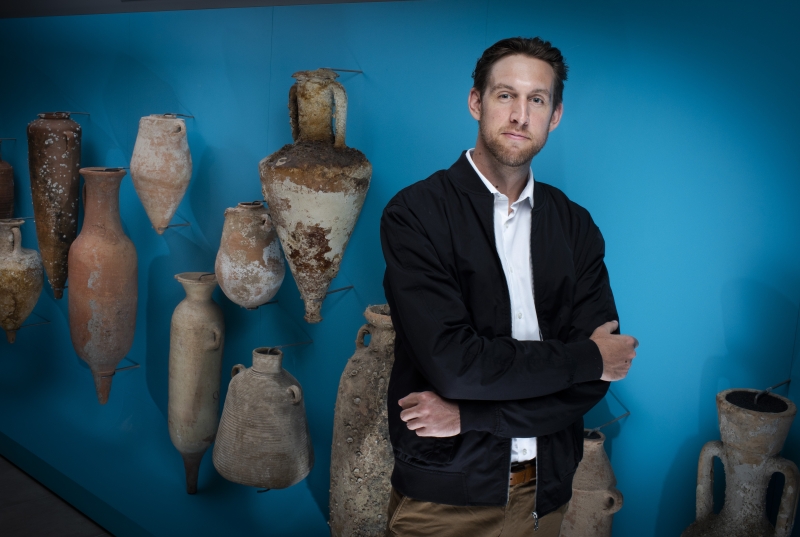
- Emlyn Dodd, Senior Lecturer at the Institute of Classical Studies
- Institute of Classical Studies, University of London. Co-Director Falerii Novi Project | FSA FRHistS FHEA
Description
Abstract
In much of the Roman world, wine was the beverage of choice across social strata, a key source of carbohydrates, and was used in medicine, religion and cooking. Olive oil was used for fuel in cooking, lighting and heating, personal hygiene, craft and agriculture and within the kitchen.
The production of these commodities shaped landscapes and was central to local and regional economies and trade. But how were they produced in the Roman period? With what technologies and processes? And was it anything like wine and olive oil production in our modern era?
This lecture will combine archaeological, artistic, and historical evidence to explore Roman wine and olive oil production, from small urban vineyards and rudimentary rock-cut facilities, to extravagant imperial villas that put on a vinicultural show.
Bio
Emlyn Dodd is Senior Lecturer at the Institute of Classical Studies, University of London. He was Assistant Director at the British School at Rome from 2021–23.
Emlyn has published extensively on ancient wine and olive oil production in Greek and Roman antiquity, including the books Vine-growing and Winemaking in the Roman World (2025), Methods in Ancient Wine Archaeology (2024) and Roman and Late Antique Wine Production in the Eastern Mediterranean (2020) along with recent articles in Antiquity, and the American Journal of Archaeology.
Emlyn co-directs the Falerii Novi Project in Italy and directs a survey project in the Cyclades, Greece. He features regularly in public media and has appeared in The Guardian, Washington Post, The Conversation, on the BBC and ABC, and filmed with National Geographic.
**Combined lecture with Cirencester Archaeological and Historical Society (CAHS).
Location
& CSTS Zoom Channel ID 912 0723 6181
- Street
- Market Place
- City
- GL7 Cirencester
- County
- England
Based in Cirencester, Capital of the Cotswolds
Royal Agricultural University - Sir Emrys Jones Lecture Theatre
- Street
- Sir Emrys Jones Lecture Theatre, RAU
- City
- GL7 6JS Cirencester
- County
- Gloucestershire
Royal Agricultural University (RAU) is situated close to the junction of the A419 (Cirencester to Stroud road) and the A433 (Cirencester to Bath road) on the south-west edge of Cirencester.
The entrance to the Stroud Road car park is off the A419. (Satellite View, RAU page and RAU campus map)
The Parkinson Lecture Theatre (19 on the map) can be found by entering from the Stroud Road car park, and following the path on the right-hand side of the Garner Lecture Block, the first entrance on the right leads to the Parkinson Lecture Theatre.
What3words= televise.brief.ripples